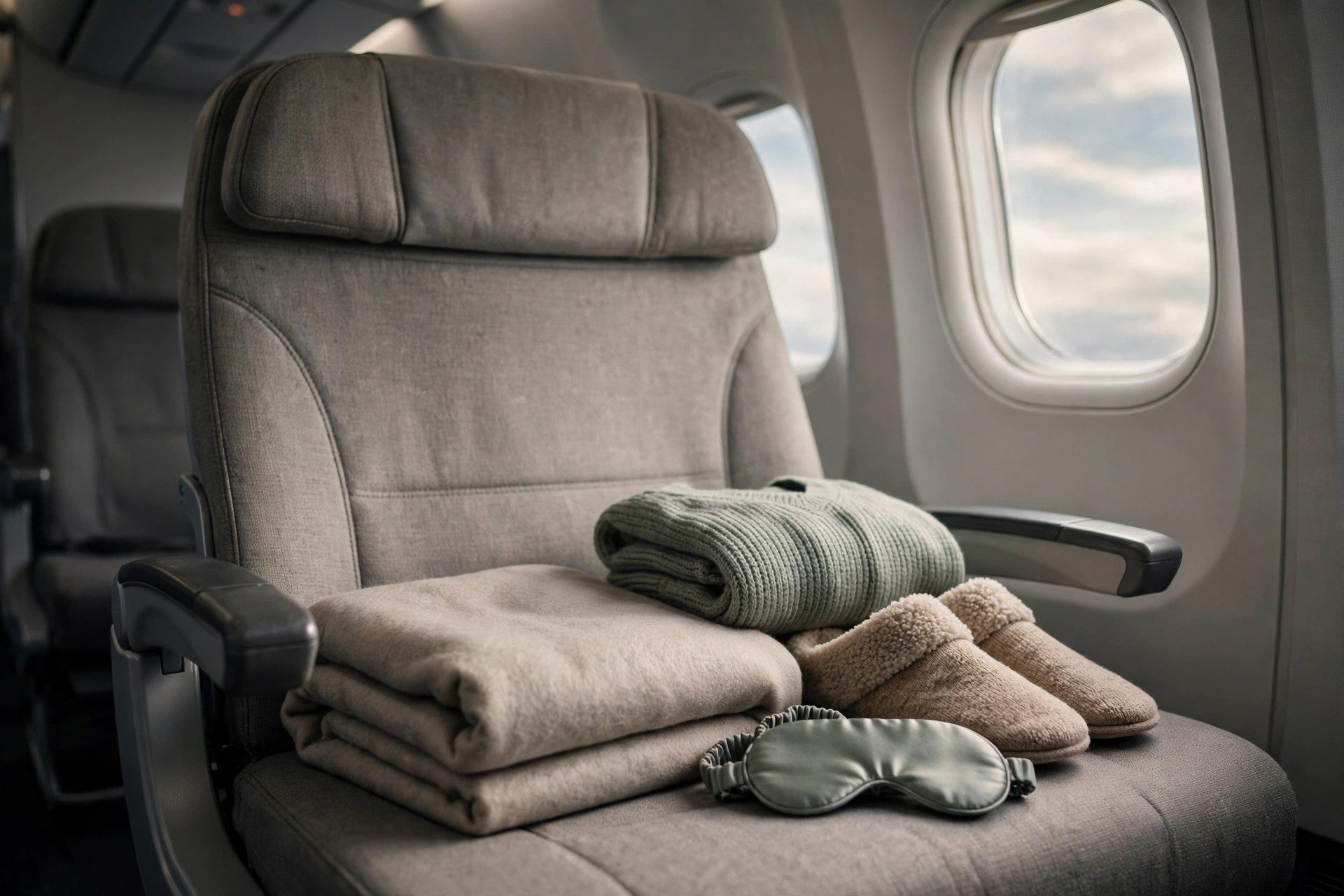
A long flight — six hours and up, and especially an overnight red-eye — stops being a journey and becomes an environment, and the clothes that work for a short hop fail in it one by one. Stiff jeans that were fine for two hours become a tourniquet by hour seven; feet swell a half-size in the low pressure; the cabin temperature drops through the night; you will try to sleep in whatever you are wearing. What to wear on a long flight is therefore its own subject: soft, loose, layered clothing that treats circulation, temperature and sleep as the three design requirements, because on a long flight, they are.
Comfort Is a Circulation Question
The body changes shape on a long flight. Cabin pressure lower than at ground level plus hours of sitting means ankles and feet swell — commonly half a shoe size — and anything snug at departure becomes a tourniquet by landing. So the long-flight outfit starts loose: soft trousers with an elastic or drawstring waist (knit, ponte or wide-leg styles in substantial fabric), no belt hardware pressing into a seated stomach, no stiff high waistband, no skinny cut trapping the calf. The guideline frequent flyers use is simple: if you would not wear it for a day on the sofa, do not wear it past six hours in a seat.
Circulation is also the argument for compression socks, the one piece of clothing on this page with an actual medical case: graduated compression supports blood flow in the lower leg during long immobility and visibly reduces swelling. Pair them with roomy, slip-off shoes your feet can swell into — shoes that were comfortable at boarding and punishing at landing are the most common long-haul footwear regret, and laces you must loosen secretly under the seat are the tell.
Layers for a Night Cabin
Temperature on a long flight swings wider than on a short one, and the coldest hours are the sleeping hours. Build the same three-layer system as any airport outfit, biased warmer: a breathable base layer (merino is ideal — warm, odour-resistant, kind to skin in dry cabin air), the warmest knit you are packing worn on board, and an outer layer that can become bedding — a wrap, a large scarf or a soft hooded top that shades the eyes. Every layer should be removable in a seat without elbowing your neighbour, which rules out anything that must come off over your head in a tangle.
Sleep decides the details. Seams, tags, waistband buttons and bra hardware all become pressure points against a seat over eight hours, so the red-eye outfit removes them where it can. Warm socks replace shoes once you are settled — put them in your personal item so you are not excavating the overhead bin in the dark — and a layer you can pull over your face or wear as a hood buys darkness that an eye mask alone sometimes does not.
Fabrics, Skin and the Arrival Trick
Cabin air is desert-dry, and natural fibres near the skin cope best: merino and cotton-rich blends feel better at hour ten than pure synthetics, which can feel clammy and hold odour on a long sector. Dark, textured, crease-proof fabrics are the visual strategy — you will wrinkle, so choose cloth where wrinkles do not show, and spill-prone areas should not be the palest thing you own. Avoid anything worn for the first time: a long flight is an unforgiving test of an untested garment.
Finish with the arrival trick that separates experienced travellers: a fresh top in your personal item. Change in the washroom before landing and the slept-in uniform becomes yesterday's problem; you walk off in a clean layer, with the travel outfit's soft trousers suddenly reading as intentional. Combined with compression socks and a layer you slept in properly, it is the whole long-flight system: circulate, regulate, sleep, arrive.
Common Questions
- Should I wear compression socks on a long flight?
- On flights over about four hours, yes — they are one of the few clothing items with a real health argument. Graduated compression socks support circulation during long sitting and reduce ankle swelling noticeably. Cabin crew and frequent long-haul flyers wear them routinely. Put them on before you board, not once your feet have already swollen.
- Are jeans a bad idea on a long flight?
- Stiff, tight jeans, yes — rigid denim with a fixed waistband is the classic long-haul mistake: it digs in sitting, restricts circulation and makes sleep harder. Soft, stretch denim in a relaxed fit is workable, but knit trousers, ponte or merino-blend pants are better tools for a flight past six hours.
- How do I sleep comfortably in my clothes on a plane?
- Dress for sleep before you board: soft layers you can adjust without standing, nothing with hardware pressing into you when you recline, warm socks, and a layer that works as a blanket and another that can shade your eyes or support your neck. Eye mask and earplugs live in the personal item. Sleeping in your clothes works when the clothes were chosen for it.
- What should I wear on a red-eye flight?
- Layers you control: a breathable base, your warmest knit worn on board, and a wrap or soft jacket as the adjustable outer — cabins on night flights are coldest while everyone sleeps. Add warm socks and a fresh top in your personal item for arrival, and dress in the morning, not the departure, timezone.
Travel Outfit Guides
This page is part of our travel dressing series — what to wear when you are going somewhere.