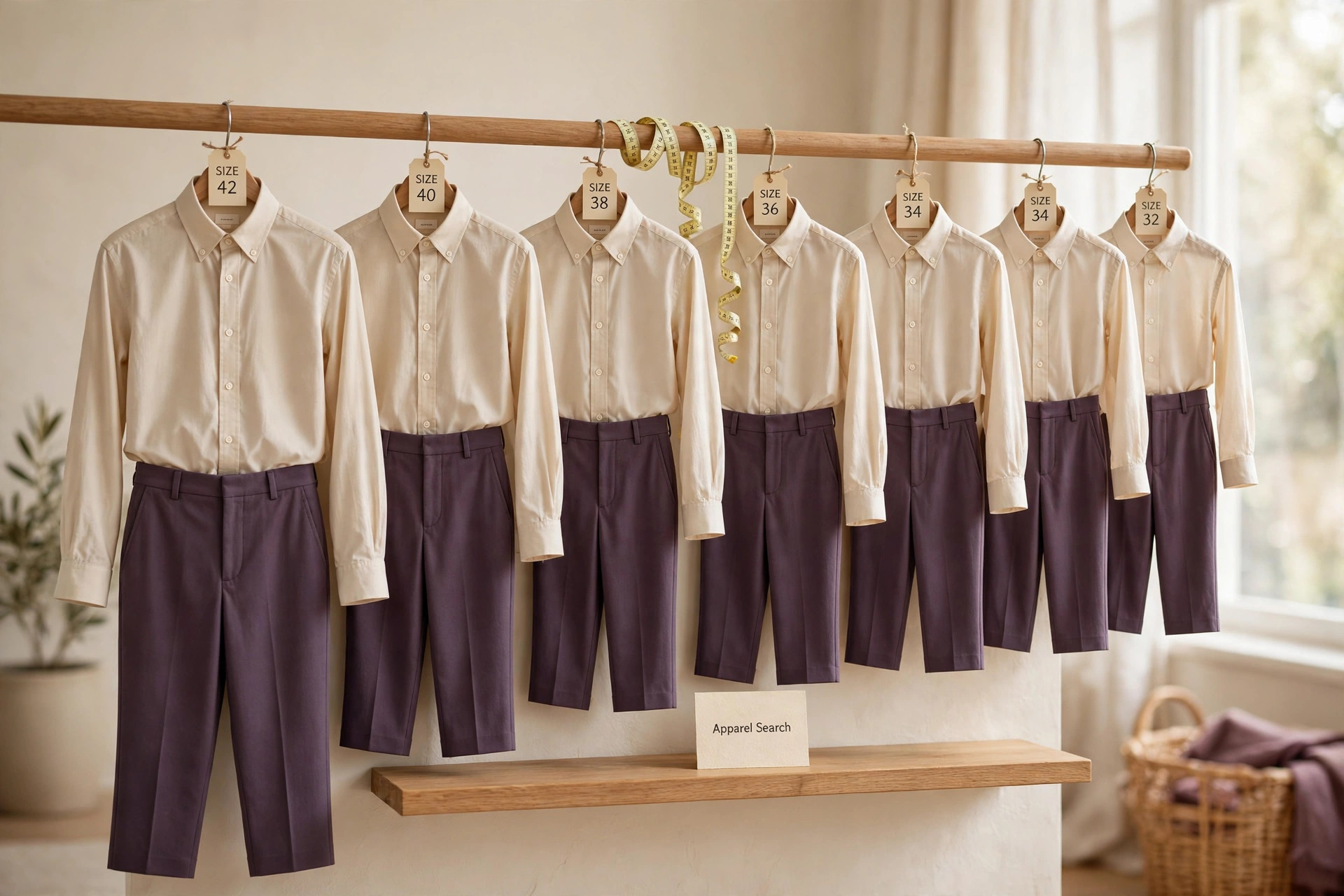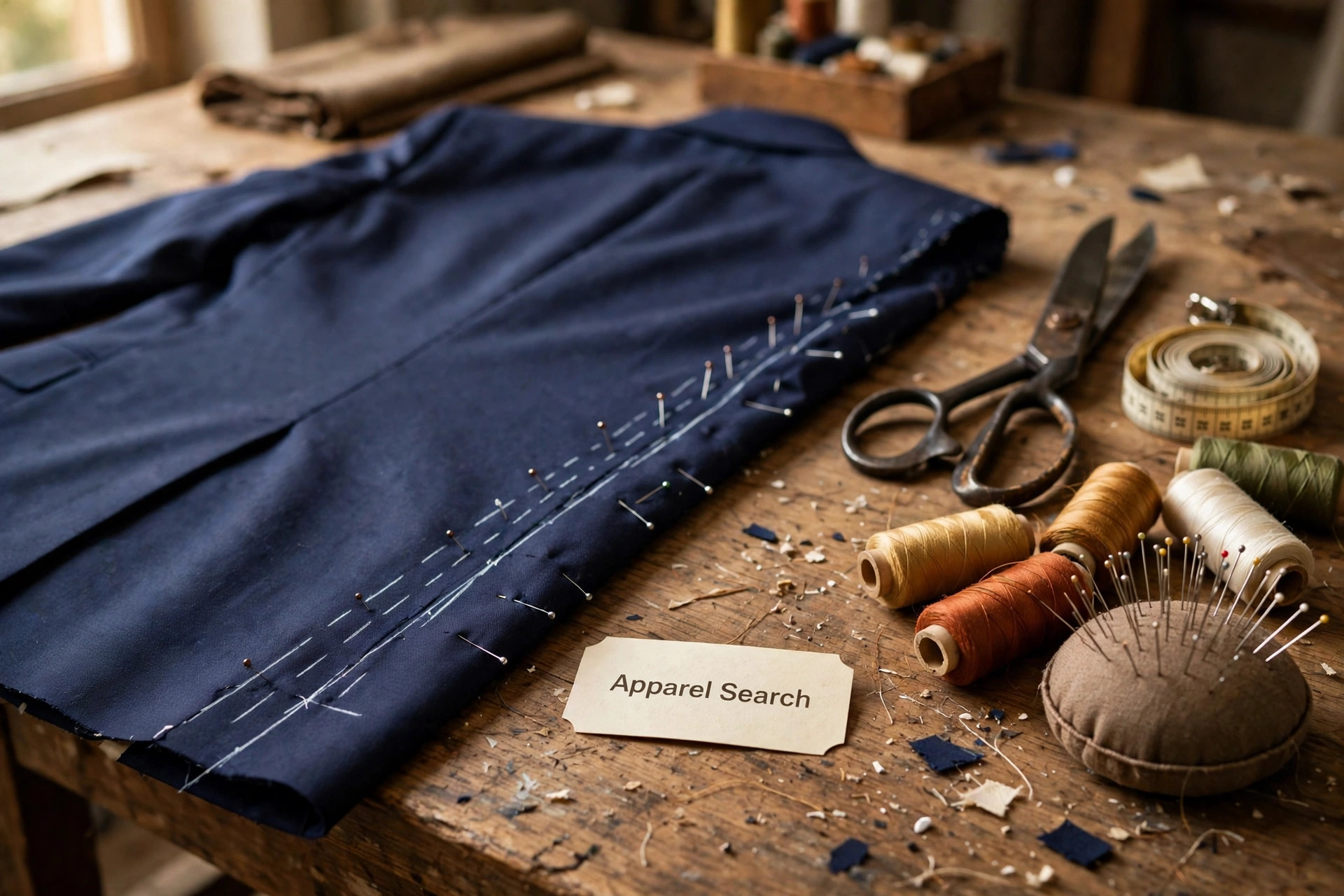
There is a particular frustration in getting dressed while your size is still moving: nothing is wrong with your taste, your budget or your effort — the target simply will not sit still. Buy for today and the purchase may be wrong by spring; wait for a final size and you spend months dressed in clothes that fit a former self. This guide is the strategy for the moving middle: choose constructions that adjust, keep the wardrobe small and deliberate, borrow what you only need briefly, and spend real money only where fit is truly critical. The goal is not a perfect wardrobe. It is a workable one, at every size along the way.
A Garment Guide, Not Medical Advice
This guide is about clothing — fit, tailoring and wardrobe strategy. It offers no medical or weight advice, and nothing here is a recommendation about how anyone’s body should change. If your size is changing for medical reasons, those questions belong with your own doctor or care team; the clothing questions are what these pages can help with.
01 / Movement Itself
Sizes Move in Both Directions
Size changes run in both directions and for unremarkable reasons: after a baby, during a period of recovery, through the ordinary reshaping of middle age, and — a pattern stylists are seeing more of lately — following medication-related weight loss. The direction does not change the dressing problem, which is why this guide is written for movement itself rather than for any one story.
Whatever is moving your size, the wardrobe questions are the same three: what fits today, what will still fit after another size of movement, and what is not worth buying until the moving stops. Every section below is one of those questions, answered in order.
02 / Built-In Forgiveness
Buy Adjustability, Not Permanence
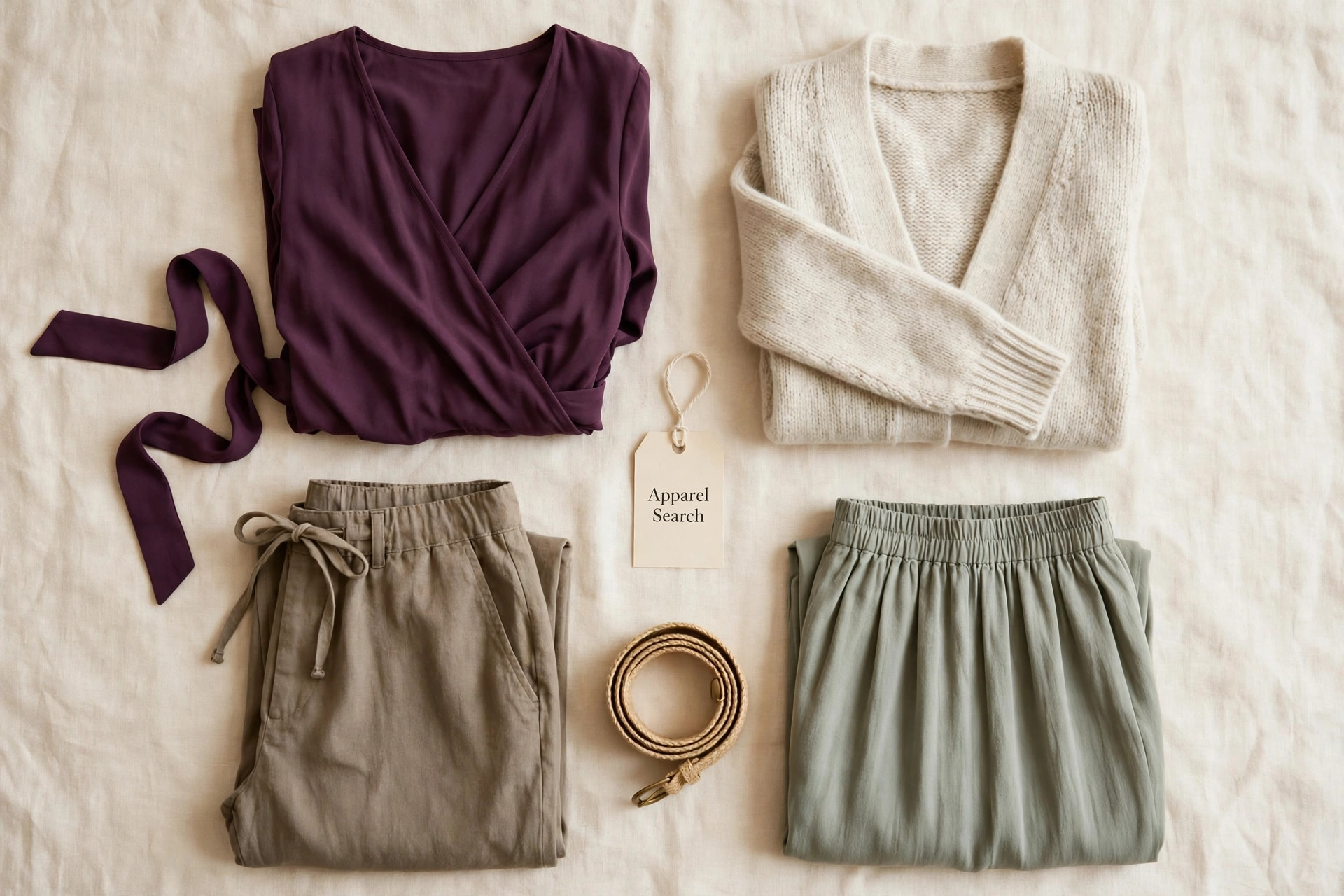
Some garments are built to be refitted by their wearer every morning, and they are the moving wardrobe’s foundation. Wrap styles tie at today’s waist and tomorrow’s. Drawstring and tunnel-elastic waists adjust by inches without a tailor. Part-elastic waistbands — flat at the front, gathered at the back — keep a tailored look with a forgiving fit. Knits earn their place only when they have recovery: the stretch that snaps back, not the stretch that bags by evening.
Button extenders and adjustable straps quietly widen the range of the shirts, trousers and undergarments you already own. And the oldest adjuster of all, the belt, redraws a waistline on anything with loops or a tie. Favor these constructions in every category while sizes move, and regard rigid, exact-fit tailoring as a purchase for later.
“Buy for the body in the mirror this morning — in constructions forgiving of the one that may be there next season.”
03 / Small and Closed
The Bridge Wardrobe
A bridge wardrobe is a small, closed set of pieces that fit now, forgive a size of movement, and combine with each other: perhaps a dozen to twenty pieces in one palette — bottoms with adjustable waists, wrap and knit tops, one open layer, one dress or its equivalent, and shoes that already fit. It is a capsule in the strict sense, built for a season rather than a lifestyle, and priced like a tool rather than a collection.
Keep it honest with a monthly try-on. Pieces that leave the fit window rotate out; gaps get filled from the adjustable list, never with hopeful exact-fit purchases made for a size you have not reached. When the try-ons stop changing the rail, the bridge has done its work and the permanent wardrobe can begin.
04 / Bridges You Do Not Own
Borrow, Rent, Buy Secondhand
A size in motion is the strongest argument the secondhand rail ever had. Thrift and consignment pieces dress you at today’s size for a fraction of retail, and when the size moves again they can be sold or donated with no sting — our thrifting and secondhand fashion guide covers the workflow from hunting to judging quality.
For occasions — the wedding, the reunion, the photographed event that lands mid-change — renting beats buying a formal piece at a temporary size: our clothing rental guide explains how the services work and what to check before an event. Borrowing from a friend in a similar flux is the oldest bridge of all; offer the same in return when your rail holds the size they need.
05 / The One-Size Test
When to Buy, When to Wait
The deciding question for any purchase is how much fit error the garment tolerates. Buy now: the pieces worn against the skin and the fit-critical foundations — undergarments in the current size, shoes that fit today’s feet, the one pair of trousers you will live in — because a wrong fit there is paid for hourly. Wait: tailored suits and coats, structured dresses, anything whose value lives in exact fit, and anything bought “for when I reach” a size; aspiration purchases mostly become expensive evidence.
A useful test at the rail: would this still work after one more size of movement in either direction? If yes, it is a bridge piece and a fair buy. If no, it is a settled-size purchase, and it can wait for a settled size.
06 / The Running List
Cost per Stage, Not per Garment
Judge bridge spending by cost per wear within the stage, not by the garment’s whole imagined life. A thrifted wrap dress worn twice a week for a season is cheap at almost any ticket; a full-price tailored jacket worn twice before the size moves is dear at any discount. The cost comparison in fashion shopping guide works that arithmetic in detail.
Keep a simple running list — what was bought for this stage, what it cost, roughly what it earned in wears — and let it discipline the next stage. Most people find the bridge wardrobe costs far less than the anxious, piecemeal buying it replaces.
Questions
Common Questions
How many clothes do I need while my size is changing?
Fewer than feels safe: a bridge wardrobe of roughly a dozen to twenty combining pieces in adjustable constructions covers most lives, washed and rotated. The count matters less than the rule — every piece must fit today and forgive a size of movement.
Are elastic waists my only option?
Not at all. Wrap and tie closures, drawstrings, part-elastic backs, belts, button extenders and knits with genuine recovery all adjust — several of them while looking entirely tailored. Elastic is simply the most famous member of a large family.
Is renting clothes worth it while sizes are moving?
For occasions and short needs, usually yes: one formal event at a temporary size is exactly the case rental was built for. For daily wear, a small owned bridge wardrobe is cheaper than a standing rental habit — rent the exceptions, own the rotation.
When should I start buying permanent pieces again?
When a size has held steady across a season, start with one category — the workhorse trousers, say — and buy it properly. Settling is a trend, not a date: two or three months of stable measurements are a better signal than any single morning on the tape.
More to Explore
The Companion Guides
The bridge wardrobe is one act of a three-part play: the full sort-and-rebuild plan, and the tailor’s side of the story.