Apparel Search · Secondhand Skills
Selling Your Clothes Secondhand
The selling half of the secondhand loop: how to sort a closet into the right channels, price from evidence instead of hope, and present each piece so it sells — turning clothes you no longer wear into money and space.
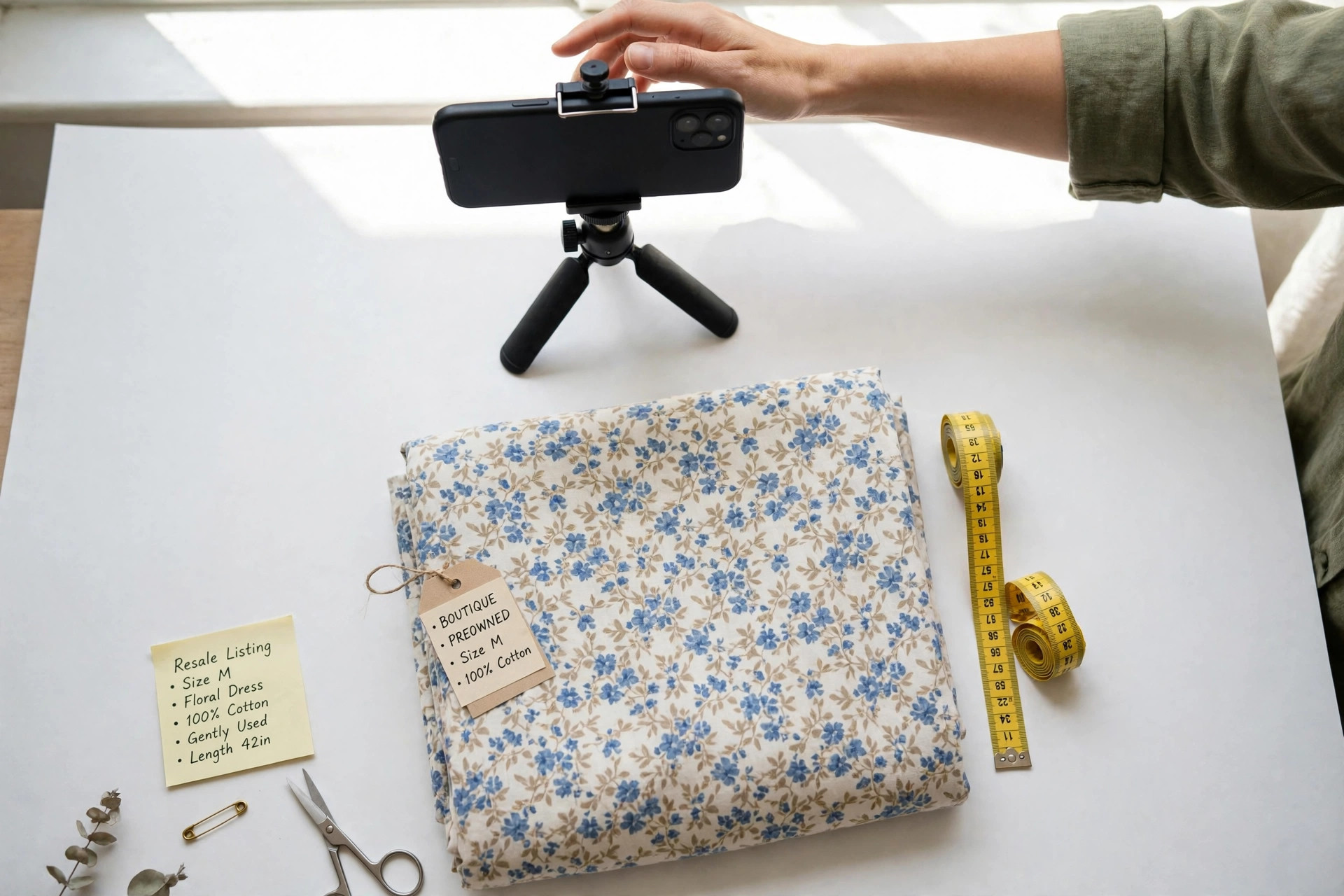
Every guide in the Thrifting & Secondhand Fashion cluster has a mirror image, and this is the mirror of the hunt: the clothes you no longer wear are somebody else's rack. Sold well, they fund your future finds, clear your closet, and keep good garments working instead of landfilled. Sold badly — one blurry photo, a hopeful price, a channel that does not fit the piece — they sit for months and teach you that “nobody wants this,” when the truth is that nobody could see it properly.
Sort Before You Sell
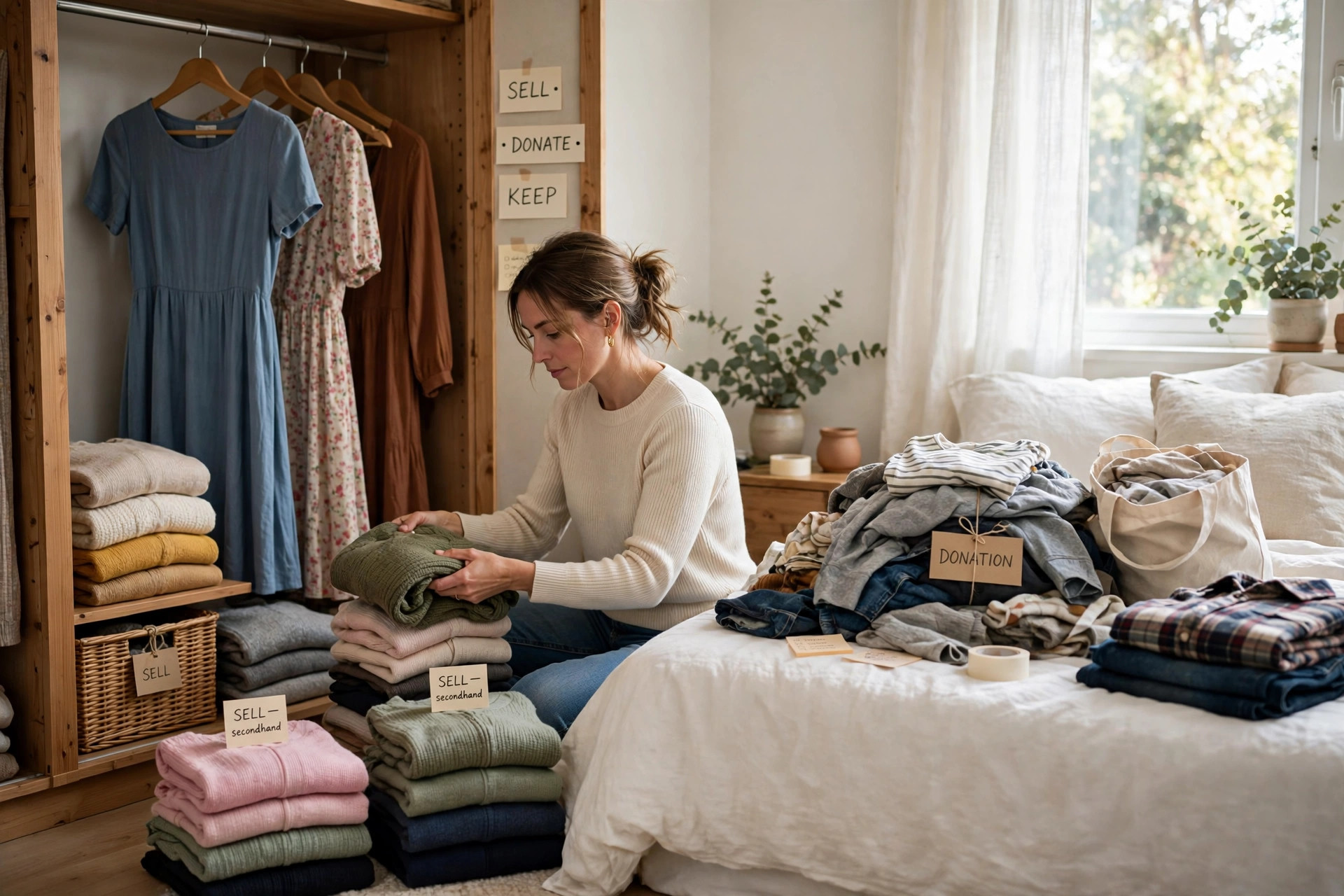
The single biggest selling mistake is treating every garment the same. A designer coat, a good pair of jeans and a armful of worn basics are three different products with three different best channels. Spend ten minutes sorting first — designer and quality pieces, everyday brands, volume clear-out, and the honest donate-or-recycle pile — and every later step gets easier.
Choose the Channel for the Piece
Designer clothing, quality leather and genuinely vintage pieces earn their best prices where buyers trust the curation: consignment shops and curated resale platforms, which present, sometimes authenticate, and take a commission for doing it. Solid everyday brands — the jeans, sweaters and dresses of well-known labels — sell efficiently on the big general marketplaces, where search traffic does the work. Low-value basics move best in bulk: local buy-sell-trade and consignment shops pay less per piece but pay on the spot and take everything at once. Pieces too worn to sell still have a dignified exit — donation, or textile recycling for the truly finished, a route mapped in Apparel Search's look at circular fashion and textile recycling. If the distinctions between shop types blur, the comparison guide to consignment shops on Apparel Search explains how the consignment model pays out.
Price It From Evidence
Your original receipt is not evidence; the market's memory is. Search your platform for the same or closest comparable items and filter to sold listings — asking prices are wishes, sold prices are facts. Grade your condition honestly against those comparables: unworn with tags, excellent, good with noted wear, and price a step below the closest match if you want movement, or at it if you can wait. Expect the honest arithmetic of resale — most everyday clothing returns a fraction of retail — and remember that the variables you control, condition and presentation, move your result more than stubborn pricing does.
Present It Like a Shop
Buyers cannot touch your garment, so your photographs do the touching. Shoot clean, pressed clothing in bright natural light against a plain background; show front, back, label, fabric close-up, and any flaw, honestly framed. This is a real photographic discipline — Apparel Search's e-commerce clothing photography guide covers lighting, color accuracy and garment presentation in full, and its parent Fashion Photography & Media Production hub goes deeper still. A measuring tape in one frame, and flat measurements in the listing, quietly answer the question that kills more sales than price: will it fit?
Write the Listing
Write like the buyer you were in the thrift store. Brand, garment type, size and measurements, fiber content from the label, condition graded plainly, flaws named and photographed. If the piece is vintage, say what dates it — the label and construction evidence from the dating guide — because knowledgeable buyers search for exactly those details and pay for the confidence. Answer messages promptly and politely; in resale, the seller's manner is part of the product.
Ship, Meet and Follow Through
Package clean clothing neatly, ship when promised, and meet local buyers in sensible public places. Keep your ratings like they are capital — because in resale, they are. Then close the loop: the proceeds of a well-sold closet are the budget that makes the next season of thrifting effectively free, which is the quiet economics underneath this entire cluster.
Common Questions
Where is the best place to sell used clothes?
It depends on the piece. Designer and high-quality items earn most through consignment shops or curated resale platforms that authenticate and present them well. Good everyday brands sell efficiently on general online marketplaces. Bulky basics and volume clear-outs suit local buy-sell-trade stores, which pay less but pay immediately. Match the channel to the garment rather than sending everything to one place.
How much of the original price can I expect to get back?
Usually a modest fraction — common clothing in good condition often resells for roughly 10 to 30 percent of its retail price, while sought-after designer pieces, quality leather, and genuinely vintage items can do considerably better. Condition, brand demand and presentation move the number more than the original price tag does. Pricing from recently sold listings of the same item tells you what your market will actually pay.
Should I wash or repair clothes before selling them?
Yes — clean, fresh, repaired clothing photographs better, smells better and sells for more. Wash or clean everything, treat small stains, sew loose buttons and fix open seams; the basics are simple mending anyone can do. Be honest about whatever you cannot fix: a disclosed flaw preserves your ratings and your buyer, while a hidden one becomes a return and a bad review.
How should I price a genuinely vintage piece?
Research first: search sold listings for comparable pieces of the same era, garment type and condition, and date your item as carefully as you can — labels and construction narrow the era, and buyers pay for that knowledge. Scarce, wearable, well-documented vintage commands real prices; common pieces in poor condition do not, whatever their age. When your evidence is thin, price modestly and describe honestly.
Back to the Thrifting & Secondhand Fashion Guide
The Thrifting & Secondhand Fashion hub covers the whole practice — hunting, dating, judging quality, selling, and the shops themselves — with a map of every guide in this cluster.