Apparel Search · Secondhand Skills
Thrift Stores vs Consignment Shops vs Vintage Shops
All three sell used clothing, but they run on different business models — and that difference decides their prices, their stock, and whether each one is the right shop for you as a buyer or as a seller.
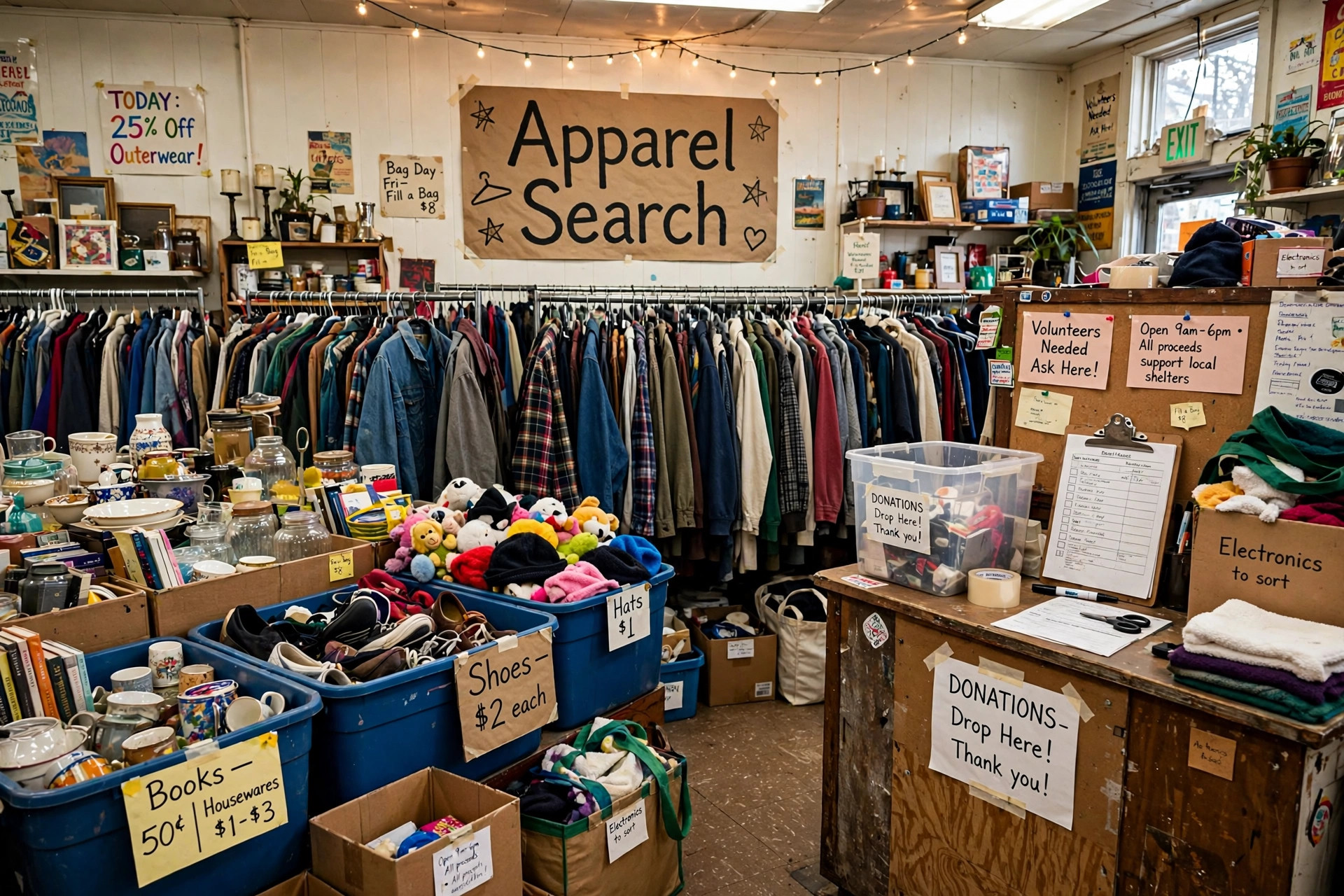
The short version fits in a sentence — a thrift store owns what it sells, a consignment shop sells it for you, and a vintage shop curates the past — and Apparel Search's question pages give exactly that answer in the Q&A What is the difference between a thrift store and a consignment shop? This guide, part of the Thrifting & Secondhand Fashion cluster, is the long version: how each model actually works, what it does to prices and stock, and how to choose among the three whether you are buying a coat or selling a closet.
It Comes Down to Ownership
Every difference between the three shop types flows from one question: whose clothes are these while they hang on the rack? Donated and owned by the store (thrift), still yours until the moment of sale (consignment), or bought and owned by a dealer who selected them (vintage). Ownership decides the risk, the pricing and the split — everything else is decoration.
Thrift Stores: The Donation Model
A thrift store takes ownership at the donation door. Goods arrive free, in unpredictable variety and condition, and the store — most often a charity raising funds, sometimes a for-profit operator — prices them to move. Because the stock costs nothing and arrives unsorted by quality, prices are the lowest in secondhand retail and the range is the widest: genuine vintage and designer pieces sleep unrecognized between worn basics, which is precisely the opportunity the thrift hunting guide teaches you to exploit. The buyer's bargain is real, and so is the work: you supply the knowledge and patience the store did not. For sellers, “selling” to a thrift store means donating — money back only as a possible tax deduction and a clear closet.

Consignment: The Split Model
A consignment shop sells clothing on behalf of its owners. You drop off pieces the shop accepts; it displays, prices and sells them; when an item sells, the proceeds split between shop and owner — commonly somewhere around half, though terms vary — and unsold items return to you or are donated after an agreed period. Because the shop earns only when your clothes sell, it selects like it means it: current, clean, well-made and designer pieces are welcomed, and the racks feel curated in a way thrift stores never do. Prices settle between thrift and new retail, and buyers pay for the selection and the confidence. Apparel Search's consignment shop page explains the model's terms in more detail, and the selling guide shows where consignment fits in a full closet clear-out.
Vintage Shops: The Curated Model
A vintage shop is a dealer. The owner buys stock — from estates, rag houses, markets and the public — selects the pieces that represent their eras, and prices them as collectible fashion rather than used clothing. The stock is the oldest and most characterful of the three, the prices the highest, and the value added is expertise: dating, grading, cleaning and presenting garments whose stories are the product. Vintage shops reward browsers who love eras more than bargains, and they pay sellers who bring genuinely old, desirable pieces — though a dealer buying outright will always pay wholesale, not retail, for them.
Which Shop, For Whom
As a buyer: choose thrift stores for price and adventure, and go often; choose consignment for reliable quality, better brands and a calmer search; choose vintage shops when the era itself is what you want and you are happy to pay for someone else's expertise. As a seller: donate to thrift for speed and simplicity; consign your better pieces for the best return on quality; sell true vintage to a dealer for immediacy, or consign it where collectors shop for the fullest price. Most experienced secondhand hands use all three in rotation — hunting in one, selling in another, and learning in the third — which is why the rest of this cluster treats them as one connected ecosystem rather than rivals.
Common Questions
What is the main difference between a thrift store and a consignment shop?
Ownership. A thrift store takes ownership of what it sells — typically donated goods — and keeps the proceeds, often for charity. A consignment shop never owns your clothing: it displays and sells it for you, then splits the sale price with you. That single difference explains why thrift stores are cheaper and more mixed, while consignment stock is more selective and prices sit between thrift and new retail.
Do consignment shops buy clothes outright?
Generally no — that is the buy-sell-trade model, a close cousin. Consignment pays you after your item sells, usually a percentage of the sale price, and returns or donates what does not sell within an agreed period. Buy-sell-trade stores pay immediately, in cash or store credit, but at a lower rate, because they take the risk of owning the stock.
Why are vintage shops more expensive than thrift stores?
Because you are paying for the hunting, knowledge and curation already done. A vintage shop's owner has sorted through thousands of ordinary used garments to select era pieces in wearable condition, priced them by scarcity and demand, and presented them as fashion history. The same dress can sit unrecognized in a thrift store for a few dollars — if you have the skill and time to find and date it yourself.
Which type of shop is best for selling a designer piece?
Consignment, in most cases. A good consignment shop or curated resale platform prices designer pieces knowledgeably, presents them to buyers who trust the shop's judgment, and returns a percentage of a genuinely good price. Thrift donation returns nothing, and general marketplaces can underprice pieces whose quality a photograph cannot prove.
Back to the Thrifting & Secondhand Fashion Guide
The Thrifting & Secondhand Fashion hub covers the whole practice — hunting, dating, judging quality, selling, and the shops themselves — with a map of every guide in this cluster.