What Is the Difference Between a Thrift Store and a Consignment Shop?
It comes down to ownership: thrift stores own what they sell; consignment shops sell it for you.
The short answer is ownership. A thrift store takes ownership of the product it sells — typically donated goods, sold to raise money for charity, though a thrift store can also be a for-profit business. A consignment shop does not own the goods: it sells product on behalf of someone else, acting as a third-party seller, and takes a fee or share when the item sells. If the item matters to you because it is still yours until it sells, you are in consignment territory.
The two shop types look similar from the sidewalk, and both can sell new or used clothing, shoes, and accessories — although both most often sell used, second-hand clothing. The difference only becomes visible when you ask where the stock came from and who gets paid, and in what way, when a sale happens. That is where the two models genuinely part.
Second-Hand & Retail Guides
How Consignment Works
Consignment utilizes a third-party vendor to sell a product such as clothing, fashion accessories, or shoes. A third-party source means a supplier or service provider who is not directly controlled by either the seller (the first party) or the customer or buyer (the second party) in a business transaction. The shop stands between the item's owner and its next owner, handling display, pricing support, and the sale itself.
A concrete example makes it plain: if you want to sell a pair of collectible sneakers on consignment, you could drop off your collectible sneakers at a consignment shop — the third party — and they will sell them to a customer on your behalf. Obviously, they will want a fee for the transaction, taken as a share of the selling price. Until the sale, the sneakers remain yours, which is the defining feature of the model.
How a Thrift Store Works
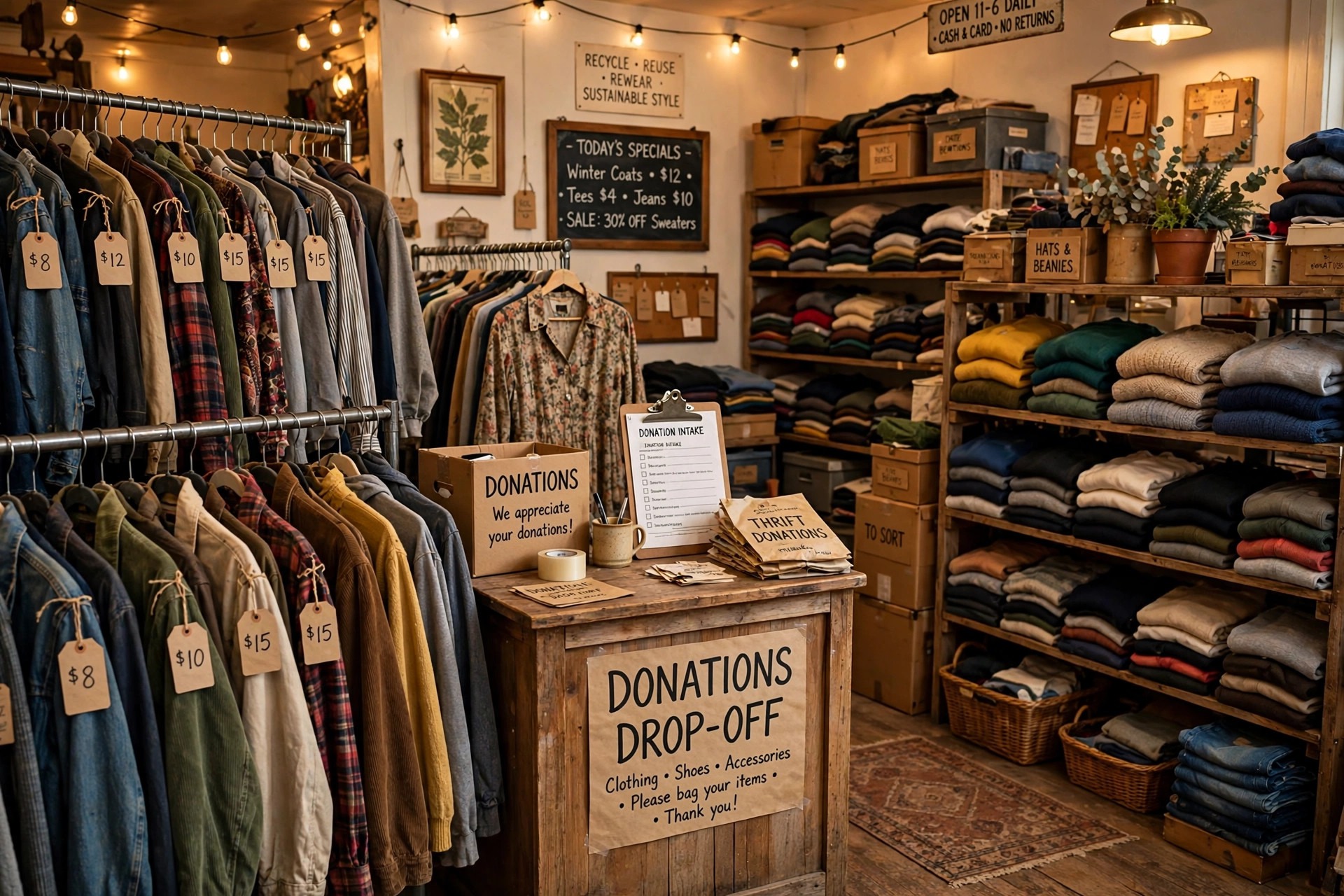
A thrift store is a retailer that typically sells donated product to raise money for charity. They can also be a for-profit business. The key transaction happens at intake, not at the till: donated goods change ownership when they are given, so the store owns its stock outright and sets prices, discounts, and clearance policy entirely for itself, using the proceeds for its charitable mission or its business.
Because donations arrive in unpredictable variety, thrift store stock is famously mixed — clothing alongside shoes, jewelry, and household goods, in every condition and era. Although thrift stores can sell new clothing, shoes, and jewelry, they most often sell used second-hand clothing. The treasure-hunt character of thrift shopping, with one-of-one finds at low prices, is a direct result of the donation-based ownership model.
The Primary Difference: Who Owns the Goods
The primary difference between a consignment shop and a thrift store can be stated in one sentence: a thrift store takes ownership of product to sell, while a consignment shop sells product on behalf of someone else. Everything else — pricing style, typical stock, how curated the racks feel — tends to flow from that single legal and practical fact about ownership.
Consignment's model produces more selective stock, because the shop chooses items it believes it can sell for owners who expect a return, and prices must satisfy both owner and shop. Thrift's model produces broader, cheaper, more variable stock, because donated goods cost the store little and turnover matters more than margin per item. Although consignment retailers can sell new clothing, shoes, and jewelry, they — like thrift stores — most often deal in used second-hand clothing.
Selling and Shopping: Which Suits You?
If you have quality items to move — especially higher-value pieces such as collectible sneakers or designer clothing — consignment is usually the route that returns money to you, in exchange for waiting until the item sells and sharing the price with the shop. Donating to a thrift store returns no payment, but it is immediate, effortless, supports the store's charitable work where applicable, and clears your closet in one trip.
As a shopper, choose by goal. Thrift stores reward patience and frequent visits with very low prices and unpredictable finds. Consignment shops reward a focused search with better-selected, often higher-quality second-hand clothing at prices between thrift and new retail. Either way, both formats keep wearable clothing in circulation — and if you enjoy shopping at either, learning more about second-hand clothing deepens the appreciation of both.
Common Questions
Do I get paid when a thrift store sells my clothes?
No, because donated goods become the store's property. A thrift store takes ownership of the product it sells, typically donated items sold to raise money for charity, or as a for-profit business. Payment to the original owner is the consignment model instead: a consignment shop sells on your behalf and takes a fee from the price.
Does a consignment shop own the items on its racks?
No. A consignment shop sells product on behalf of someone else. The owner drops the item off, the shop — acting as a third-party vendor — displays and sells it to a customer, and the shop takes a fee for the transaction. Ownership stays with the original owner until the moment the item is sold.
Do thrift stores and consignment shops only sell used clothing?
No. Both can sell new clothing, shoes, jewelry, and accessories, and consignment retailers sometimes handle new items as well. In practice, however, both most often sell used, second-hand clothing. The reliable difference between them is not the condition of the stock but who owns it while it is on the rack.
More to Explore
If You Have More Questions About Fashion
You may want to try these sections here on Apparel Search: