Apparel Search · Secondhand Skills
How to Thrift Shop for Clothes
Thrift stores reward method, not luck. Here is the working routine practiced hunters use: prepare before you go, move through the store in a deliberate order, inspect every candidate in good light, and leave the almost-right pieces behind.
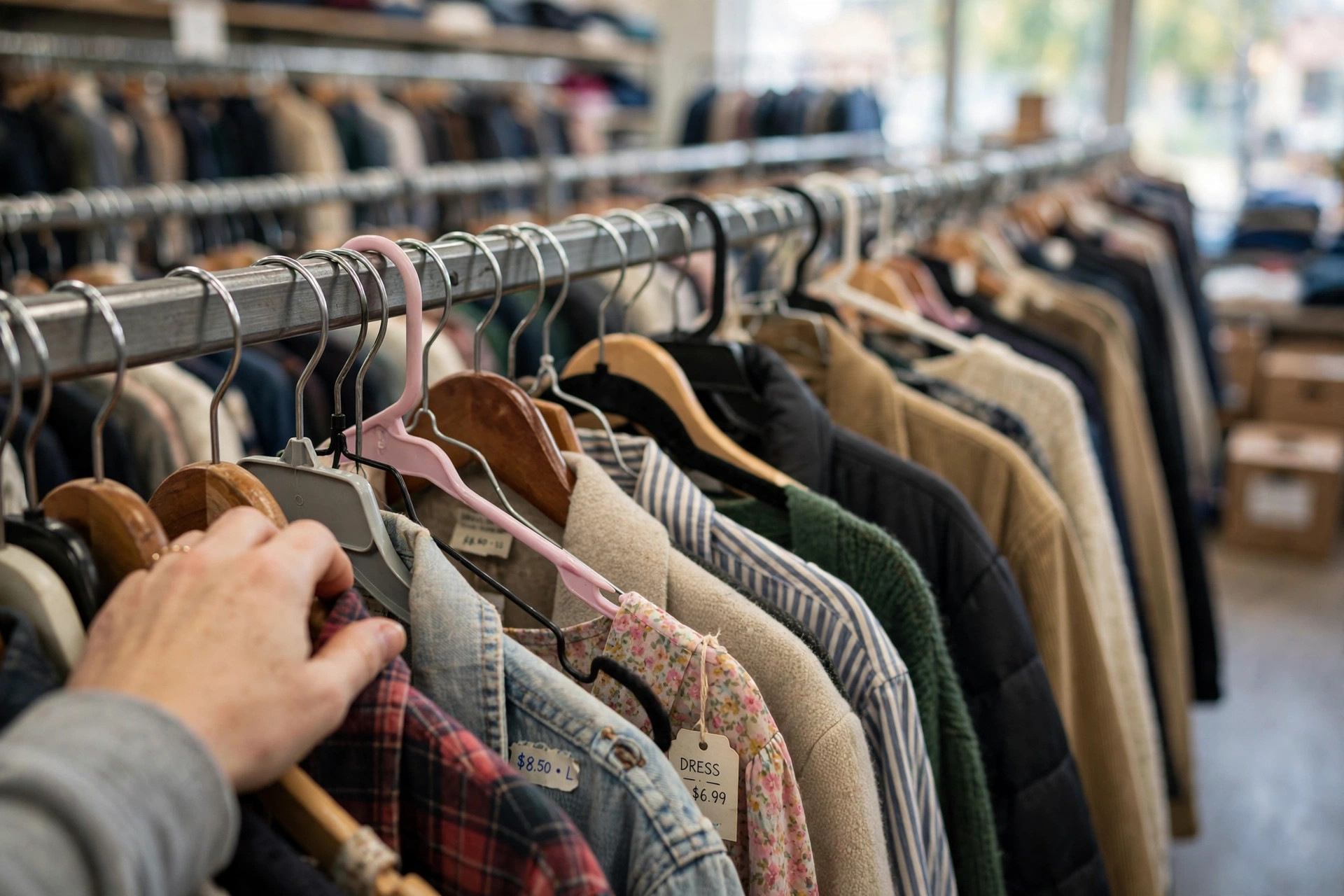
Every guide in the Thrifting & Secondhand Fashion cluster starts here, because the hunt is where secondhand fortunes are made. A thrift store is not organized like a normal shop. Nothing is merchandised for you, sizes and eras are mixed together, and the best garment in the building may be hanging between two of the worst. Shoppers who treat that chaos as a system to work — rather than a lottery to drift through — consistently walk out with the good pieces.
The Thrift Mindset
You are not shopping for a specific item in a specific size; you are prospecting. Go in with categories you want and problems you would like to solve — a wool coat, work shirts, a leather bag — but let the stock decide the details. The hunters who insist on one exact garment leave empty-handed; the ones with a short, flexible list leave with bags.
Before You Go
Preparation takes five minutes and pays for itself on the first rack. Write down your key measurements — chest, waist, hips, shoulder width, inseam — and keep them on your phone; secondhand labels lie, especially on older clothing, but a tape measure does not. Keep a small soft tape measure in your pocket or bag. Note the gaps in your wardrobe so impulse finds still have to justify themselves. Wear clothes that are easy to try things over — a fitted base layer, slip-on shoes — because many thrift stores have few fitting rooms, long lines for them, or none at all. Bring a reusable bag, and hand sanitizer for after the racks.
Working the Store: The Routine
- Start with your strongest sections. Head first to the categories where quality hides: coats, blazers, knitwear, denim and leather. These sections hold the most durable garments and the biggest gaps between price and value.
- Scan by fabric and color, not by item. Slide hangers slowly and let your hand read the rack: natural fibers — wool, cotton, linen, silk, cashmere — feel different from thin synthetics. Pull anything whose fabric and color pass this first test, whatever its label size says.
- Pull generously, judge later. Good pieces disappear while you deliberate. Carry or cart every plausible candidate, then do your serious judging in one pass at the end of the aisle or near a window.
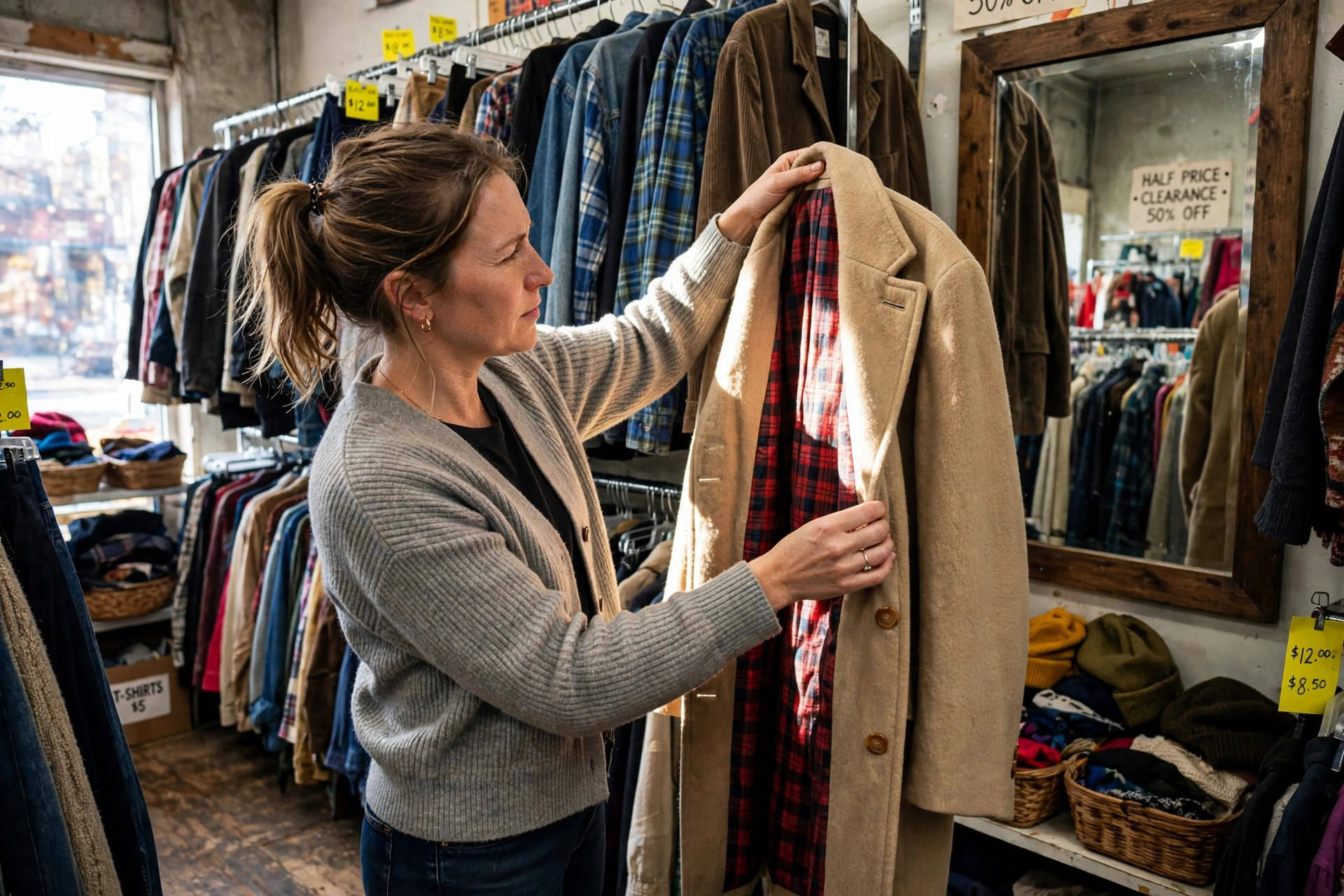
- Inspect in good light. Move to the brightest spot in the store and run the condition check: seams, underarms, cuffs, collar, lining, fastenings, and a sniff test. The full method is in our guide to spotting quality and fakes — it takes two minutes per garment and saves every regret.
- Measure, then try on. Check the garment's actual measurements against yours before joining any fitting-room line. If it looks genuinely old and interesting, a quick pass through the evidence in the vintage dating guide tells you whether you have found a $15 coat or a piece of fashion history.
- Decide with a short checklist. Condition sound? Fit right or alterable? Fills a real gap? Price fair for what it is? Four yeses means buy. An almost-right piece that fails one test goes back — another hunter's treasure, and your closet stays honest.
What to Skip
Some damage is a bargain waiting for a needle; some is a death sentence. Learn the difference. Small faults you can fix — a missing button, a loose hem, a seam that needs restitching — should never stop you, and basic repairs are covered in the garment care cluster. Walk away from moth-holed wool, silk that has shattered into splits, leather that has cracked through, elastic that has given up, and stains or odors that have clearly survived previous washing attempts. Also skip shoes worn deeply into another person's gait, and anything whose only virtue is a label you recognize on a garment that is falling apart.
Timing and Tactics
Thrift shopping has a calendar. Donations surge after weekends, holidays and spring cleaning, and many stores restock early in the week; ask the staff, because every store's rhythm differs. Learn the store's tag-color sale rotation — most charity chains discount a different tag color each week — but never buy a mediocre piece just because it is half price. Estate-heavy neighborhoods, college towns at move-out time, and affluent suburbs all stock characteristically different racks; a short drive can change what you find. And remember that the three kinds of secondhand shop reward different tactics entirely, which is why this cluster also compares thrift stores, consignment shops and vintage shops side by side.
After the Hunt
Clean everything before it joins your wardrobe — a wash, a steam, or professional cleaning for structured and delicate pieces — and store woolens protected from moths. The Garment Care Guide covers washing, mending and storage in full. Then wear your finds hard. The entire point of buying well-made clothing cheaply is the cost per wear, and a thrifted coat worn a hundred times may be the best-value garment you ever own.
Common Questions
How often should I visit a thrift store to find good things?
Stock turns over constantly and unpredictably, so frequency beats duration: several short visits find more than one long one. Many regulars stop in weekly or whenever they pass. Ask staff which days new stock reaches the floor — donations are often processed early in the week — and time your visits a day or two after.
What are the best things to buy secondhand?
Durable, well-made categories reward thrifting most: wool coats and blazers, denim, leather goods, cashmere and other natural-fiber knitwear, tailored clothing, and quality basics in neutral colors. These were built to last, were often barely worn, and cost a small fraction of their new price. Thin fast-fashion pieces, by contrast, arrive at the thrift store already near the end of their life.
How can I judge size when thrift stores have limited fitting rooms?
Carry your own measurements — chest, waist, shoulder, inseam — on your phone, plus a small tape measure. Vintage and older garments run smaller than modern labeled sizes, so never trust the tag alone. Hold waistbands against your own waist as a rough screen, check shoulder seams against your shoulders, and measure any serious candidate properly before deciding.
What should I never buy secondhand?
Skip anything with moth holes in wool, shattered silk, cracked leather, broken zippers on pieces not worth repairing, stretched-out elastic, and odors that survive washing — smoke and mildew often do. Also be cautious with worn-out shoes that have molded to someone else's feet, and pass on underwear and swimwear for hygiene. The rack will offer something better next week.
Back to the Thrifting & Secondhand Fashion Guide
The Thrifting & Secondhand Fashion hub covers the whole practice — hunting, dating, judging quality, selling, and the shops themselves — with a map of every guide in this cluster.