Apparel Search · Secondhand Skills
Spotting Quality & Fakes in Secondhand Clothing
Secondhand prices rarely reflect construction quality — a superb garment and a shoddy one can hang at the same price. These are the checks that tell them apart, plus the warning signs that a designer piece is not what its label claims.
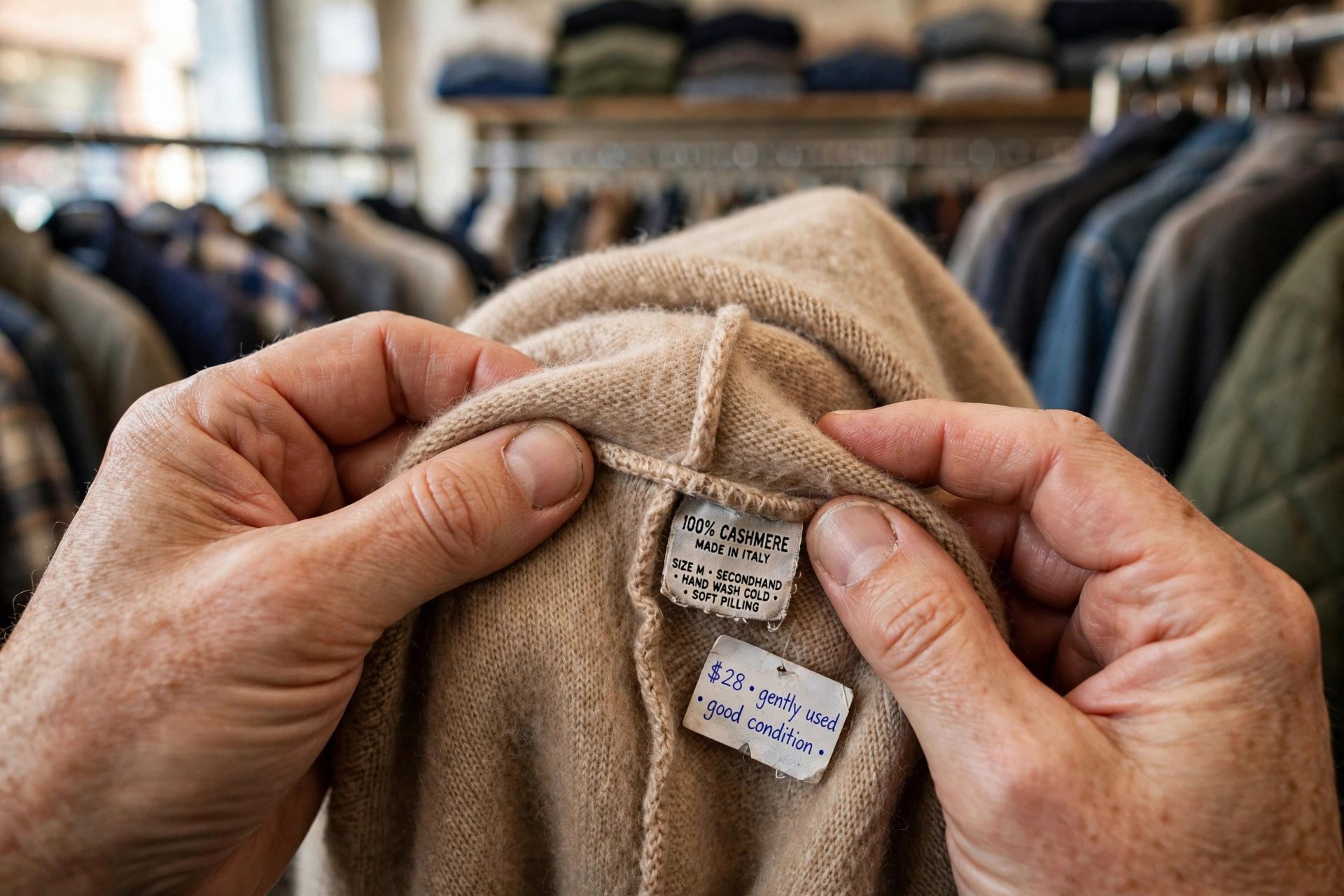
This guide is the judging half of the Thrifting & Secondhand Fashion cluster — the two-minute examination that decides whether a find is a bargain or a burden. It matters because secondhand pricing is famously careless: donations are priced by category and speed, not by construction, so the best-made coat in the store may cost exactly what the worst one does. Shoppers who can read quality take home the difference. And the same reading skill, turned up a notch, is what protects you from the counterfeits that circulate through resale.
Quality Leaves Evidence Everywhere
Good manufacture is not one feature; it is a pattern of small decisions — denser fabric, more stitches, finished seams, real lining, solid hardware — repeated all over a garment. Fakes and cheap pieces can imitate one or two of them. They almost never imitate all of them at once. Judge the pattern, not the single detail.
Fabric First
Start where your hand starts. Quality fabric has substance: wool that feels dense and springy rather than thin and papery, cotton with a tight, even weave, silk with weight and a dry, rich hand. Check the fiber-content label — natural fibers and well-made blends dominate the quality end of any rack — and hold knits up to the light to spot thinning, pilling and stretched-out yarns. Rub a small area gently: fabric that pills or sheds under a fingertip in the store will not improve at home. On printed cloth, look through to the inside — color that penetrates is a better make than a print sitting stiffly on the surface.
Construction Checks
Turn the garment partly inside out; the inside never lies. Stitching should be small, even and straight, with many stitches to the inch and no skips or tangles — long, loose stitching is how cheap clothing is sewn fast. Seam allowances should be generous and their edges finished: bound, French, flat-felled or cleanly serged rather than raw and fraying. Plaids and stripes should match at the side seams and pockets. A tailored garment should have a real lining that hangs smoothly, interfacing that supports collars and lapels without bubbling, and buttonholes worked densely and neatly. Buttons themselves should be substantial — horn, shell, wood or quality composites rather than thin, sharp-edged plastic — and a spare button sewn inside is a small, telling courtesy of better makers. Notice how many of these clues overlap with the evidence in the vintage dating guide: construction is a garment's permanent record, readable for both age and quality.
Leather Goods
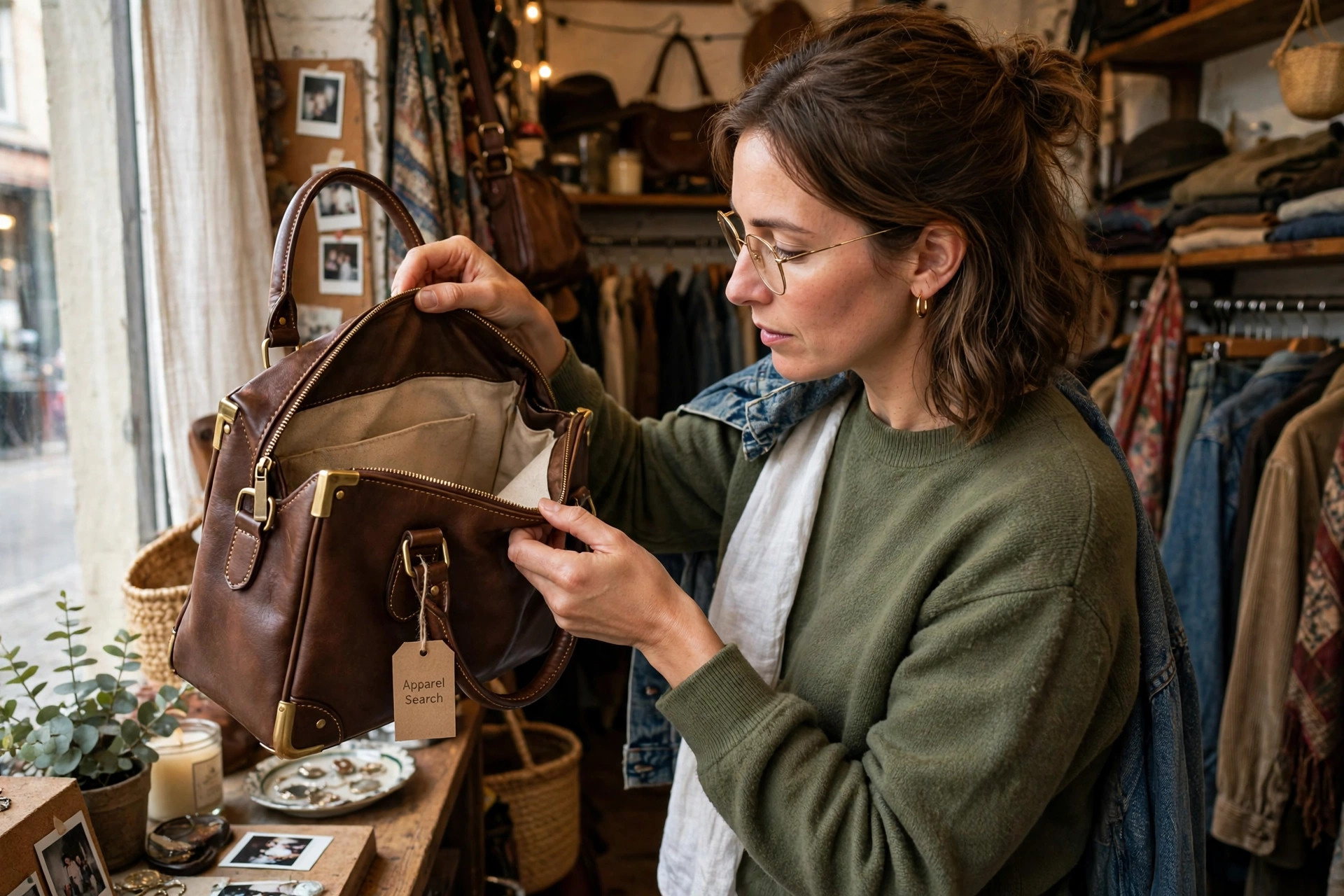
Leather concentrates every quality question into one material. Real leather has irregular pores, a warm organic smell, edges that show fibrous layers rather than paint-smooth plastic, and a surface that dents under a fingernail and slowly recovers. Bonded and synthetic substitutes feel uniform, smell chemical, and crack at flex points instead of creasing. This guide cannot do the subject justice in a paragraph — Apparel Search's dedicated guide to telling real leather from fake works through every test in depth, and its parent Leather Guide explains the grades those tests reveal. On secondhand racks the short version is: check flex points and corners for cracking, check the edges for layers, and trust your nose.
Designer Pieces and Fakes
Counterfeits concentrate where the money is: logo-heavy bags, sneakers, watches and monogrammed accessories. The defense is the same pattern-of-evidence thinking. A genuine luxury piece is well made first and branded second — stitching is meticulous, materials are the real thing, hardware is heavy and cleanly finished, logos are crisp, correctly spelled and consistent in placement and font across the piece. Fakes usually betray themselves in the accumulation: slightly wrong lettering, light or sloppy hardware, uneven stitching, cheap lining, glue traces, a chemical smell. Brand-specific details such as date codes and serial formats vary widely by house and era, so treat any single “rule” you read online with suspicion — including rules about specific brands. Where a purchase is expensive, buy only from sellers with authenticity policies, or pay for a professional authentication opinion. And hold the line that protects every thrifter: if several independent checks fail, the piece is a fake for your purposes, whatever the seller says. Walk away kindly and keep hunting.
For designer pieces specifically, our designer authentication guide builds a fuller pre-purchase routine around the same pattern-of-evidence thinking: seller and provenance checks first, then hardware, stamps, date codes and documentation, with a dedicated step-by-step for handbags and another for sneakers.
The Two-Minute Rack Check
Condensed, the method is: feel the fabric and read its content label; scan the stitching, seam finishes and lining; test the fastenings and hardware; hold the piece to the light for thinning, stains and damage; then ask whether the brand story and the construction story agree. Run that sequence a dozen times and it becomes reflex — the rack starts sorting itself into treasure, ordinary and leave-behind before you have consciously decided anything at all.
Common Questions
What is the quickest quality check on a thrift store rack?
Feel the fabric first — weight, density and natural fiber content separate most good garments from poor ones in seconds. Then check the stitching: small, even, straight stitches with finished seams and a proper lining signal careful manufacture. Those two checks, fabric and stitching, correctly sort the great majority of garments you will ever pull from a rack.
How can you tell if stitching is high quality?
Look for a high stitch count — many small stitches per inch rather than few long ones — that runs straight and even, with no skipped stitches, puckering or loose threads. Seams should be finished so raw edges do not fray: bound, French, flat-felled or cleanly serged. Patterns such as plaids and stripes should match at the seams on well-made pieces, and buttonholes should be dense and neat rather than raw and fraying.
Are all designer items in thrift stores fake?
Not at all. Genuine designer pieces reach thrift stores constantly, through donations their owners never thought to resell. Fakes are common in resale too, so the honest position is to verify rather than assume either way: construction quality, materials, hardware and label details should all agree. When a high-value piece fails several checks, walk away — another find will come.
Can you return a fake bought secondhand?
It depends entirely on where you bought it. Established resale platforms and consignment shops often have authenticity policies and return windows; charity thrift stores typically sell as-is. That is why the checks in this guide happen before purchase, in the store, in good light — after the sale, your options narrow quickly.
Back to the Thrifting & Secondhand Fashion Guide
The Thrifting & Secondhand Fashion hub covers the whole practice — hunting, dating, judging quality, selling, and the shops themselves — with a map of every guide in this cluster.