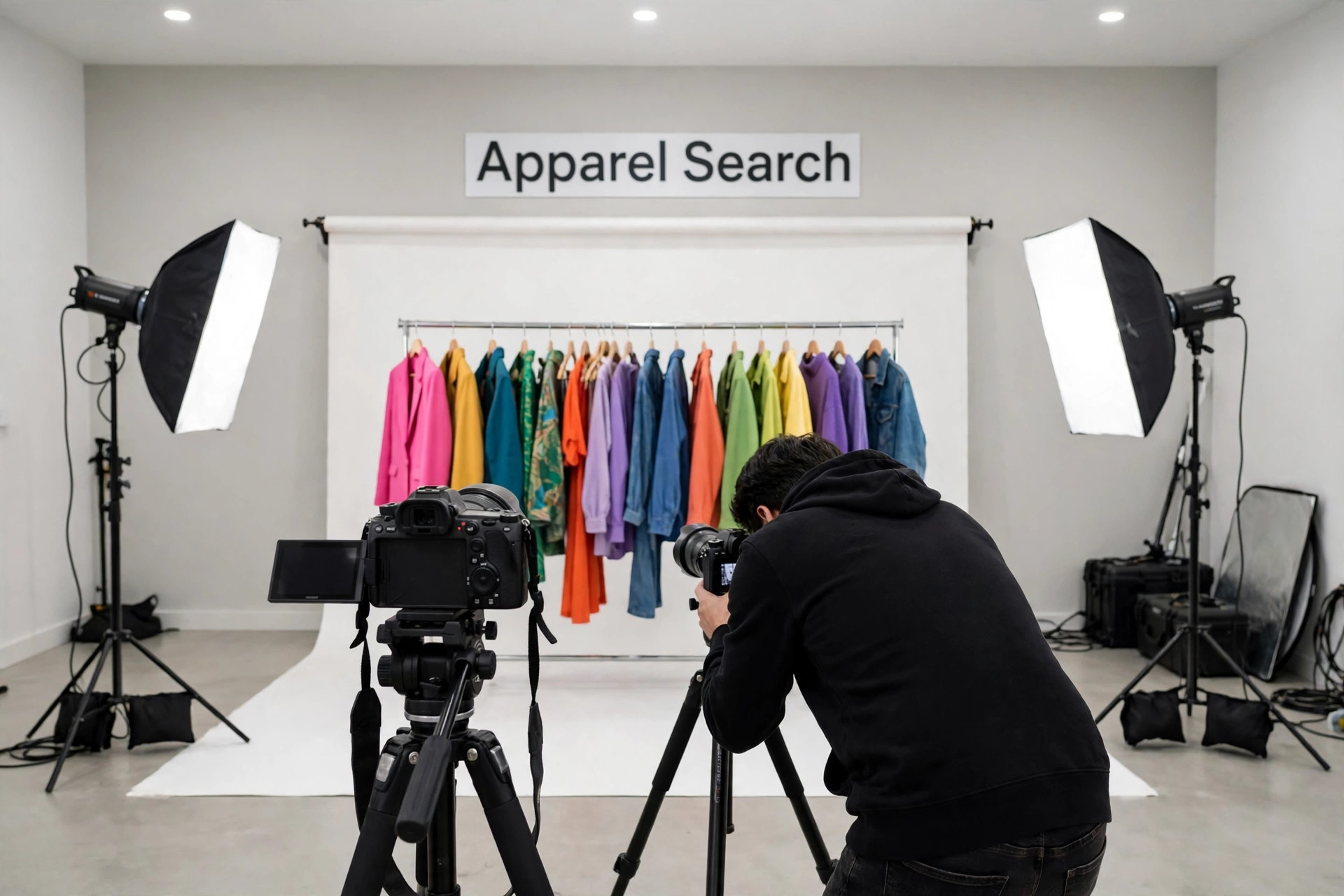
Fashion photography production is the organized work of turning garments into images and video: planning the shoot, casting and booking the crew, photographing the collection for lookbooks, catalogs, and online stores, and delivering finished files whose usage rights are clear. This guide walks the whole workflow, one stage at a time, with a chapter for each part of the job.
The Production Workflow, End to End
Every successful fashion shoot — whether it produces a season's lookbook, a wholesale catalog, or a week of social video — moves through the same sequence. Skipping a stage does not save time; it moves the cost to a more expensive stage later. The seven stages below are the spine of this guide, and each one has its own chapter.
- Plan the shoot. Settle the concept, the shot list, the crew, and the schedule before anyone books a studio. Planning is where the budget is really decided.
- Cast the models. Choose the people who will wear the collection through an agency or a direct casting, and get releases and usage terms agreed in writing.
- Budget and license. Price every line — crew day rates, studio, equipment, post-production — and agree what the brand may do with the finished images, and for how long.
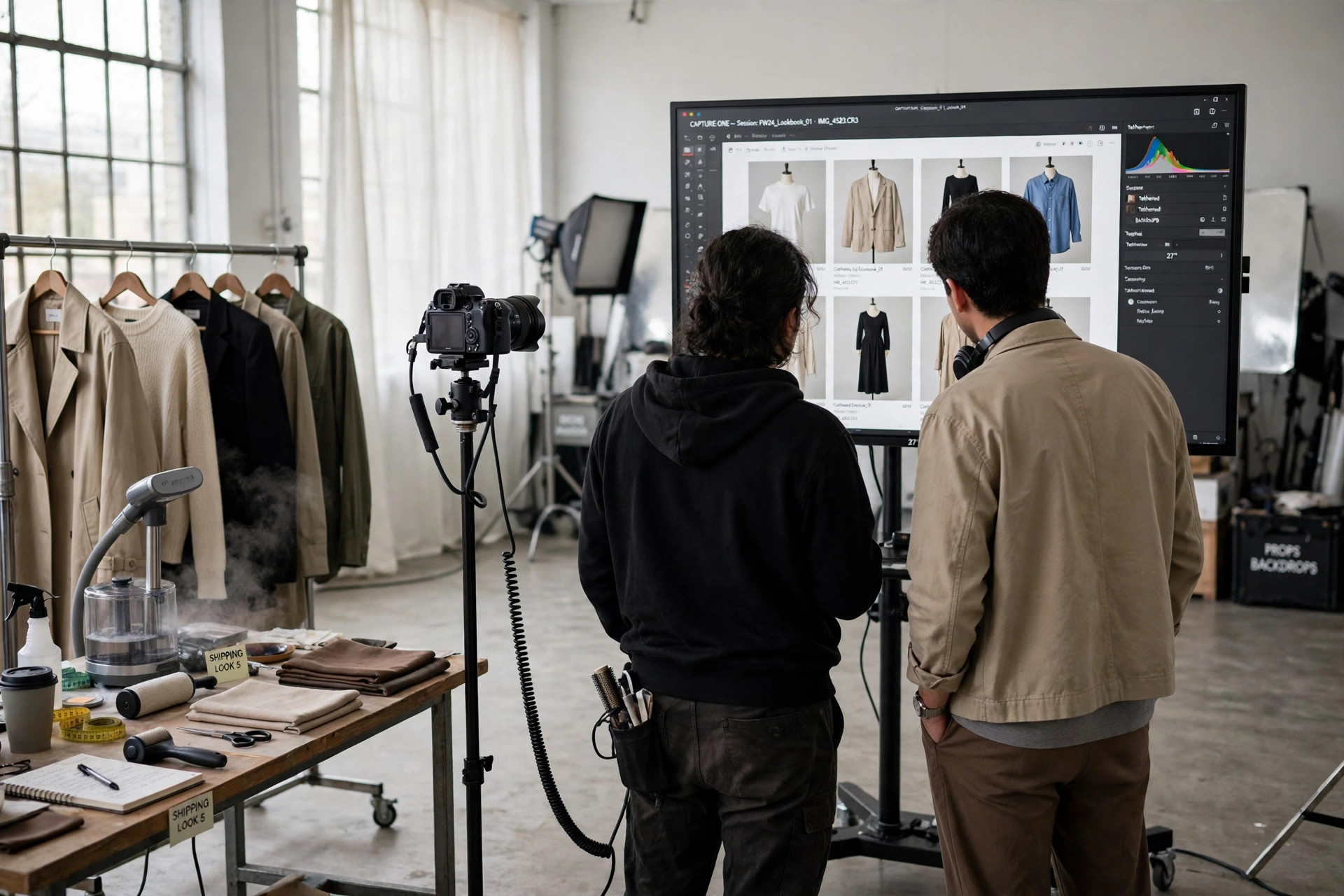
- Shoot the collection. Work the shot list on the day, checking focus, color, and coverage as you go. Our product photoshoot checklist is the working tool for this stage.
- Build the lookbook. Edit the strongest frames into a sequenced story that shows buyers and press how the collection is meant to be worn.
- Photograph the catalog and line sheet. Produce the clean, consistent packshots and the wholesale documents buyers actually order from — and the matching e-commerce photography for the online store.
- Add video. Capture motion while the set, the models, and the styling are already in place: runway clips, product video, and short-form social cuts.
The Chapters of This Guide
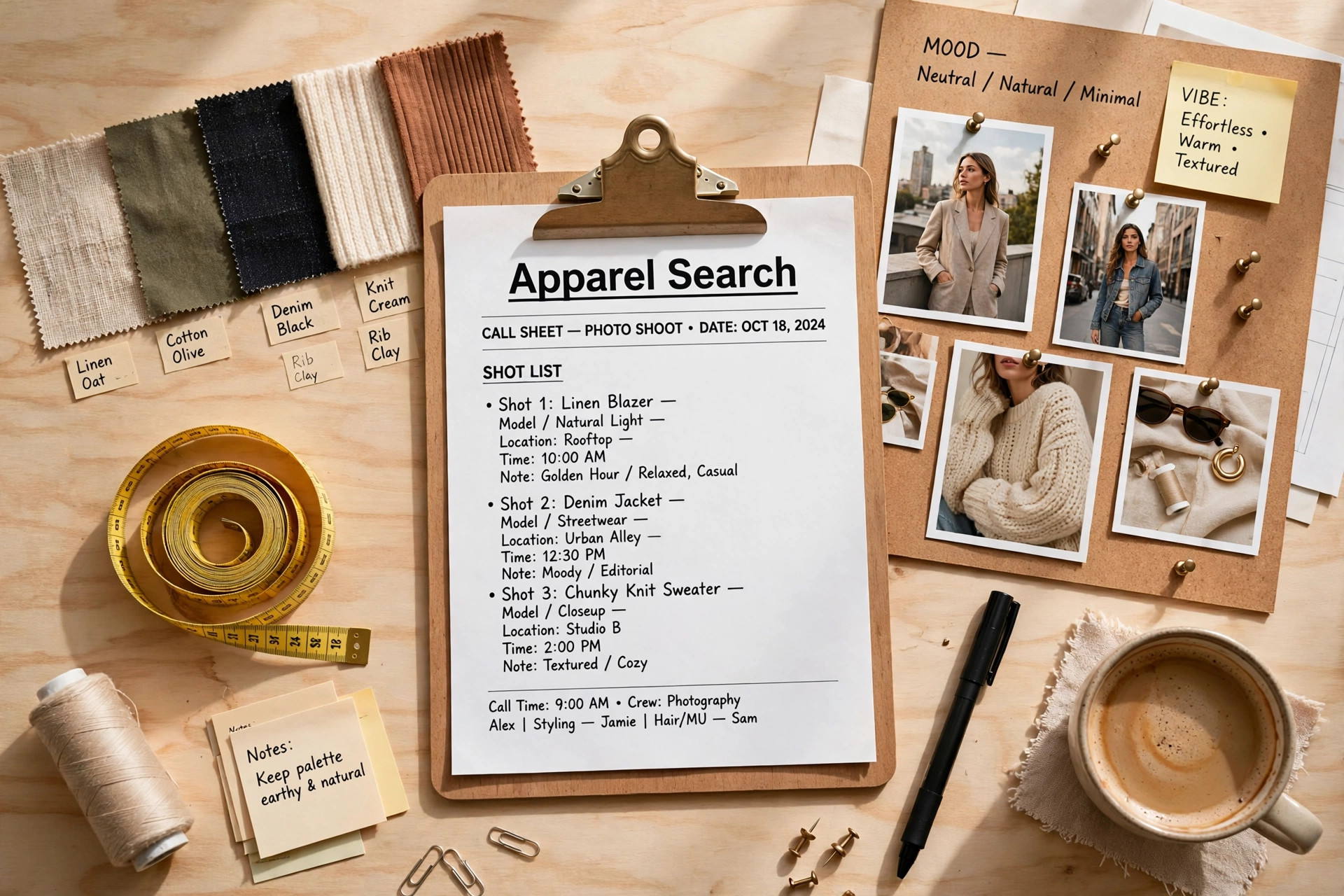 How to Plan a Fashion Photo ShootConcept, shot list, crew, call sheet, and the schedule that holds a shoot day together.
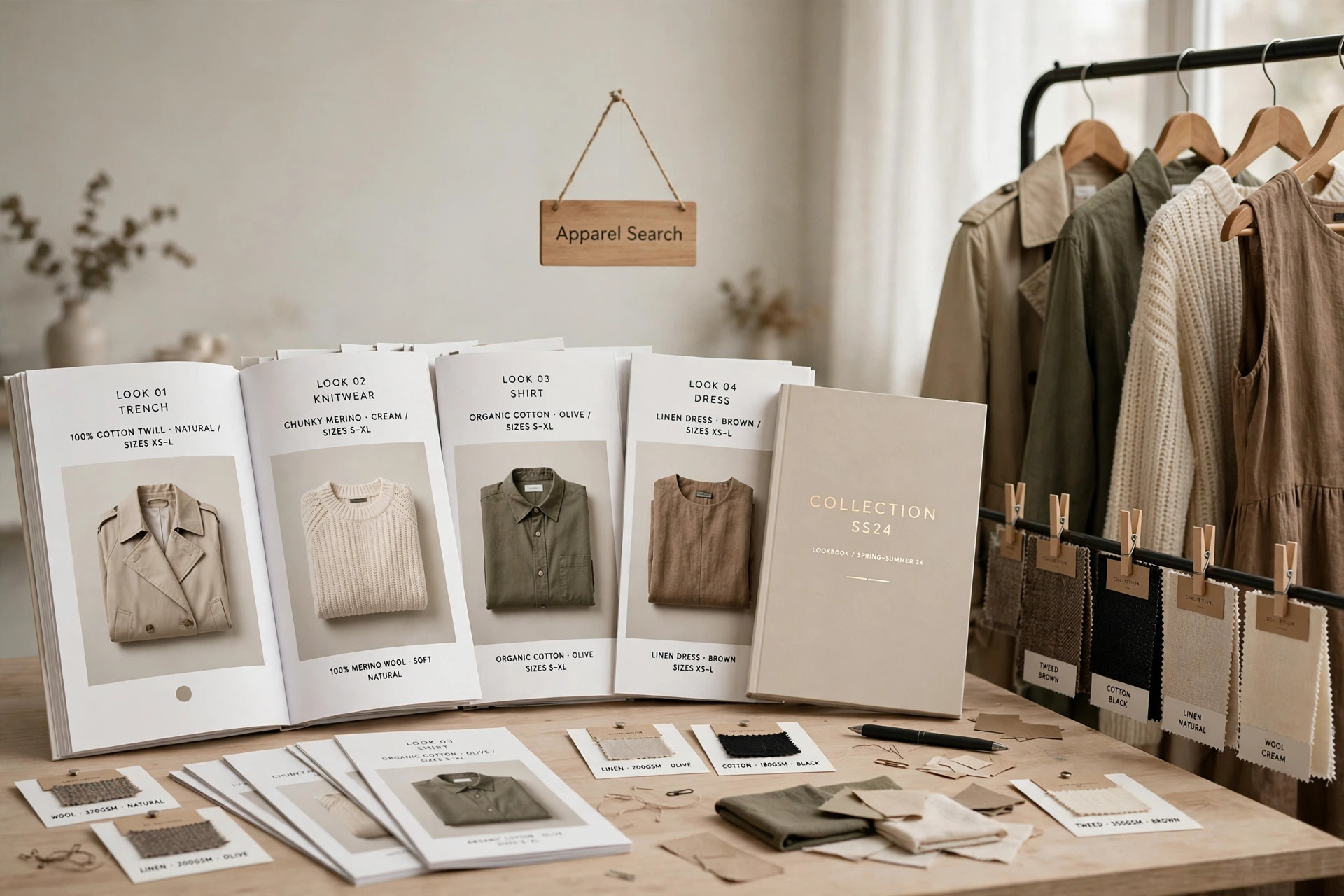 Producing a Fashion LookbookEditorial versus commercial lookbooks, sequencing a story, and print and digital formats.
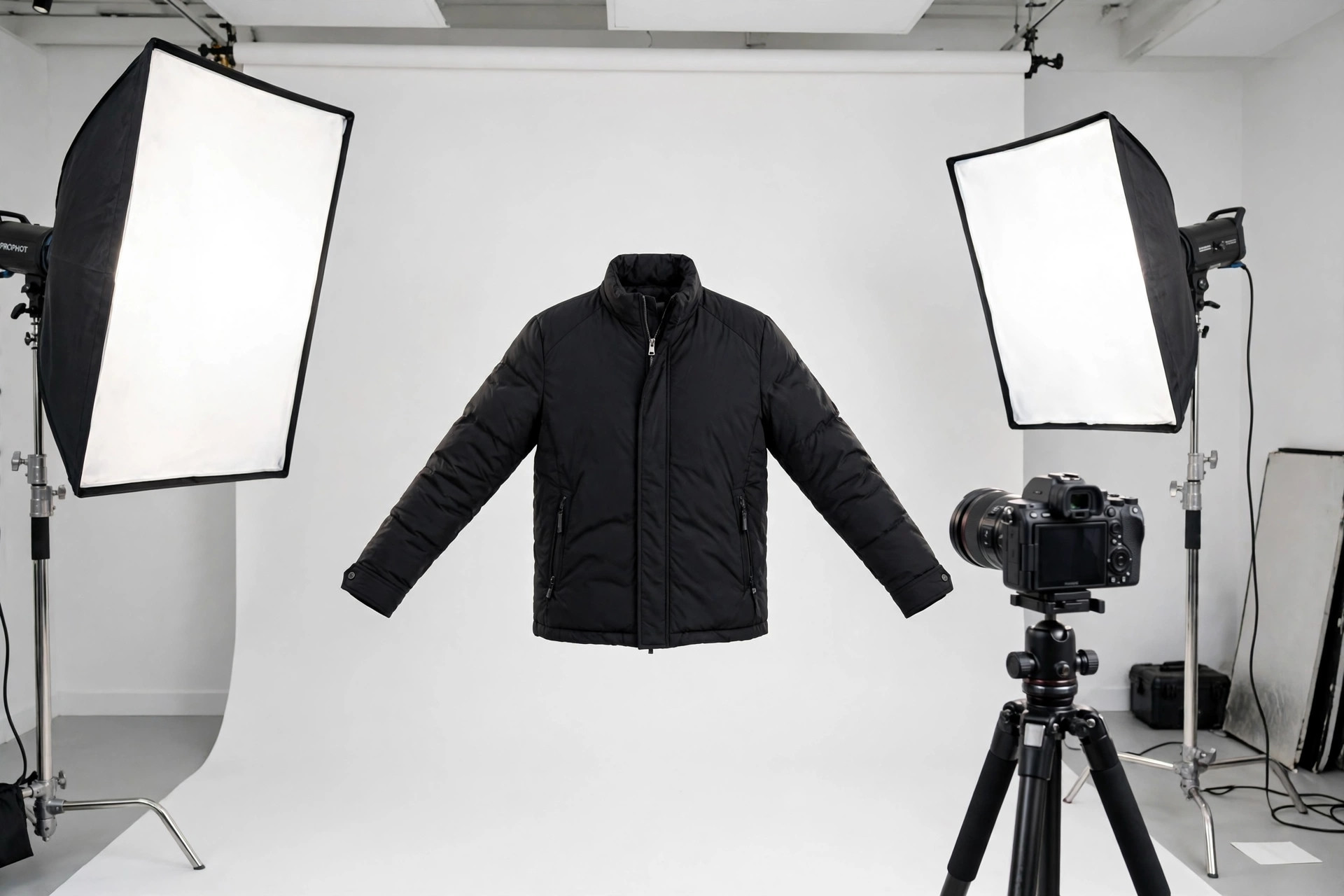 Catalog & Line Sheet PhotographyConsistent packshots and the wholesale photography standards buyers order from.
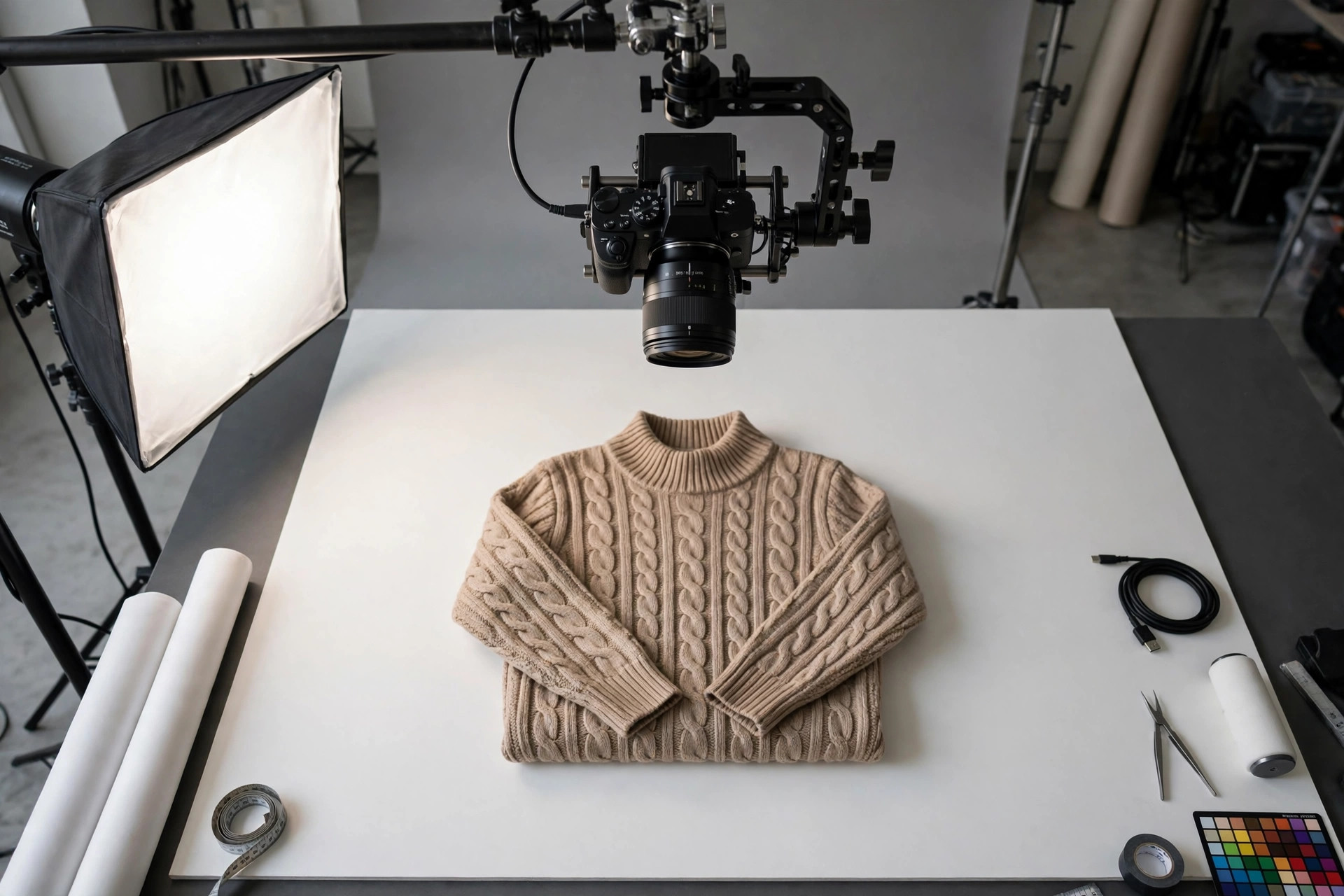 E-Commerce Clothing PhotographyGhost mannequin, flat lay, and on-model product photography, color accuracy, and image specs.
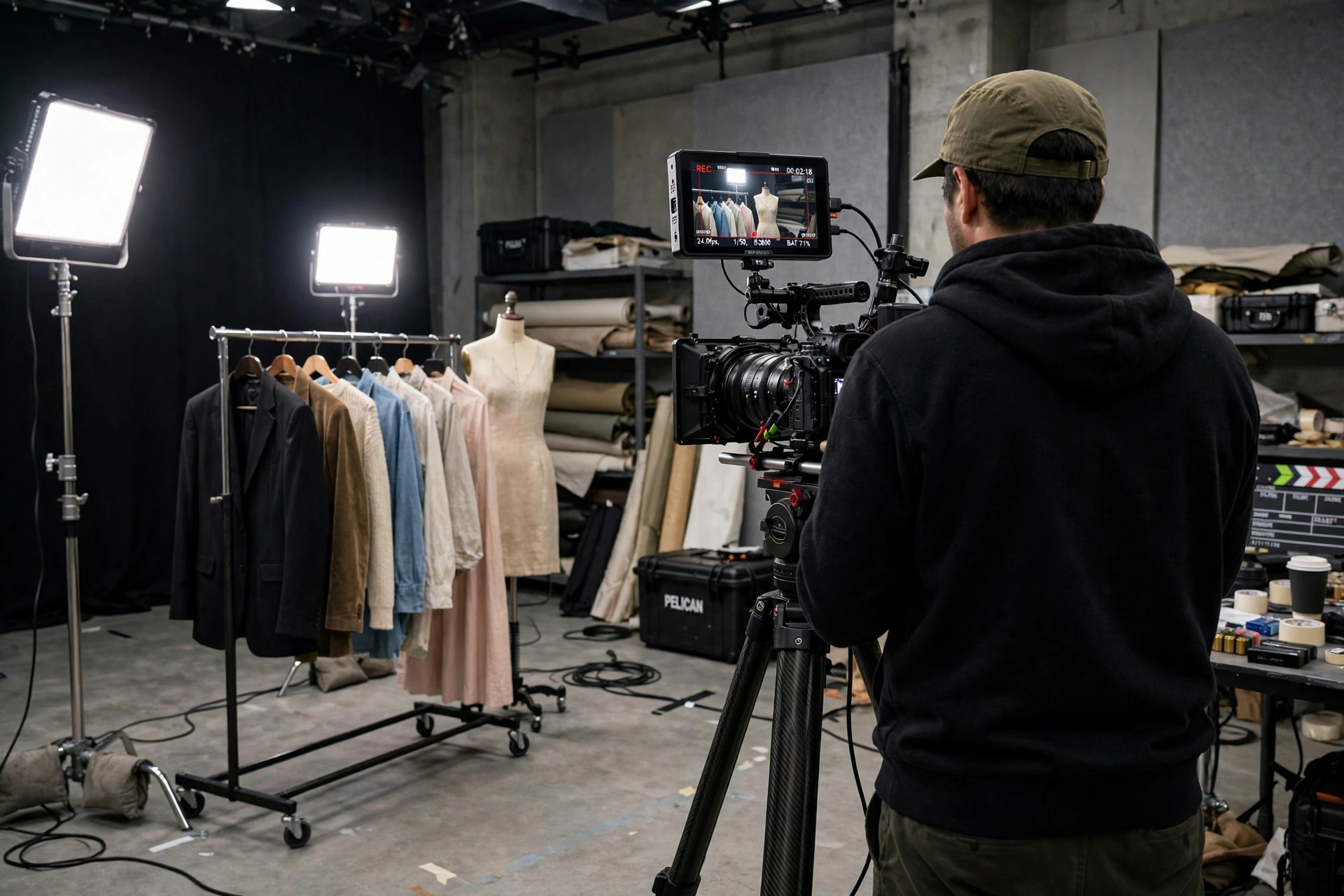 Fashion Videography & Short-Form VideoRunway clips, product video, and the vertical formats social platforms reward.
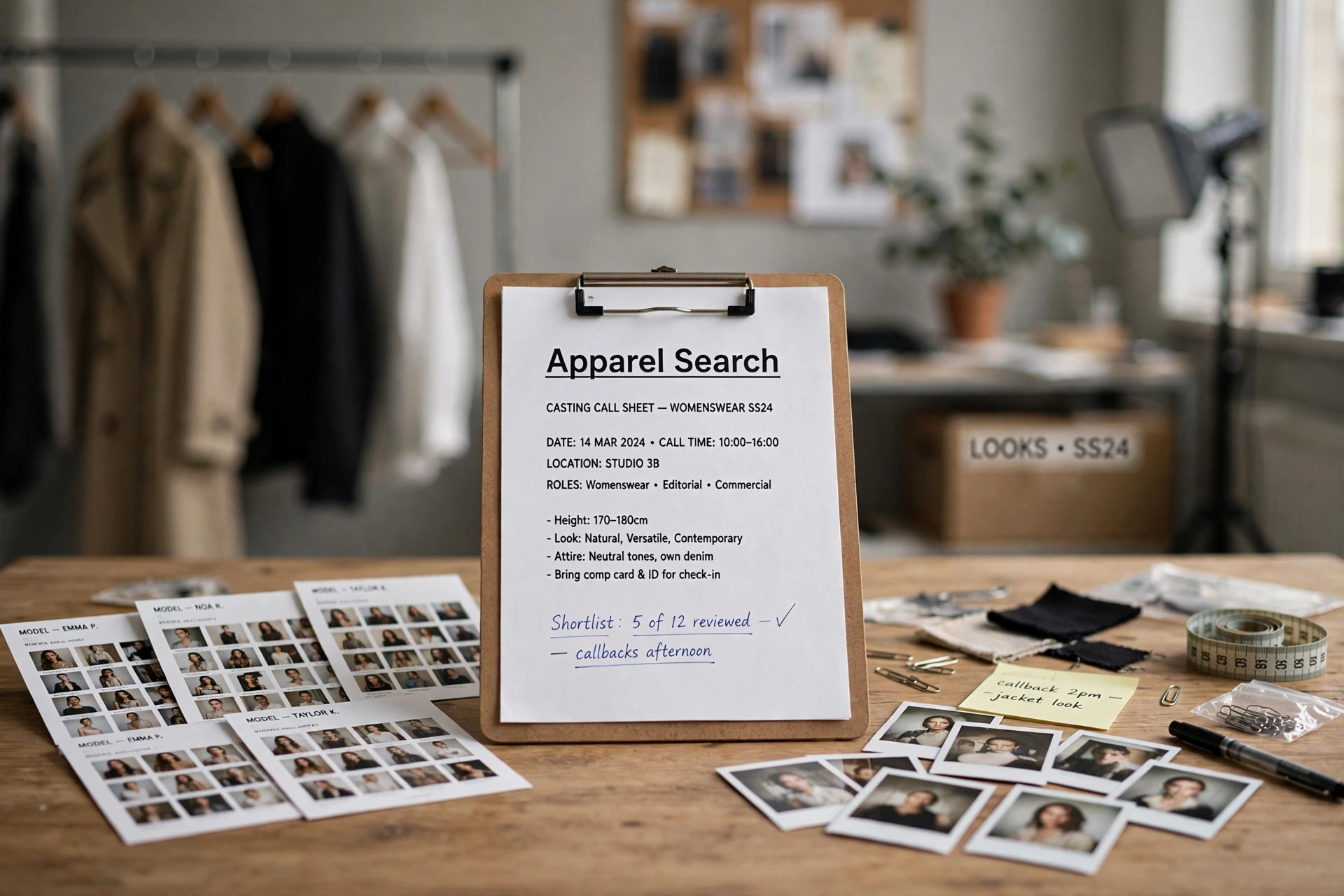 Casting Models for a Photo ShootWorking with agencies, running a casting, and the releases and usage rights to settle first.
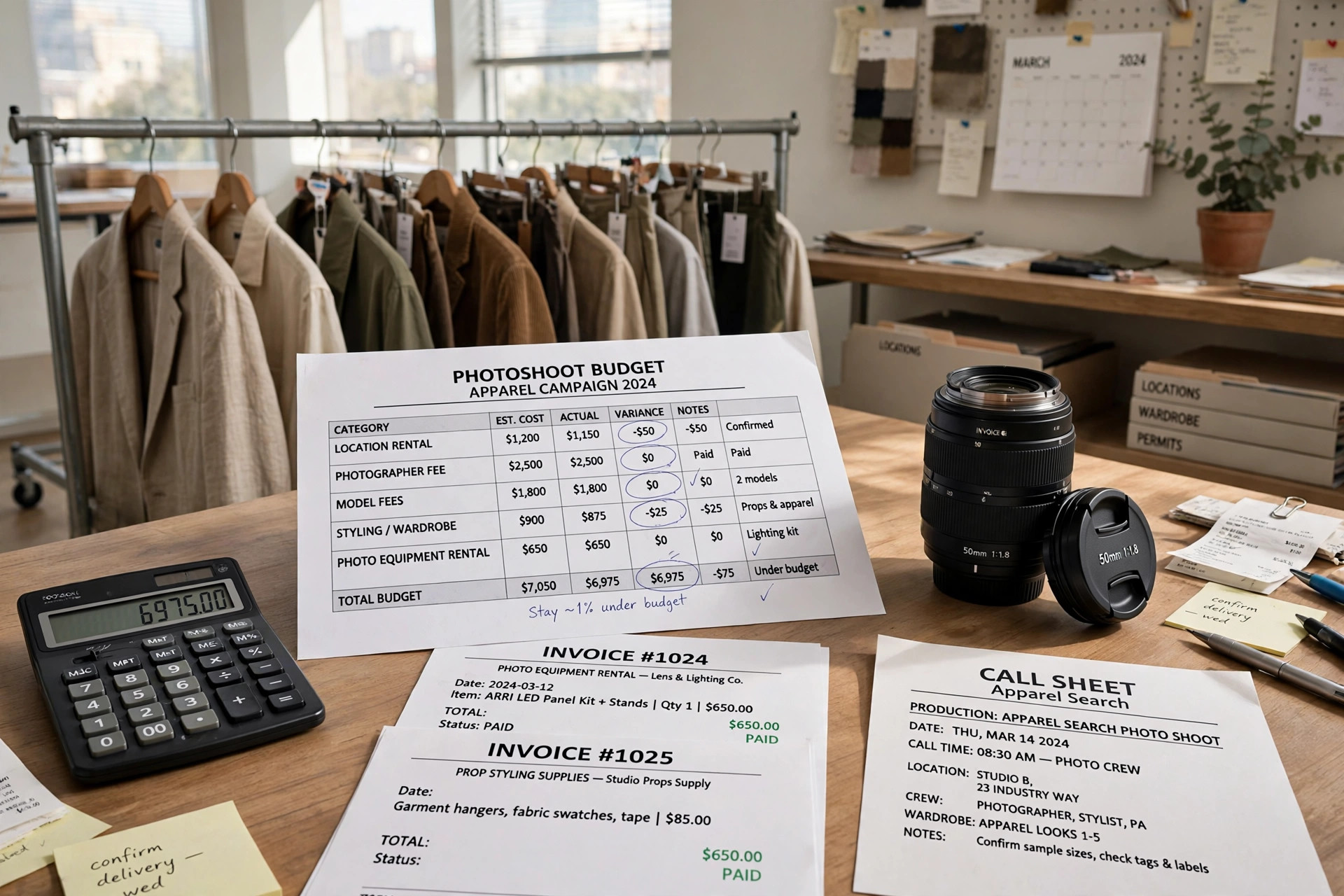 Photo Shoot Budgeting & Usage LicensingDay rates, buyouts, deliverables, and what a usage license actually buys.
Three Kinds of Fashion Imagery, Three Different Jobs
Brands often budget for "a photo shoot" as if one set of pictures could do everything. It cannot, because the three main kinds of fashion imagery are judged by different standards. Editorial imagery — the lookbook and campaign work — is judged on mood and story; it exists to make the collection desirable. Commercial catalog imagery is judged on accuracy and consistency; a wholesale buyer comparing forty styles needs every garment shown the same way, at the same scale, in honest color. E-commerce imagery is judged on how completely it replaces the fitting room: the shopper cannot touch the garment, so the photographs must answer questions about fit, fabric, and detail that a store visit would settle in seconds.
Smart productions shoot for all three in one session: the hero editorial setups in the morning while energy is high, the disciplined catalog coverage in the middle of the day, and the detail and video captures before the set is struck. That is a planning decision, not a photography decision — which is why this guide starts with planning rather than with cameras.
Post-Production: Where Good Shoots Are Finished
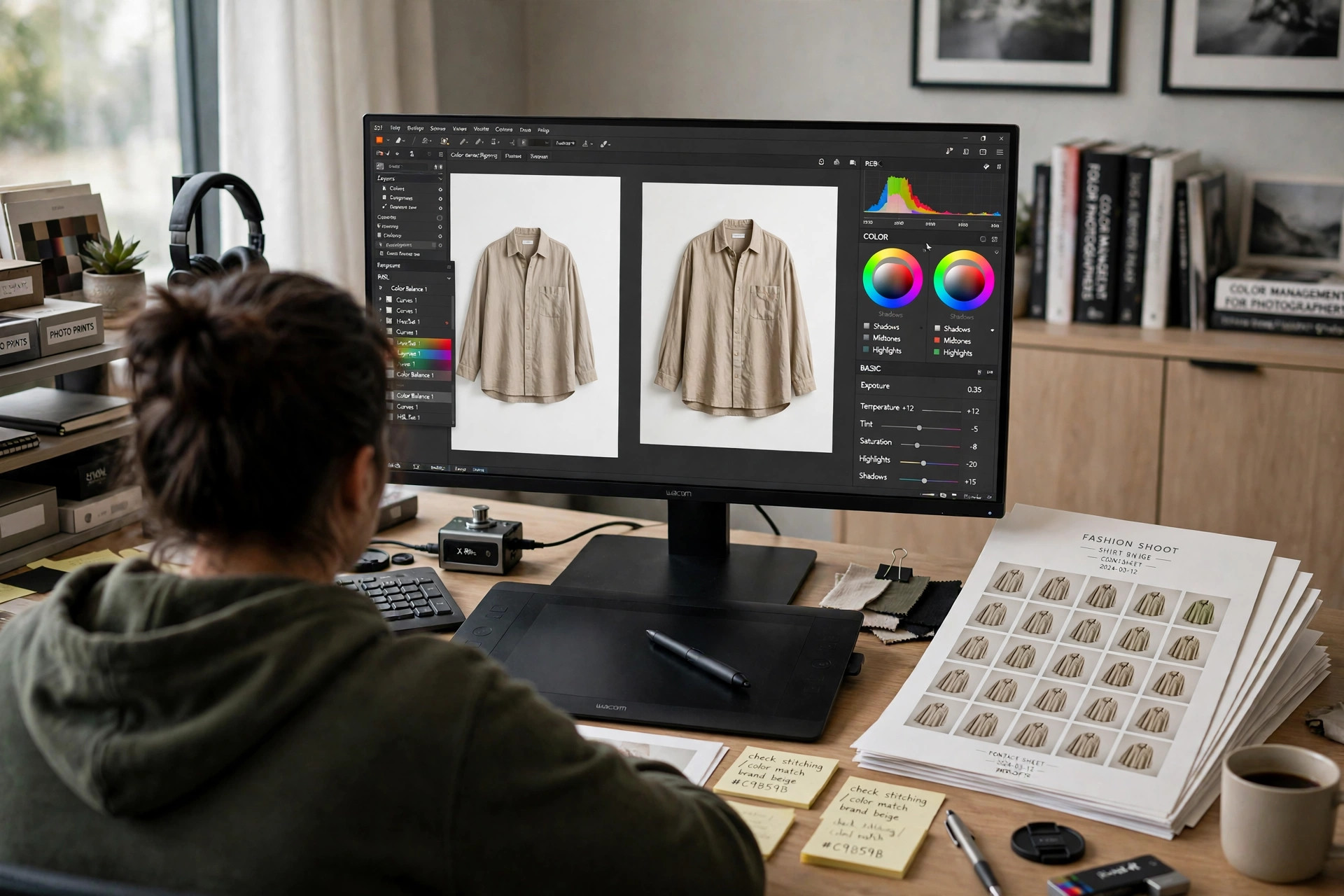
The shoot day produces raw material; post-production turns it into assets. Selection comes first — the disciplined edit that discards near-duplicates and keeps the frames that carry the collection. Retouching follows: cleaning backgrounds, removing pins and clamps, correcting color to match the physical garment, and preparing each file at the sizes its destination requires. Color accuracy is the ethical line as well as the technical one — an online shopper who receives a garment that looks different from its photograph returns it, and returns are among the most expensive problems in apparel e-commerce.
Technology now offers a second route for part of this work. AI tools can place garments on generated models and build catalog imagery from a single product shot, and for some brands that is the right economics. Our guide to AI product photography for fashion surveys the leading tools and the garment-fidelity test to run before trusting one. Most established brands end up hybrid: conventional shoots for the collection's hero imagery, AI assistance for volume and variation.
Start With the Checklist, Not the Camera
More shoots are spoiled by missing garments, unbooked crew, and forgotten deliverables than by any camera setting. Work from a written list: our product photoshoot checklist covers planning, garment preparation, the shoot itself, editing, and publishing — and pairs with the shoot planning chapter of this guide.
Careers Behind the Camera
Production is also a career path. Fashion photographers, stylists, producers, digitechs, and retouchers form the crew this guide describes, and the work is steadier than its glamorous reputation suggests — catalog and e-commerce volume runs all year. If you are considering the field, read our guide to becoming a professional photographer and the fashion photographer job description for what employers actually ask for.
Related Guides on Apparel Search
Common Questions
- What is fashion photography production?
- It is the planning and management behind a fashion shoot: deciding what imagery the brand needs, booking the photographer, models, and studio, running the shoot day against a shot list, and delivering edited images and video with agreed usage rights. Production is what makes the difference between a pile of photographs and a set of assets a brand can sell from.
- What is the difference between a lookbook, a catalog, and e-commerce photography?
- A lookbook tells the collection's story in styled, editorial images. A catalog shows every style consistently and accurately so wholesale buyers can order. E-commerce photography replaces the fitting room for online shoppers, with front, back, detail, and fit views of each garment. Most brands need all three, often from the same shoot.
- How much does a fashion photo shoot cost?
- Costs range from a few hundred dollars for a small in-house product session to tens of thousands for a full campaign day with agency models, a large crew, and location fees. The main drivers are crew day rates, model fees and usage, studio or location hire, and post-production. Our budgeting chapter breaks down each line.
- Can AI replace a fashion photo shoot?
- For some catalog volume, AI tools can now generate credible on-model imagery from a single product shot, and many brands use them for part of their range. Hero campaign imagery, exact color and fit representation, and video still generally come from conventional shoots. Most brands land on a hybrid approach.