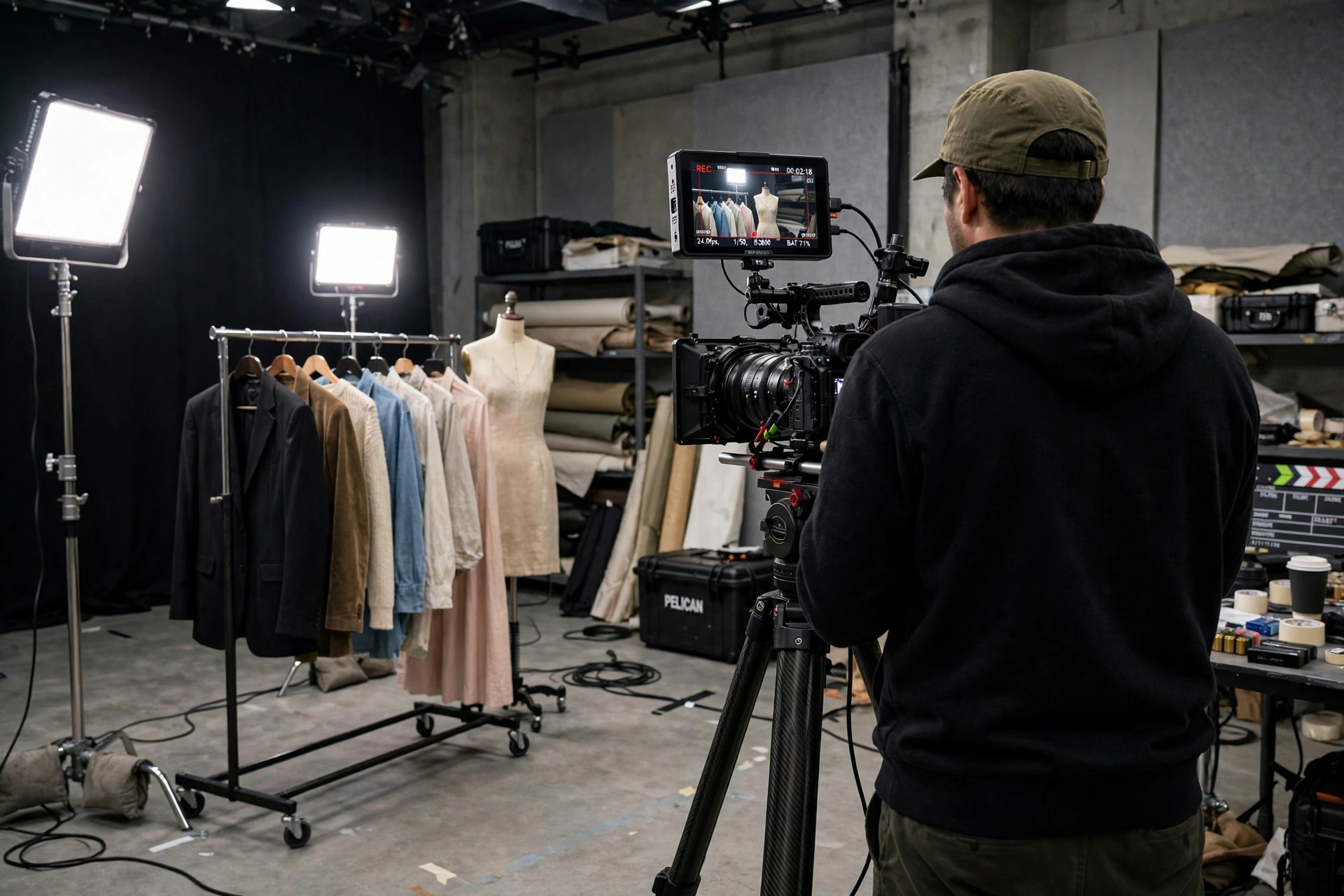
Fashion videography is the moving-image side of apparel media production: runway and collection films, product video for online stores, and short-form vertical video for social platforms. This chapter of the Fashion Photography & Media Production Guide covers what each format is for, and how to capture video efficiently inside a stills production rather than as a separate, second production.
Why Video Earns Its Place in the Production
Still photographs cannot show the two things shoppers and buyers most want to judge after fit: how a fabric moves and how a garment behaves in motion. A five-second clip of a skirt walking answers questions that eight stills cannot. That is why video has moved from campaign luxury to standard deliverable — product pages with video routinely hold attention longer, runway films carry collections to buyers who cannot attend, and social platforms distribute short vertical video far more widely than still images.
The economics favor planning video into the photo shoot rather than bolting it on. The set, the styling, the models, and the garments are already assembled; the marginal cost of a camera operator and a shot list for motion is a fraction of a standalone production. The workflow in our shoot planning chapter simply gains a video column in the shot list.
The Main Formats
Runway and collection films
The runway film records a show or stages a walk-through of the collection: full looks in motion, in sequence, usually one to three minutes for buyers and press, with shorter cuts for release. A staged collection film — models walking a set route past a fixed or tracking camera — gives smaller brands the same asset without a fashion-week budget.
Product video
Short, functional clips on product pages: a model turning, walking a few steps, or demonstrating a feature such as a reversible jacket. Fifteen to thirty seconds, silent-friendly, loopable. Product video is shot on the e-commerce set, in the same session as the stills described in our e-commerce photography chapter.
Short-form and social video
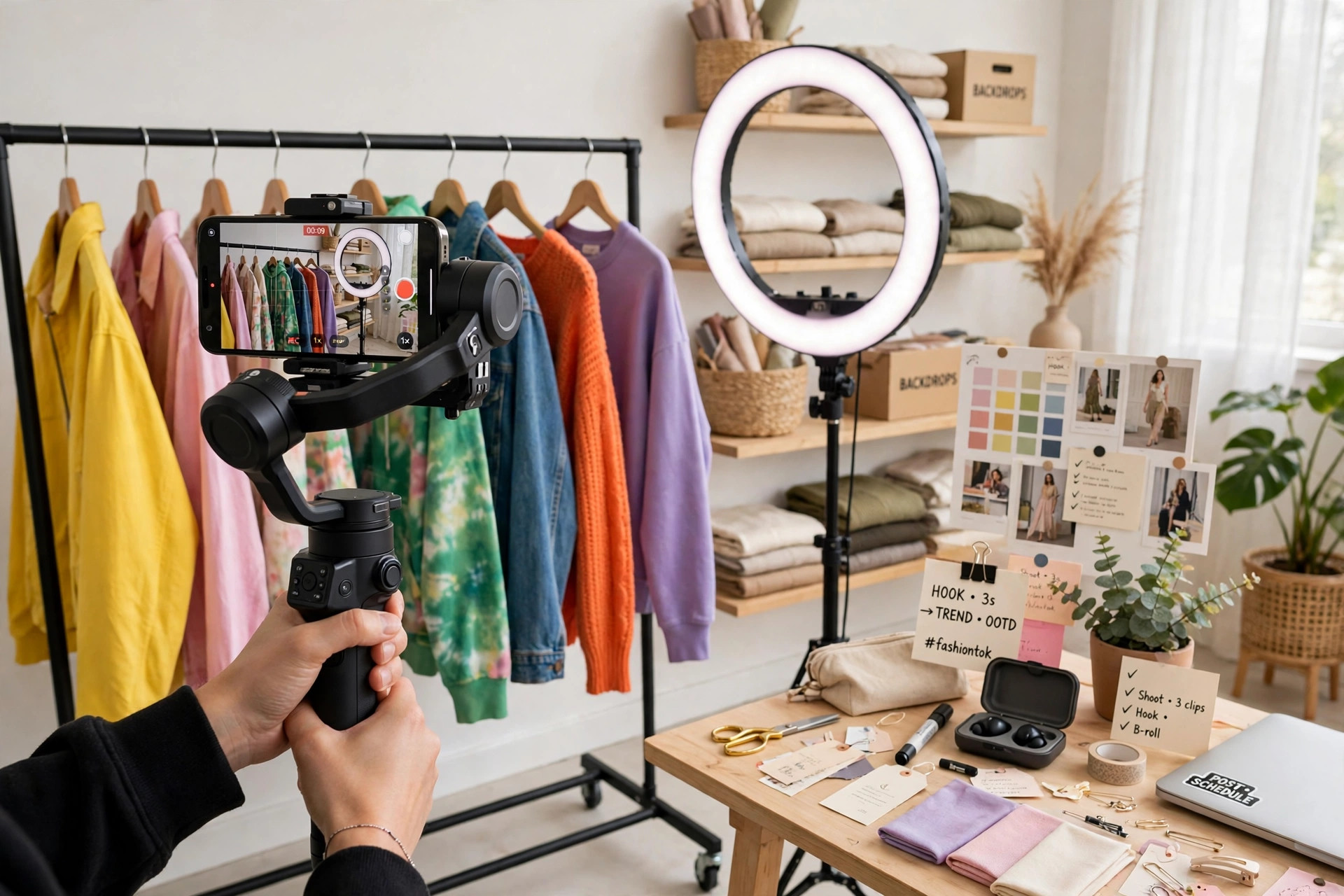
Vertical video — try-ons, styling transformations, behind-the-scenes production clips, detail close-ups — made for the feeds where collections are now discovered. It is deliberately less polished than campaign film, is usually shot on phones or compact cameras, and rewards frequency and authenticity over production gloss. Behind-the-scenes footage from the stills shoot is a reliable source: the steamer, the set build, the first look of the day.
Shooting Video Alongside Stills
The workable pattern is a small dedicated video unit — one operator, one camera, a gimbal or tripod — that works the edges of the stills production. While the photographer shoots a setup, video captures the same look in motion from a second angle; between setups, video takes the detail and atmosphere material: hands steaming a garment, fabric close-ups, the rail of the collection. Agree the priority list before the day, because video yields to stills on a shared set — the lookbook and catalog are the contracted deliverables, and our lookbook chapter explains what they demand of the schedule.
Technical consistency matters as much as in stills: match color between the video and photographic deliverables so a product page does not show the same dress in two colors, keep the vertical format in mind when composing social clips (shoot 9:16 natively or protect the center of a wider frame), and capture clean audio only where speech is actually planned — most fashion video is published muted or music-led.
Rights, Music, and Delivery
Video multiplies the rights questions. Model releases must cover moving image use, music must be licensed for commercial distribution (library tracks with the correct license tier, not ripped audio), and platform rules on disclosure apply to sponsored content. These terms belong in the same agreements as the stills usage — our budgeting and licensing chapter covers how usage is scoped and priced. Deliver masters in high resolution, platform exports at each destination's specification, and captioned versions where the format supports them; file everything under the same style-number discipline as the stills so video assets stay findable next season.
Common Questions
- What is the difference between a runway film and a product video?
- A runway film presents the collection as a sequence of looks in motion, for buyers, press, and launch storytelling. A product video is a short functional clip on a single item's page, showing fit and movement to help a shopper decide.
- Should fashion video be shot vertically or horizontally?
- Both, deliberately. Horizontal masters suit websites, shows, and presentations; vertical 9:16 suits social feeds, where most short-form fashion video is watched. Plan the framing for both rather than cropping as an afterthought.
- Can video be shot during a normal photo shoot?
- Yes — a small video unit working alongside the stills team is the standard, cost-effective pattern, provided the shot list includes motion captures and the video operator works around the stills setups rather than competing with them.
- Do you need a license for music in fashion videos?
- Yes, for commercial use. Use library music licensed for commercial distribution at the right tier, or commissioned audio. Publishing a brand video with unlicensed popular music risks takedowns and claims.
Back to the Fashion Photography & Media Production Guide
This page is one part of the complete guide. Return to the Fashion Photography & Media Production Guide to follow the whole production workflow from first concept to final delivery.