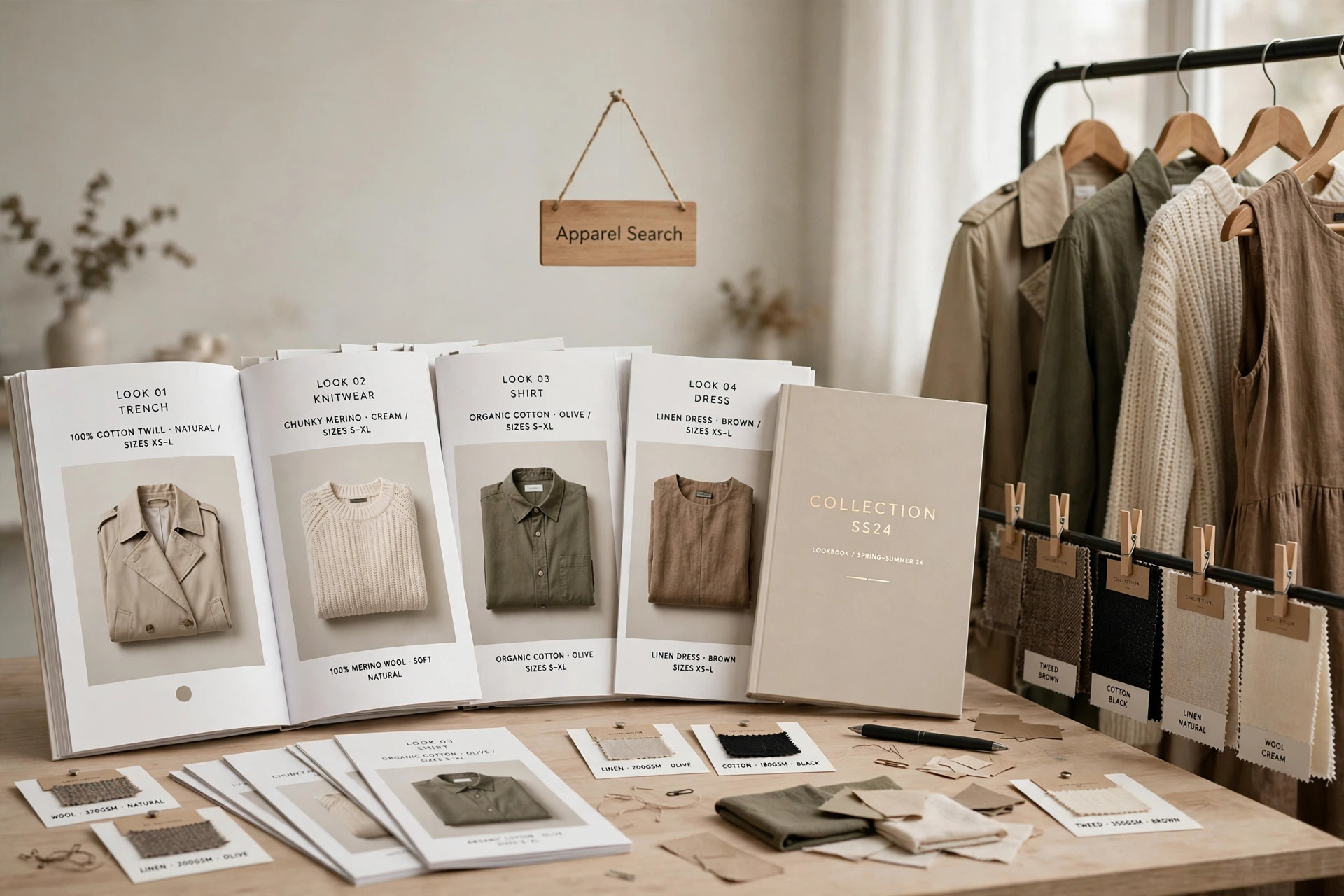
A fashion lookbook is a curated set of photographs presenting a collection as a story — the outfits styled as the designer intends them to be worn, sequenced to build mood and momentum. This chapter of the Fashion Photography & Media Production Guide covers producing one, from deciding what kind of lookbook the season needs to the printed and digital files that reach buyers and press.
Editorial or Commercial? Decide First
Lookbooks sit on a spectrum. An editorial lookbook leads with atmosphere: location settings, expressive styling, and images that could sit in a magazine. It exists to create desire and press interest. A commercial lookbook leads with clarity: every style shown completely, usually on a clean background, in an order a buyer can work through with a pen. It exists to be ordered from. Many brands produce one book that does both — an editorial opening section that sets the season's mood, followed by a complete, disciplined presentation of every look.
The mistake to avoid is drifting between the two. An editorial book that forgets to show the back of the hero dress, or a commercial book with moody lighting that hides the product, fails at its job. Decide the primary audience — press and image, or buyers and orders — and let that decision govern the photography plan, as described in our shoot planning chapter.
Shooting for the Book
Lookbook photography is planned backwards from the page. The photographer and stylist agree the visual world first — location or studio, light quality, color palette, casting — then shoot each look to fill a spread, not just a frame. Vertical and horizontal compositions are both captured, full-length and detail, because the layout will ask for all of them. Consistency across the book matters more than any single spectacular image: one visual language, held from cover to cover, is what makes a collection feel like a collection.
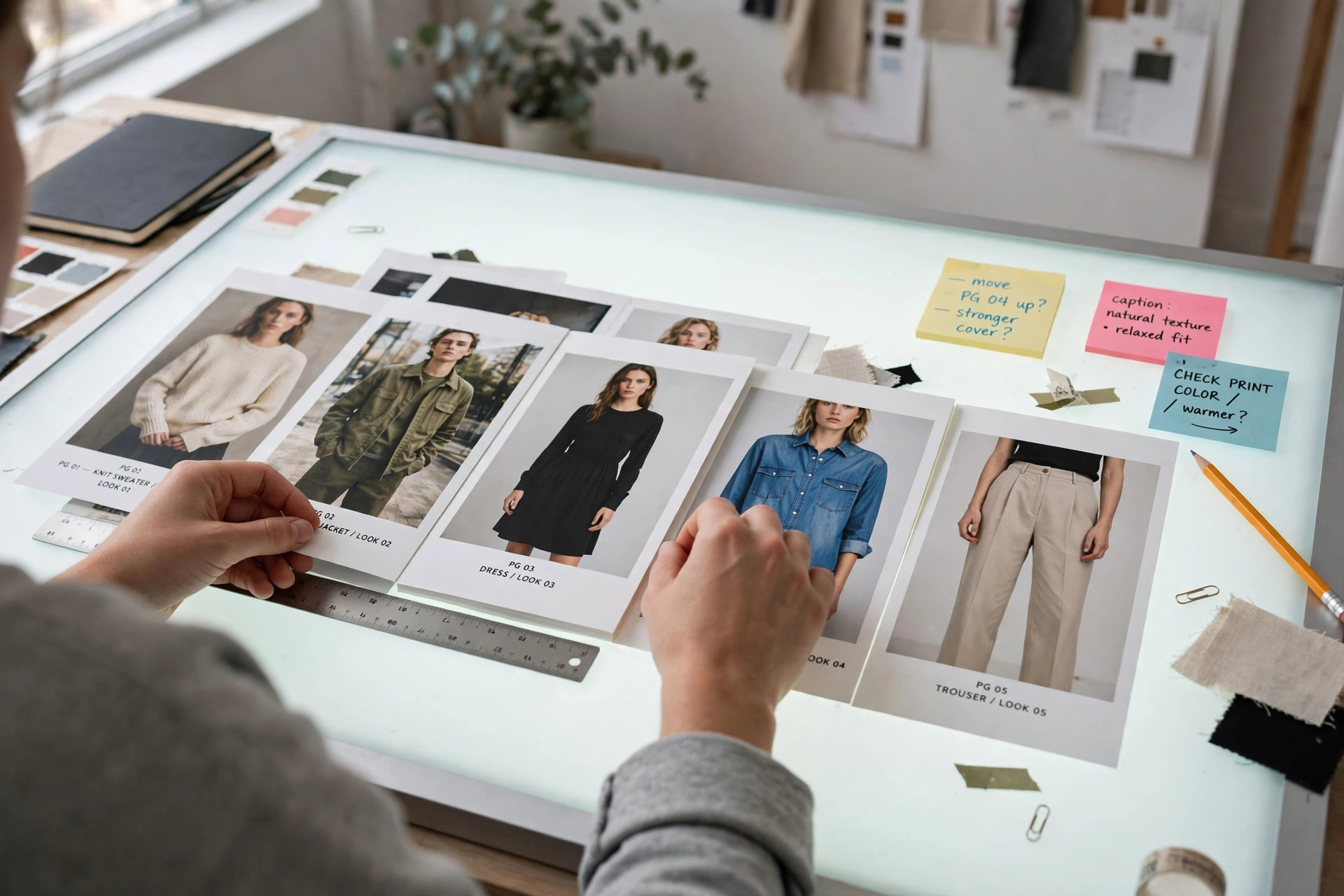
Shoot with the commercial layer in mind even on an editorial day. A clean front view of every look, taken against a simple background before the styled setups begin, gives the sales team usable imagery and gives the book's commercial section its backbone. It costs minutes per look and saves a reshoot.
Sequencing: The Book Is an Argument
A lookbook is read in order, so the sequence is an argument about the collection. Open strong — the look that best states the season — but save a second peak for the middle, where attention fades. Group by story or color rather than by style number, alternate full-length spreads with details and textures to vary the rhythm, and place the most commercial pieces where buyers linger, just after the editorial high points. Close with the look you want remembered.
Captions carry the selling information: style names or numbers, fabric, and colorways, placed consistently so a buyer can move between book and line sheet without friction. The lookbook shows; the line sheet prices and specifies. Confusing the two documents — a beautiful book with no style references — is the most common lookbook failure in wholesale.
Print and Digital Delivery
Print still matters at market appointments, where a physical book on the table signals investment in the collection. Print in modest quantities, on paper stock that renders color honestly, and proof the color on press — screen previews lie about saturated fabrics. The digital edition does the volume work: a PDF light enough to email, a version published on the brand's site, and individual images released for press and social use.
Video increasingly travels with the book — a short collection film or per-look clips shot during the same session, covered in our fashion videography chapter. For a broader map of lookbook topics across the site, see our fashion lookbook summary. And before anything is printed or published, confirm the usage rights for every image cover the intended life of the book — the subject of our budgeting and licensing chapter.
Common Questions
- What is the difference between a lookbook and a catalog?
- A lookbook presents a collection as a styled story to create desire and show how pieces are worn together. A catalog presents every style completely and consistently so buyers can evaluate and order. Many brands combine them: editorial opening, complete commercial presentation behind it.
- How many pages should a fashion lookbook be?
- Most seasonal lookbooks run 16 to 40 pages — enough to show every look with breathing room, few enough to stay focused. One look per spread is the classic rhythm; detail and texture pages vary the pace.
- Should a lookbook include prices?
- Usually not. Prices and ordering terms live on the line sheet, which is updated more often than the book. The lookbook should carry style names or numbers so buyers can cross-reference the line sheet easily.
- Is a printed lookbook still worth it?
- For wholesale appointments and press, yes — a physical book communicates quality and sits on the buyer's table after the meeting. Print small quantities, and let the digital edition carry the volume.
Back to the Fashion Photography & Media Production Guide
This page is one part of the complete guide. Return to the Fashion Photography & Media Production Guide to follow the whole production workflow from first concept to final delivery.