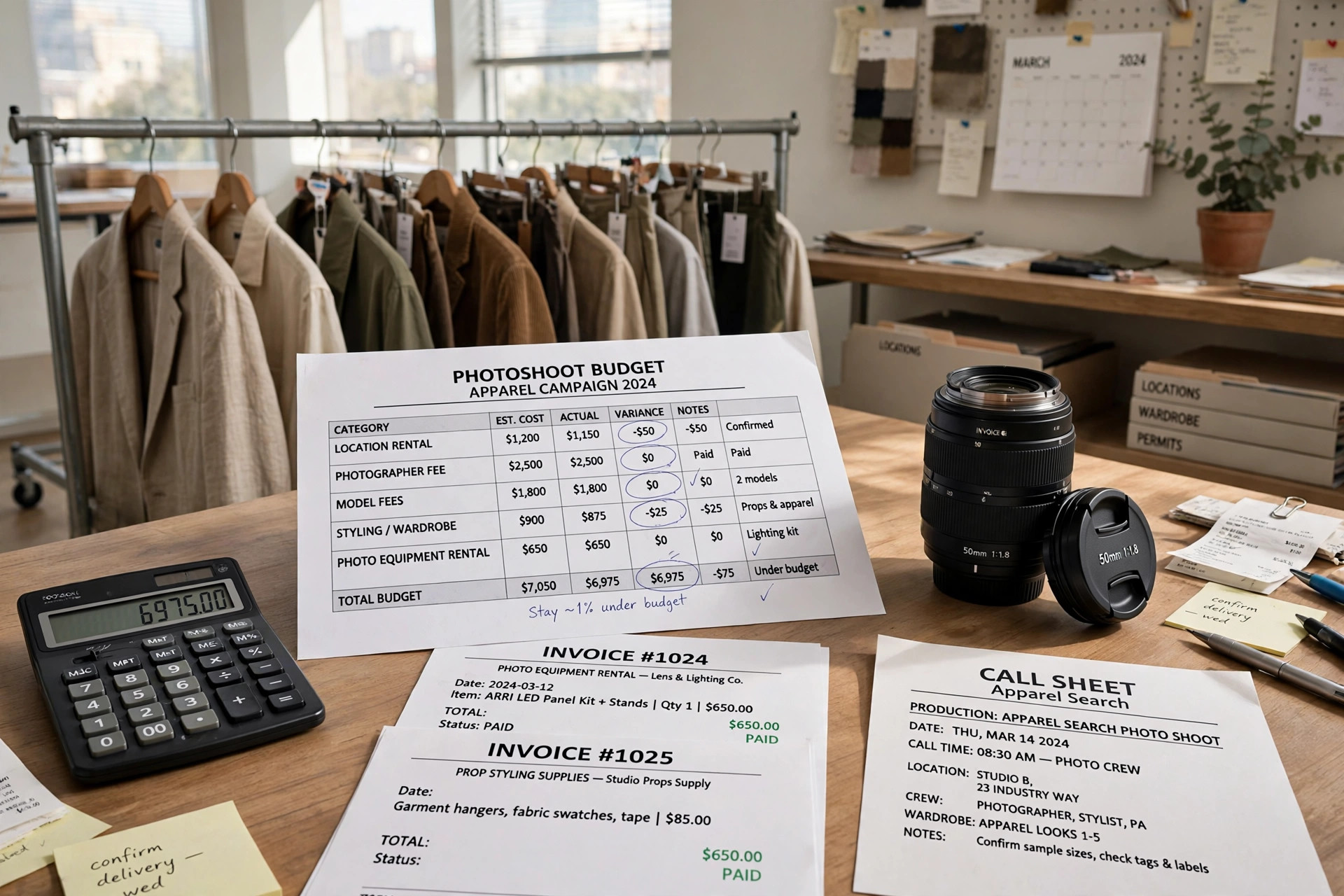
A photo shoot budget is the itemized cost of a production — crew, models, studio, equipment, and post-production — and a usage license is the agreement defining what the brand may do with the finished images. The two are inseparable: the price of a shoot depends on the rights it buys. This chapter of the Fashion Photography & Media Production Guide breaks down both.
The Budget, Line by Line
A realistic shoot budget is built from the plan — the shot list and crew described in our planning chapter — and priced line by line:
- Photographer. A day rate (or a per-image or per-style rate for catalog volume), plus an assistant. Rates vary enormously with experience and market.
- Models. Day or half-day rates, plus agency fees where applicable, plus usage — the line most often underestimated.
- Creative crew. Stylist, hair and makeup artist, digitech, producer — each a day rate, each cheaper to book properly than to improvise around.
- Studio and equipment. Studio hire by the day, lighting and camera rentals, set materials and props.
- Garments and logistics. Couriering samples, steaming and prep, catering, travel and parking — small lines that decide whether the day runs smoothly.
- Post-production. Selection, retouching, and file preparation, priced per image or per day. High-volume catalog work makes this a major line, not an afterthought.
- Contingency. Ten percent, held for the overtime hour, the reshoot of one look, the courier nobody planned. Productions that budget contingency rarely need rescuing.
Usage Licensing: What the Brand Is Buying
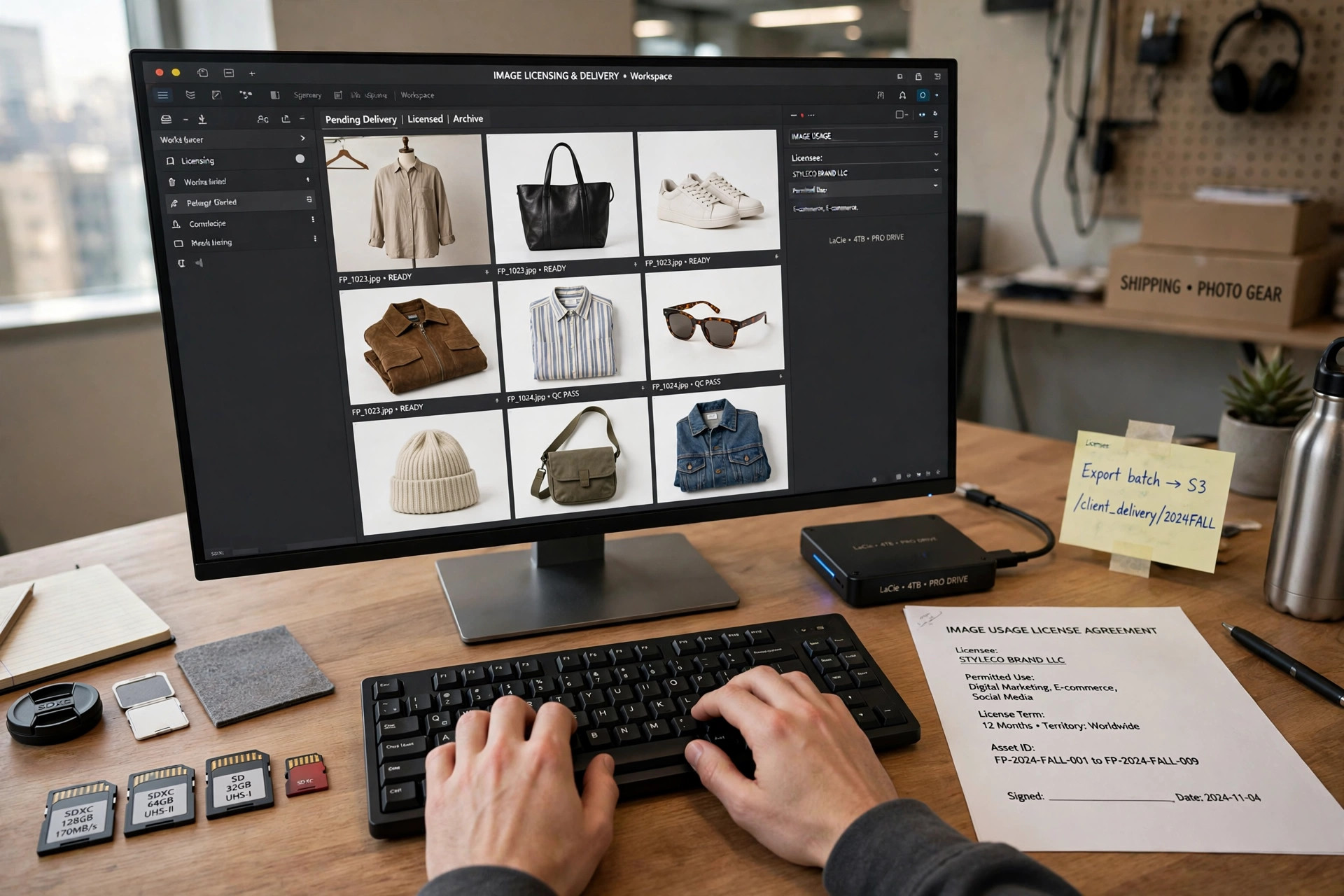
Under copyright law in most countries, the photographer owns the copyright in the photographs they create, even when a brand commissions and pays for the shoot — unless a contract says otherwise. What the brand normally buys is a license: permission to use specified images, in specified media (web, print, outdoor, broadcast, social), in specified territories, for a specified period. Wider media, longer terms, and larger territories cost more, because the images work harder.
A buyout is a license at the wide end of the scale — broad or unlimited use for a set term, sometimes all rights transferred outright (an assignment) where the contract and jurisdiction allow. Buyouts simplify life for campaign imagery used everywhere at once; for ordinary seasonal e-commerce imagery, a defined license is usually the economical and sufficient choice. The questions to settle in writing before the shoot are: which images, which media, which territories, how long, whether exclusivity applies, and who may use the images besides the brand (retailers and marketplaces often need them too).
Deliverables and Payment Practice
The agreement should also fix the deliverables: how many finished images, in what formats and sizes, retouched to what standard, delivered by what date, and whether raw files are included (often they are not, or are priced separately). Payment practice in the industry commonly splits fees — a portion on booking to secure crew and studio, the balance on delivery — with crew and models paid promptly through agencies or against invoices. Late payment to freelance crew is the fastest way for a brand to acquire a reputation it does not want.
The wider legal picture — who owns what in fashion imagery, how licensing interacts with trademarks and a brand's own intellectual property — is laid out in our Fashion Law & Intellectual Property Guide, and licensing agreements specifically in its chapter on the legal side of fashion licensing. The U.S. Copyright Office is the authoritative reference for copyright registration and records in the United States. This chapter is general information about industry practice, not legal or financial advice — significant productions should have their agreements reviewed professionally. Models' fees and releases follow the same principle and are covered alongside casting in our casting chapter.
Common Questions
- Who owns the copyright in commissioned fashion photographs?
- In most jurisdictions the photographer, as the creator, owns the copyright by default — even when a brand commissions the shoot — unless a written contract assigns it or a specific employment rule applies. Brands normally license the usage they need.
- What is a usage license in photography?
- Permission to use specified images in specified media, territories, and time periods — for example, web and social use in North America for one year. Broader scope costs more because the images do more commercial work.
- What is a buyout?
- A buyout is a broad license — often all media, worldwide, for a long term — bought for a single negotiated fee. Some buyouts amount to a full transfer of rights. They suit major campaigns; defined licenses are usually more economical for routine product photography.
- What should a photo shoot contract include?
- The shoot date and plan, each party's fee and payment terms, the deliverables (number of images, formats, retouching standard, delivery date), the usage license scope, cancellation terms, and how raw files are handled.
Back to the Fashion Photography & Media Production Guide
This page is one part of the complete guide. Return to the Fashion Photography & Media Production Guide to follow the whole production workflow from first concept to final delivery.