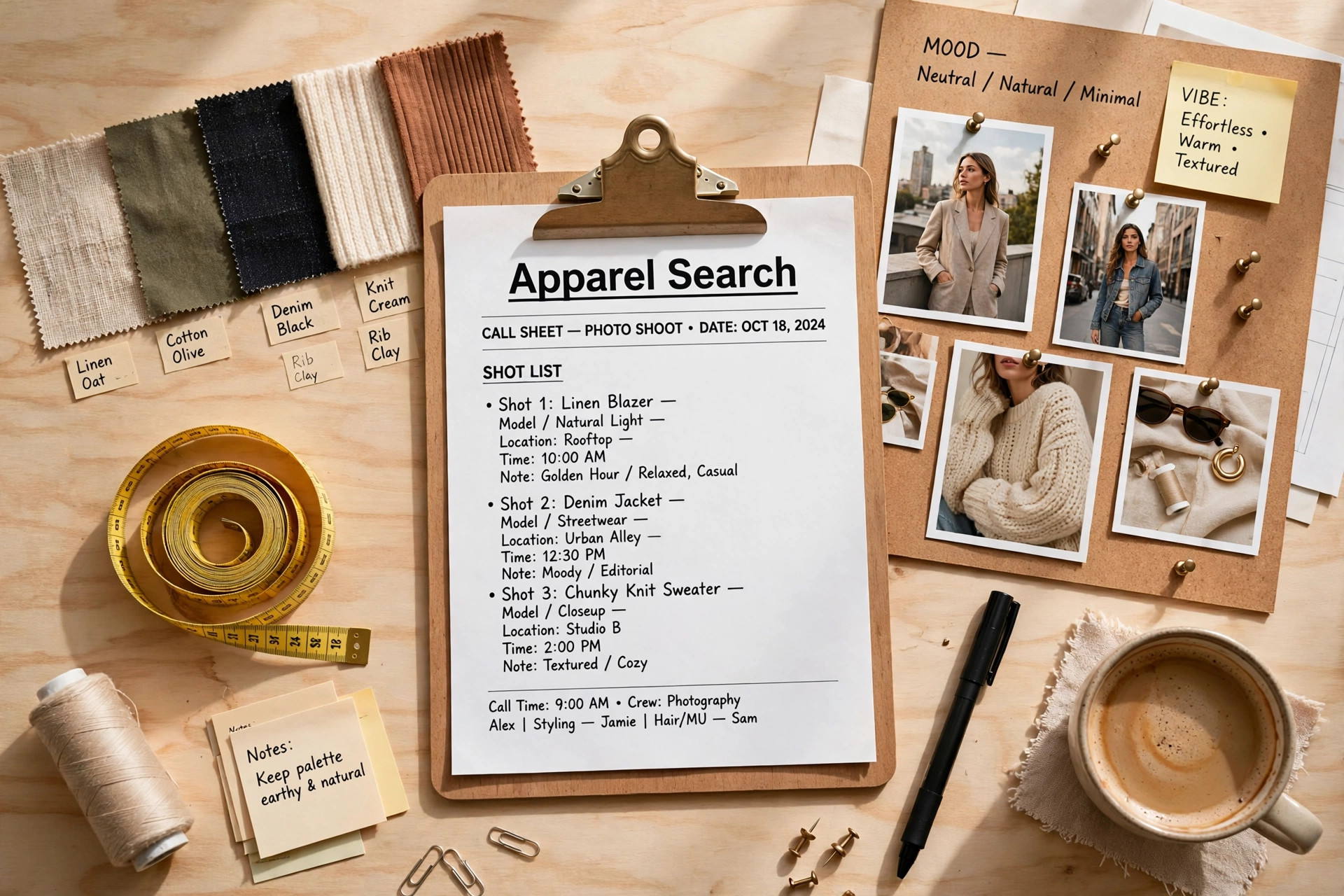
A fashion photo shoot plan is the set of decisions made before the camera comes out: what the images are for, exactly which shots are needed, who is doing each job, and how the day will run hour by hour. This chapter covers that planning stage of the Fashion Photography & Media Production Guide; the day itself is worked from the shot list and call sheet the plan produces.
Start With the Purpose, Not the Pictures
Every planning decision gets easier once the shoot's job is stated in one sentence: "photograph the spring collection for the wholesale lookbook and the online store," or "create three campaign images for the season launch." The purpose decides the style of photography, the number of shots, the crew size, and the budget. A shoot meant to feed a catalog and line sheet needs disciplined, repeatable setups; a shoot for a lookbook needs room for styled, atmospheric frames. Write the purpose down and share it with everyone you book — most shoot-day disagreements are really two different purposes colliding.
From the purpose, list the deliverables: how many finished images, in what formats and sizes, for which destinations (print lookbook, web store, social, press), and by what deadline. Deliverables drive the schedule backwards — printing a lookbook, for example, fixes a hard date the edited files must exist.
Build the Shot List
The shot list is the shoot's contract with itself: every photograph that must exist when the day ends. Build it garment by garment and view by view.
- List every style. Style number, colorways, and sizes to be photographed — taken from the collection's line list, not from memory.
- Assign the views. For each style, mark the required views: front, back, side, detail, on-model, flat, or styled editorial. Catalog work usually needs the full set; editorial work picks moments.
- Sequence the list. Group shots by setup — same background, same lighting, same model — so the day flows in blocks instead of relighting between every frame.
- Add the safety shots. A clean front view of every style, even in an editorial shoot. It is the image every department will ask for later.
Keep the list realistic. A well-run studio team might complete 30 to 60 catalog looks in a day, but only 8 to 12 fully styled editorial setups. If the list cannot fit the day, cut shots on paper — it is far cheaper than cutting them at 6 p.m. with the crew on overtime.
Book the Crew
A fashion shoot crew scales with the plan. The core roles are the photographer, who owns the images; the stylist, who owns how the garments look; a hair and makeup artist for on-model work; and the models, booked through the casting process covered in our casting chapter. Larger productions add a producer or shoot coordinator, a photographer's assistant, a digital technician (digitech) running the tethered computer, and a steamer/prep hand for garments.
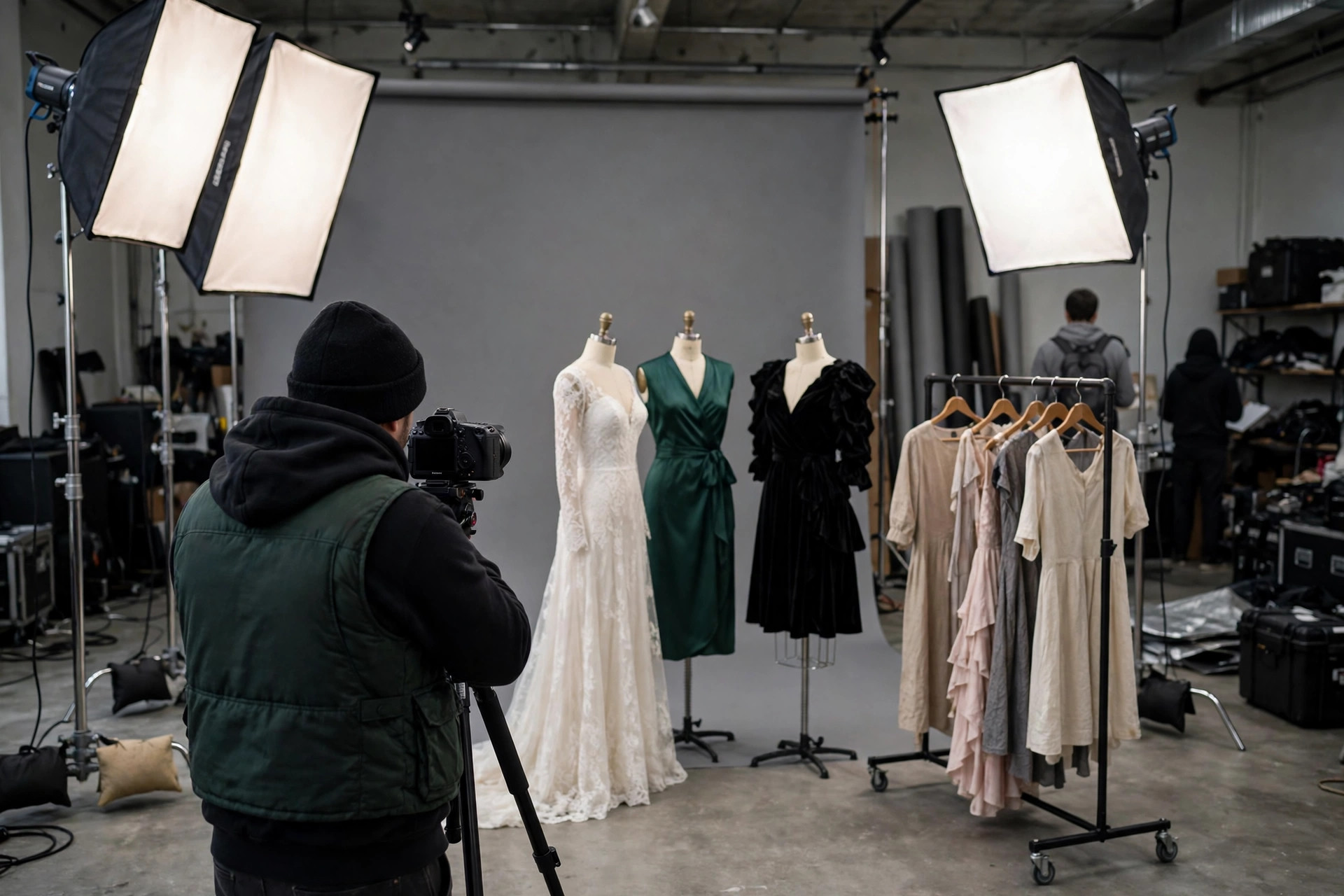
Book in writing, with the date, call time, rate, and deliverables confirmed — the money side is covered in our chapter on budgeting and usage licensing. Hold a short pre-production call or message thread a few days before: confirm garment delivery, studio access, parking and load-in, and who brings what. Half of shoot-day problems are logistics that a ten-minute call would have caught.
Write the Call Sheet and Run the Day
The call sheet is the single document everyone works from on the day. It carries the date and location with directions, call times for each crew member (staggered — hair and makeup start before the photographer needs them), the schedule of setups in order, garment and prop lists, contact numbers, and the wrap time. Send it the day before, and print copies for the set.
On the day, the plan meets reality: a model runs late, a garment arrives wrinkled, a setup does not work. The producer's or photographer's job is to protect the shot list — shoot the must-have catalog coverage first if time gets tight, and let the experimental frames go. Work through the practical items with our product photoshoot checklist, which covers garment preparation, shooting, editing, and publishing in tick-box form. End the day by confirming the files are backed up twice and the selects process is agreed — the shoot is not finished when the lights go off, but when the images are safely stored and the edit is underway.
Common Questions
- How far in advance should you plan a fashion photo shoot?
- Two to four weeks is comfortable for a studio shoot with booked models and crew; a simple in-house product session can be planned in a few days. The long-lead items are model casting, studio availability, and sample garments arriving on time, so start with those dates and work backwards.
- What goes on a fashion shoot call sheet?
- The date, location and directions, each person's call time and contact number, the schedule of setups in order, the garment and prop lists, catering or break arrangements, and the planned wrap time. One page is ideal; two at most.
- How many looks can you photograph in one day?
- A practiced catalog team can complete roughly 30 to 60 looks in a day with a fixed setup. Styled editorial work is slower — 8 to 12 setups is a full day. Fitting, steaming, and hair and makeup changes are usually the bottleneck, not the camera.
- Who should run the shoot on the day?
- One named person — usually the producer, art director, or the photographer on small shoots — makes the calls when the plan meets reality. Committees stall; a single decision-maker keeps the shot list protected.
Back to the Fashion Photography & Media Production Guide
This page is one part of the complete guide. Return to the Fashion Photography & Media Production Guide to follow the whole production workflow from first concept to final delivery.