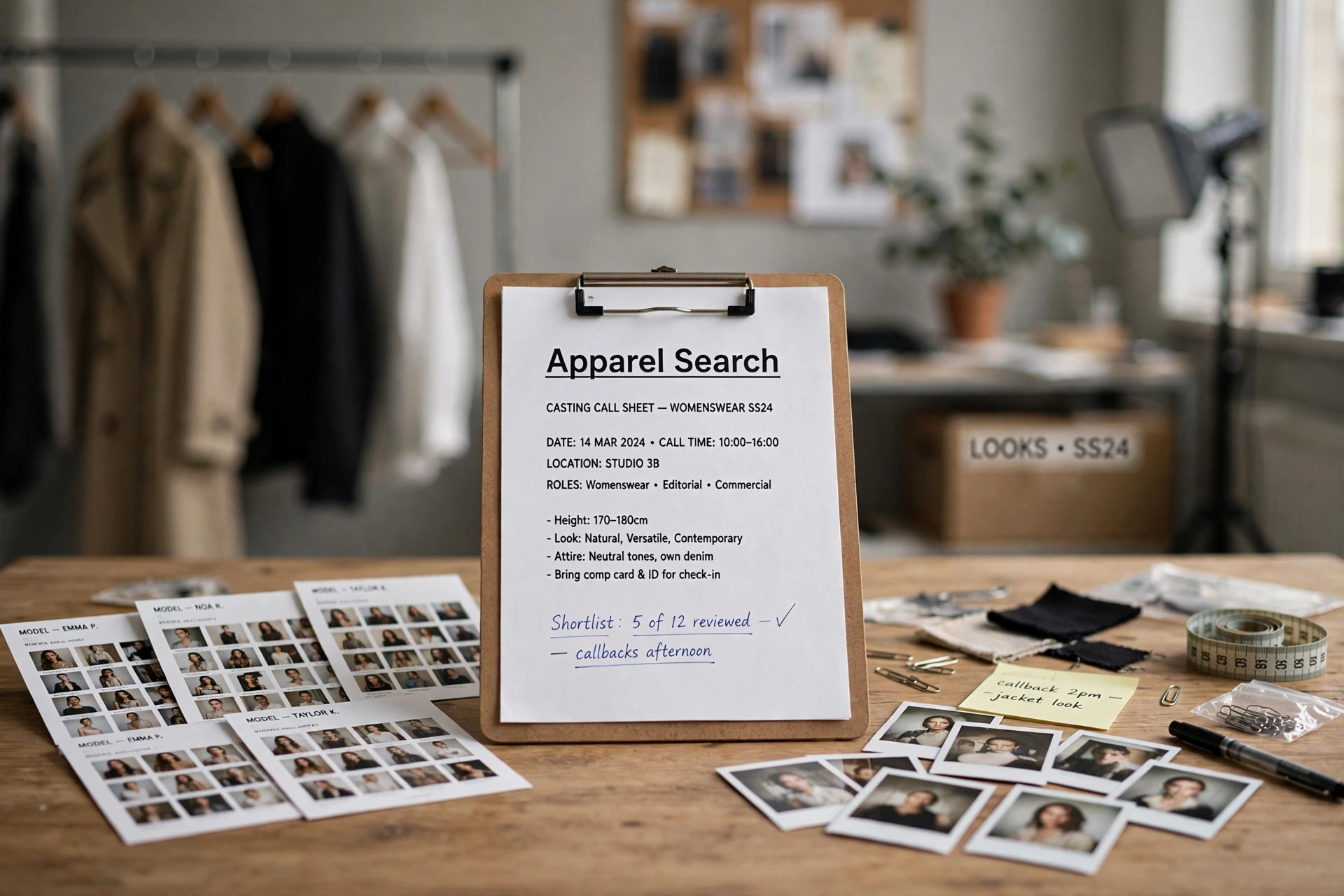
Casting is the process of selecting the models who will wear a collection in front of the camera: reviewing portfolios and comp cards, seeing candidates in person or on video, checking fit against the sample sizes, and booking under agreed terms. This chapter of the Fashion Photography & Media Production Guide explains how casting works and what must be settled — releases, usage, and rates — before the shoot day.
Two Routes: Agencies and Direct Casting
Most established brands book through model agencies. An agency maintains a board of models with current measurements, digitals (simple, unstyled photographs), and comp cards; the booker proposes candidates who fit the brief, handles contracts and usage negotiation, and supplies a professional who arrives prepared. Agency booking costs more — the model's day rate plus an agency fee, commonly around twenty percent — and buys reliability, paperwork handled properly, and recourse if a model falls ill.
Direct casting — open calls, portfolio reviews, casting platforms, and referrals — suits smaller brands, fit-specific needs, and e-commerce volume work. It demands more of the brand: verifying measurements, running the casting session, drafting the release and usage terms, and managing payment directly. Whichever route is used, the deliverables of casting are the same: the right bodies and faces for the clothes, confirmed for the date, under terms everyone has seen in writing.
Running a Casting
A casting session is an evaluation, run efficiently and respectfully. For each candidate, the team checks:
- Fit against the samples. The collection exists in sample sizes; the model must fit them as intended. Measurements are confirmed, not assumed from the card.
- How the clothes photograph. A few test frames in an actual sample garment — digitals and a short walk for video work — reveal more than a polished portfolio.
- Range and brief fit. Can the model carry both the tailored and the relaxed stories in the collection? Do they match the customer the brand is photographing for?
- Availability and professionalism. Confirmed dates, travel practicality, and the basics of punctuality and preparation.
Shortlisted candidates for campaign work usually attend a fitting before the shoot, so the stylist can pin, plan alterations for the samples, and note which looks belong to which model in the shot list — the planning discipline of our shoot planning chapter.
Releases and Usage Rights
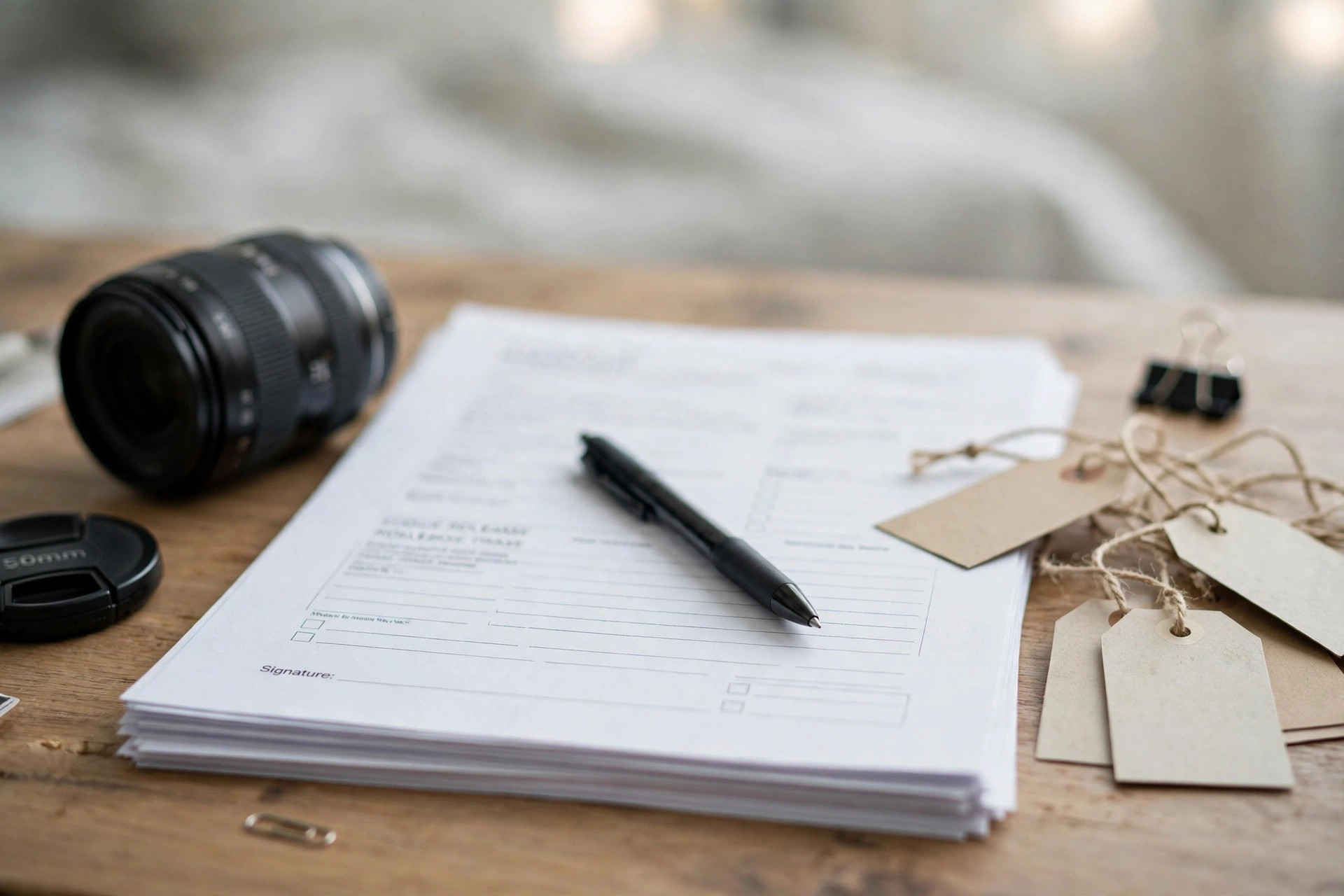
No commercial shoot should proceed on a handshake. The model release records the model's consent to be photographed and the brand's right to use the images, for the agreed media, territories, and period. Usage is the variable that moves the price: a season of web and social use costs less than a year of print, outdoor, and broadcast. Rates, usage scope, and exclusivity (whether the model may appear for competing brands during the term) are negotiated at booking, through the agency or directly — never renegotiated after the images exist and the brand needs them.
The legal framework behind releases and image rights is covered in our Fashion Law & Intellectual Property Guide — general information, not legal advice; brands with significant campaigns should have their standard release reviewed by a lawyer in their jurisdiction. Keep signed releases filed with the shoot's images permanently: the right to use a photograph may be questioned years after it was taken.
Working Standards on Set
Professional casting ends in professional working conditions. Models are entitled to a private changing area, reasonable working hours with breaks, a chaperone policy for younger models, and a set where direction is given respectfully. Minors are subject to strict rules on hours, permits, and guardians in most jurisdictions, and reputable agencies enforce them — one more reason the agency route is standard for any shoot involving models under eighteen. Brands that treat casting and the shoot day as professional engagements get the industry's best people back season after season; the crew and casting choices in this guide are, in the end, a reputation the brand builds in its market.
Common Questions
- How do brands find models for photo shoots?
- Most commonly through model agencies, whose bookers propose candidates matching the brief and handle contracts and usage. Smaller brands also cast directly through open calls, casting platforms, and referrals, managing the paperwork themselves.
- What is a comp card?
- A model's calling card: a sheet or digital card with a headshot, several portfolio images, measurements, and agency contact details. Casting teams review comp cards to build a shortlist before seeing candidates in person.
- What is a model release?
- A signed agreement in which the model consents to be photographed and grants the brand the right to use the images for agreed purposes, media, territories, and a set period. It should be signed before the shoot takes place.
- Why does usage change a model's fee?
- Because the fee buys exposure rights, not just time. A season of website and social use is a smaller grant than a year of print, outdoor, and broadcast advertising, and exclusivity — barring work for competitors — costs more still.
Back to the Fashion Photography & Media Production Guide
This page is one part of the complete guide. Return to the Fashion Photography & Media Production Guide to follow the whole production workflow from first concept to final delivery.