Fashion Lookbook
Apparel Search fashion summary — a short guide to fashion lookbook.
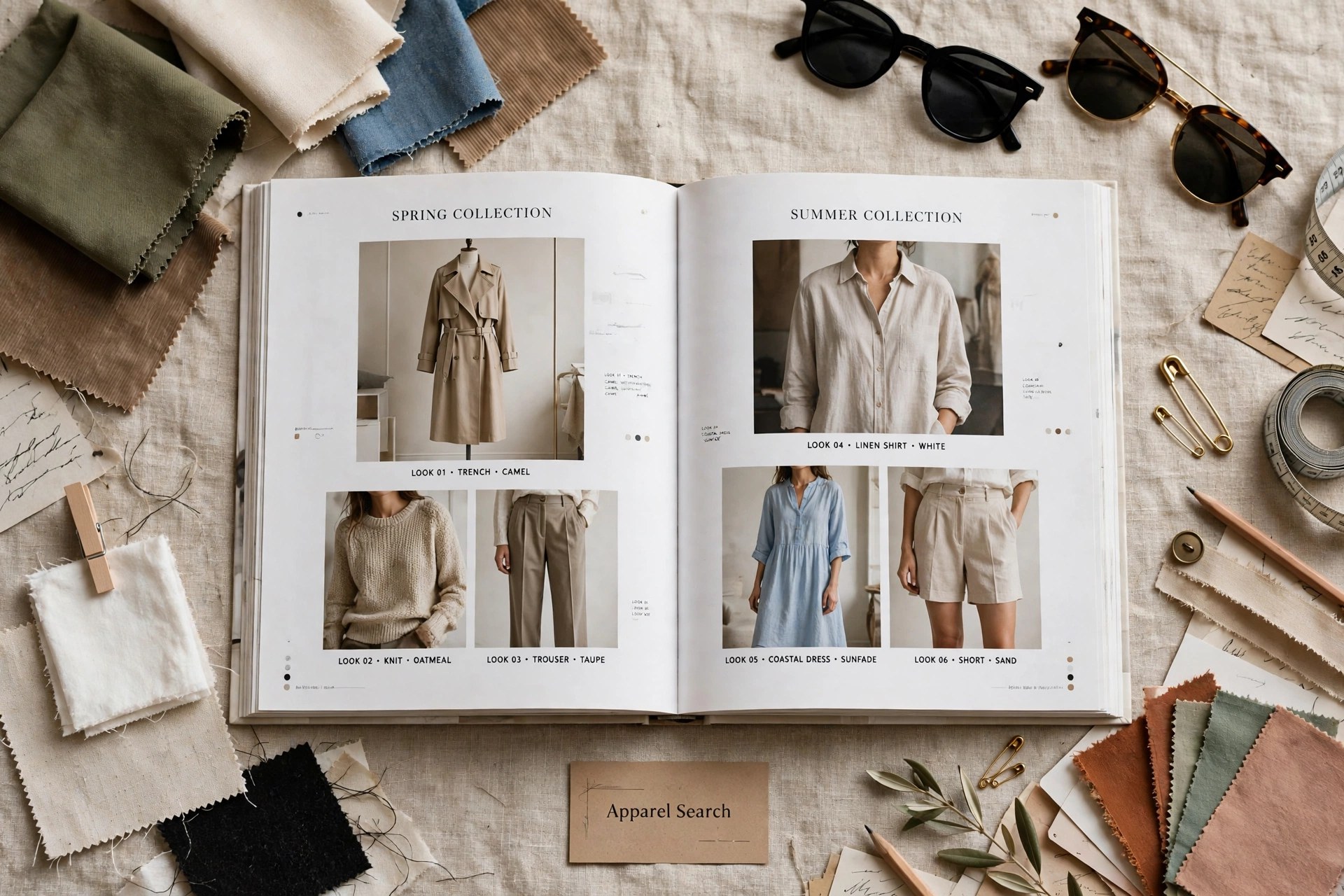
A lookbook is a collection of photographs compiled to show off a model, a photographer, a style, a stylist or a clothing line. Done well, it is a creative way of storytelling that conveys the essence of a brand — a fashion catalogue of well-styled images rather than a list of products with prices.
Fashion Lookbook — Explore & Resources
What Lookbooks Do
The purpose of any fashion lookbook is to show a clothing line, a fashion model portfolio, a fashion trend or a style through a collection of photographs. Designers use lookbooks in two directions at once: to develop a collection as they work — alongside trend boards, which organise the thoughts and references behind a line — and to show the finished collection to the world once it exists.
Major fashion brands present lookbook sections on their websites to entice consumers, because a lookbook sells the world around the clothes: the setting, the styling and the attitude that a product page cannot carry. A fashion designer uses a lookbook to tell the story of his or her fashion line, guiding customers through the collection as a visual experience rather than as inventory.
From Print to Pinterest
Lookbooks began as print publications and are now used by stylists, designers and e-commerce sites to show collections online. The digital move widened who makes them: bloggers use lookbooks to show off their own outfits to their readers, modelling looks from a particular period or category of clothing in a format their audience can browse like a magazine.
Pinterest is the modern lookbook's natural home — an image board is a lookbook by another name — and the Apparel Search fashion lookbook on Pinterest, linked from this page, collects the form there. Example lookbooks linked below include a chromatic metallic shoe lookbook and a metro retro fashion lookbook from the Apparel Search blog, showing how the format handles a single product story and a whole retro theme respectively.
Making a Lookbook That Works
A working lookbook obeys three rules. Sequence first: the images are ordered as an argument — opening with the strongest look, grouping colours and stories so the eye travels, and closing on a memorable piece — never as a warehouse inventory. Consistency second: one photographic treatment across the book, so the clothes vary and the world does not, which is what makes a set of photographs read as a single collection. Captions last and briefly: style names and numbers only, because the lookbook's job is desire, with the price list kept in the separate line sheet where buyers expect it. A book that follows all three rules can be read in two minutes and remembered for a season, which is precisely the effect it exists to create.
Common Questions
What is a fashion lookbook?
A collection of photographs compiled to show off a clothing line, a model, a photographer, a style or a stylist — a styled visual catalogue that tells a brand's story rather than listing products and prices.
Who uses lookbooks?
Designers developing and presenting collections, stylists and models building portfolios, e-commerce sites and major brands showing collections online, and bloggers presenting their own outfits to readers.
Are lookbooks still printed?
They began as print publications, but most lookbooks are now digital — published on brand websites, blogs and image platforms such as Pinterest.