E-commerce clothing photography is product imagery made for online stores, where the photograph must do the work of the shop floor and the fitting room combined. This chapter of the Fashion Photography & Media Production Guide covers the three standard formats — ghost mannequin, flat lay, and on-model — plus the color accuracy and file specifications that decide whether the images reduce returns or cause them.
The Three Standard Formats
Ghost mannequin
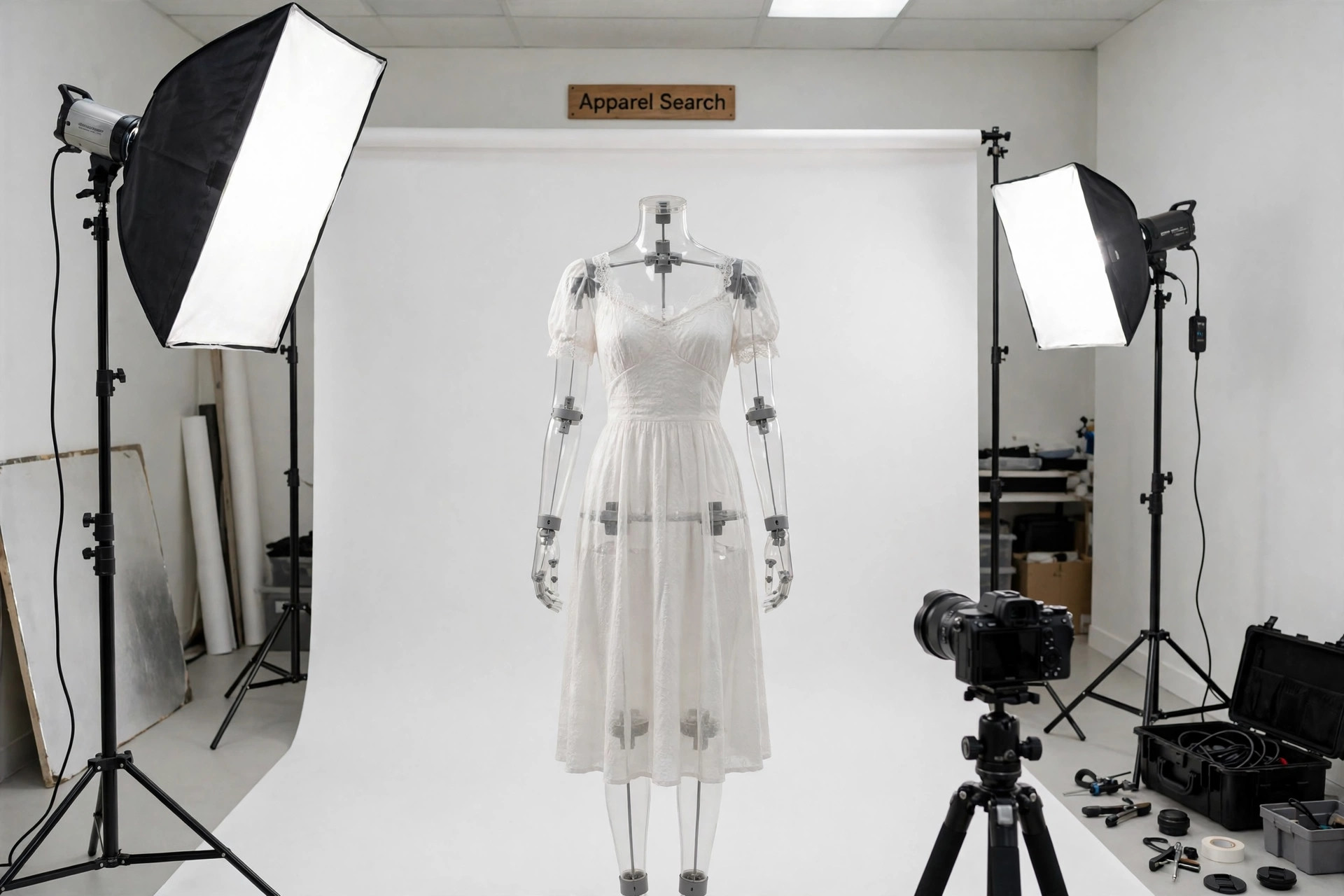
The garment is photographed on a modular mannequin whose parts are removed in post-production, leaving the clothing holding a body's shape with nobody in it. It shows fit and structure better than any other off-model format, which is why it is the standard for jackets, dresses, and tailored pieces. The setup takes longer per garment — dressing the form, shooting the interior neck or waistband shot needed for the composite — but the result reads as premium and consistent.
Flat lay
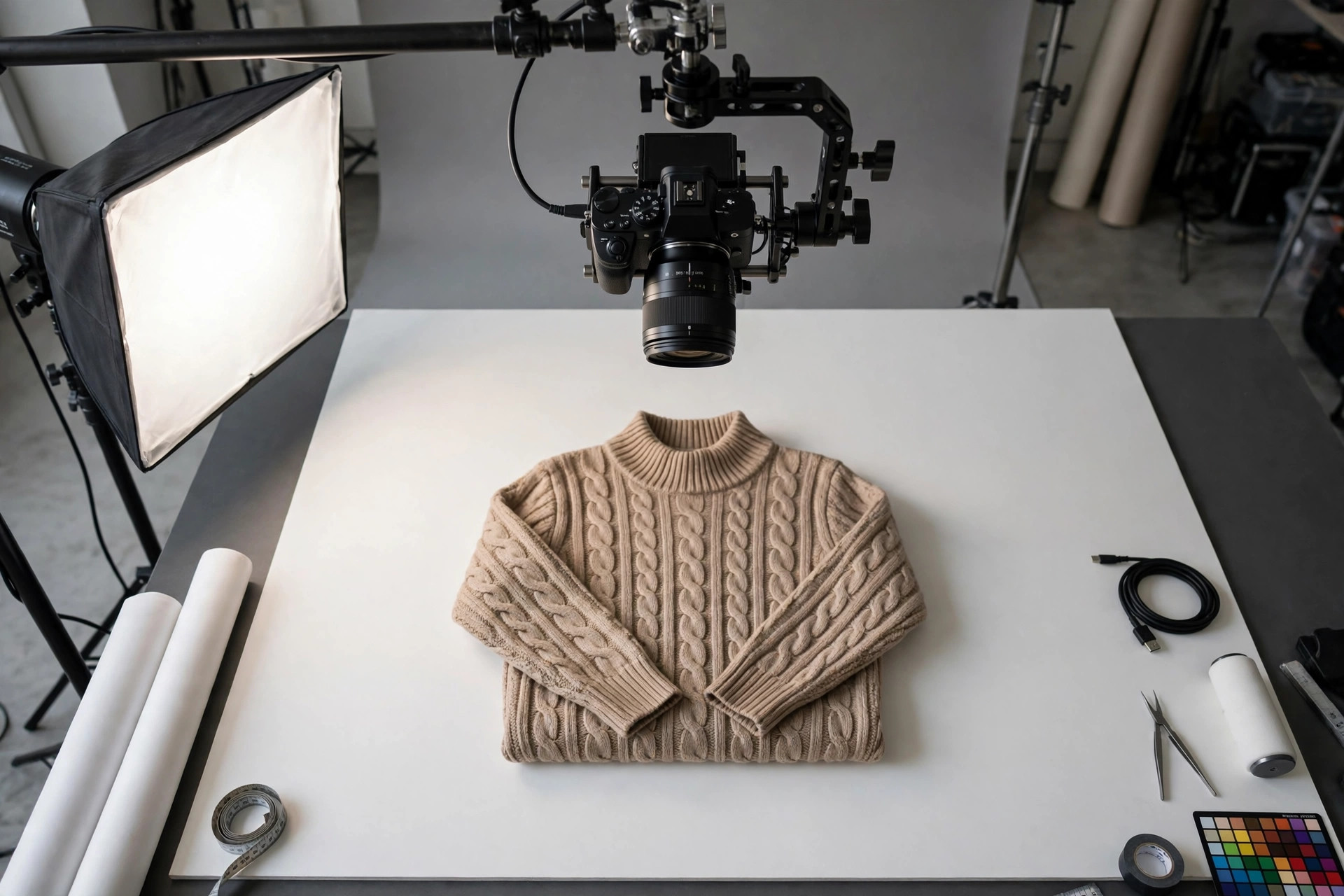
The garment is arranged flat and photographed from directly above. Flat lays are fast, inexpensive, and honest about color and pattern, and they suit folded knitwear, tees, and accessories well. Their weakness is fit: a flat garment shows little about how it drapes or where it sits on the body, so flat-lay-only product pages tend to convert worse for fitted categories.
On-model
A model wears the garment, answering the shopper's real questions: how long is it, how does it move, what does it look like with shoes. On-model photography is the most persuasive format and the most expensive, because it adds casting, styling, and hair and makeup to the session — see our casting chapter for how models are booked. Many stores mix formats: on-model for the lead image and key views, ghost mannequin or flat lay for the rest.
The Views That Prevent Returns
Returns are the tax on inadequate photography, and the most common cause is a surprise — the garment differed from its pictures. The view set that prevents surprises is well established: front, back, and side on the primary format; a close detail of fabric and any feature the description boasts about; a scale reference for accessories; and the garment in every colorway actually sold. Zoom-friendly resolution matters as much as the views themselves, since shoppers zoom to judge fabric and construction.
Consistency across the store is the other half of trust. One background, one crop logic, one lighting character for every product, so a shopper moving between items is comparing garments, not photographs. That discipline is shared with catalog photography — most brands shoot both in the same session, to the stricter of the two standards.
Color Accuracy and Image Specifications
Color is where e-commerce photography earns or loses its keep. Shoot against a color reference, white-balance deliberately, and retouch on a calibrated monitor with the physical garment beside it. A top that photographs coral and ships orange-red will be returned, and the return shipping costs more than the color check would have.
Specifications vary by platform, but the working rules are stable: deliver sRGB files for the web; keep master files at full resolution and export platform sizes from them; follow a consistent aspect ratio across the store (vertical ratios suit clothing best on most platforms and on mobile); compress enough for fast loading without visible artifacts; and name files by style, color, and view so the catalog, the store, and the warehouse are all reading the same garment. Marketplace sellers must also follow each marketplace's own rules on background, minimum size, and zoom.
Studio, In-House, or AI?
Volume decides the model. Large ranges justify an in-house studio and a standing team; seasonal brands often book external studios by the day, planned through the workflow in our shoot planning chapter. A third route has recently become practical: AI tools that generate on-model imagery from a single product photograph. They suit volume and variation well, provided the garment's print, color, and construction survive the transformation — our survey of AI product photography tools explains the fidelity test to run. Whichever route produces them, the images must meet the same standards: accurate, consistent, and complete.
Common Questions
- What is ghost mannequin photography?
- The garment is photographed on a removable mannequin form, and the form is edited out in post-production. The clothing keeps the shape of being worn, with no visible model — the standard premium format for structured garments online.
- How many photos should an online clothing listing have?
- Typically four to eight: front, back, and side views, a fabric or feature detail, and one image per colorway. Fit-critical items benefit from an on-model view as well.
- Why does color accuracy matter so much in e-commerce photos?
- Because a mismatch between the photograph and the delivered garment is one of the most common reasons for returns. Accurate color — checked against the physical garment on a calibrated monitor — directly reduces return rates.
- What image size do online stores need?
- Stores need full-resolution masters plus web exports sized for the platform, in sRGB, usually at a consistent vertical aspect ratio. Large enough for shopper zoom (commonly 2000px or more on the long edge) without slowing the page is the practical target.
Back to the Fashion Photography & Media Production Guide
This page is one part of the complete guide. Return to the Fashion Photography & Media Production Guide to follow the whole production workflow from first concept to final delivery.