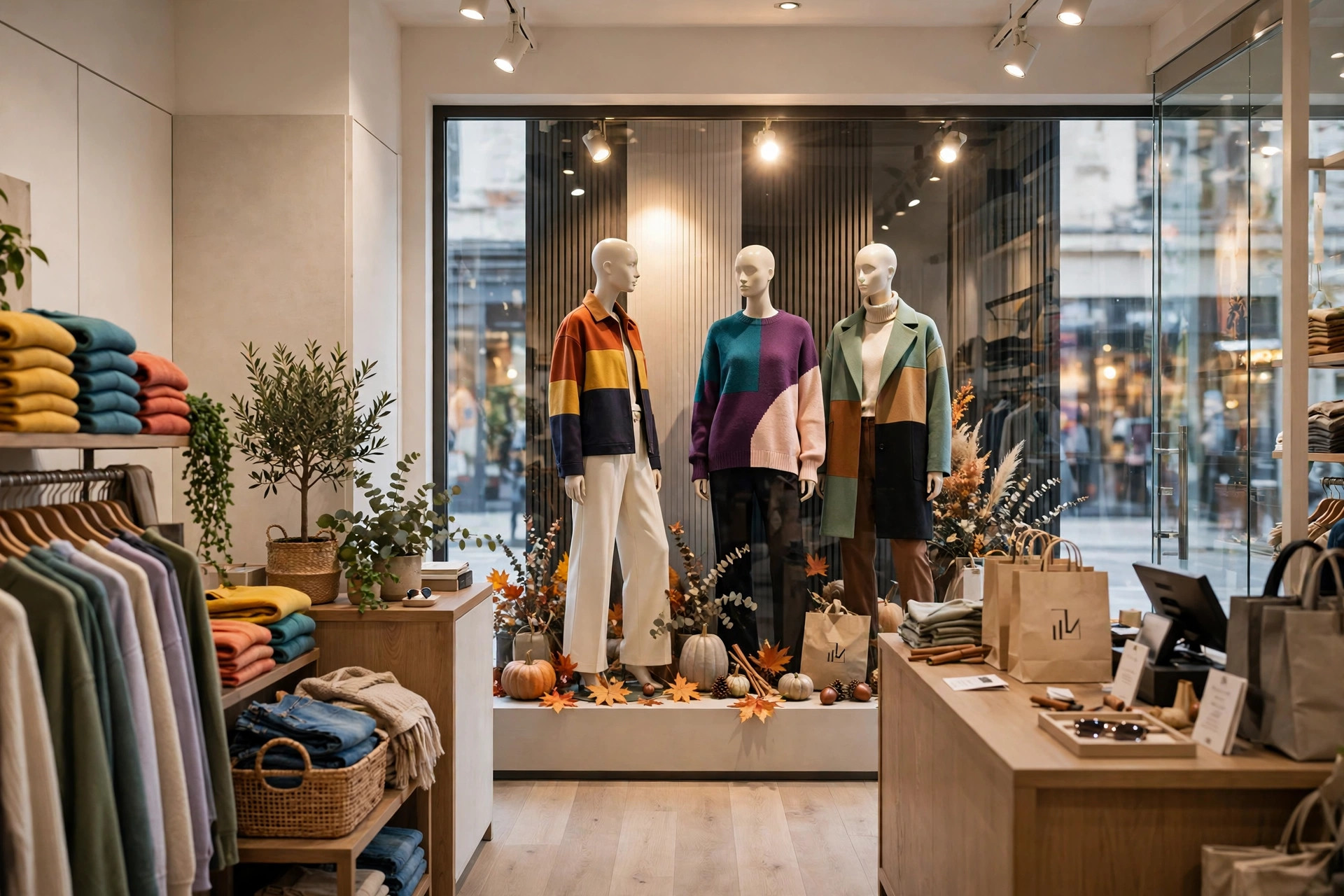
Visual merchandising is the creative presentation of merchandise in a store — the windows, mannequins, displays, signage, and lighting that show customers what the store sells, what goes with what, and what is new. In apparel, where most products are soft, similar in construction, and bought on desire as much as need, presentation is not decoration added after the real work: it is a large part of how the product is sold at all.
What Visual Merchandising Covers
The discipline spans the whole selling environment. Window displays are the store's advertisement to passing traffic, built to stop walkers with one clear story rather than a sample of everything inside. Mannequins show fit, proportion, and complete outfits as flat or hanging garments cannot. Focal points — the dressed table, form, or feature wall a customer sees first in each zone — carry the newest or highest-margin story and anchor navigation through the department.
Across the floor, color blocking groups garments so the eye reads deliberate stories — a run of neutrals broken by one strong color, or a gradient flowing light to dark — which also makes a fixture look abundant when stock is thin. Signage does the talking customers will not ask for: prices, promotions, sizes available, and where things are, kept few and legible rather than layered until nothing is read. Lighting sets the hierarchy, with accent light on focal displays, honest color rendering on the floor so a navy does not read as black, and no dead, shadowed corners signaling neglected stock.
Principles That Make Displays Sell
Effective visual merchandising follows a few durable principles. One story at a time: a display mixing three unrelated messages communicates none of them. Keep the best real estate honest: prime positions carry newness and margin, not leftover stock the manager wishes would move, because customers read the front of the store as the store's own verdict on what matters.
Maintenance is a principle in its own right. A display is a promise that sizes exist and the store is cared for; a focal table with two sizes left, a mannequin missing an accessory that sold, or a window unchanged two months into a season all break that promise. Visual standards therefore include daily tidying, size replenishment from the stockroom, and scheduled display changes tied to deliveries and seasons — work measured by the same sell-through figures as the rest of the floor, since presentation that does not move product is art, not merchandising.
How It Differs from Planogram Work
Visual merchandising and the planogram are partners, not synonyms. The planogram is the analytical placement plan: which styles occupy which fixtures, in what quantity, size order, and adjacency, so stock capacity and consistency are controlled across stores. Visual merchandising is the creative layer built on top of it: the window story, the mannequin outfits, the focal displays, the color flow, and the atmosphere that make the planned assortment desirable.
In a chain, the two are often produced by the same team in the same floor-set package — the planogram pages show where everything goes, and the visual guide shows how the key displays should look, with photographs. In an independent store, one person typically does both, sketching fixture assignments and dressing displays in the same session. Stores that support both with services such as clienteling — where pulled rails and appointment displays apply the same presentation standards — turn a well-presented floor into personal selling as well as silent selling.
Common Questions
- What does visual merchandising include?
- Window displays, mannequins, focal point displays, fixture presentation and color blocking, signage, and lighting. Together they communicate what the store sells, what is new, and how items can be worn together.
- How is visual merchandising different from a planogram?
- A planogram is the placement plan that assigns products, quantities, and size order to fixtures. Visual merchandising is the creative presentation built on that plan, including windows, outfits on mannequins, color stories, and atmosphere.
- Why is color blocking used in clothing stores?
- Grouping garments by color makes fixtures read as deliberate stories, helps customers scan and find what they want, and makes assortments look abundant and organized. It also highlights a featured color against neutral surroundings.
- How often should window displays change?
- Typically with each season and major delivery or promotion, and sooner if the featured stock has sold down. A window advertising unavailable product frustrates customers, so changes should track what the store can actually sell.
Retail Math & Fashion Business Guides
This page is part of the Apparel Search retail math and fashion business series. Browse the full series below, or start from the apparel industry tools hub.