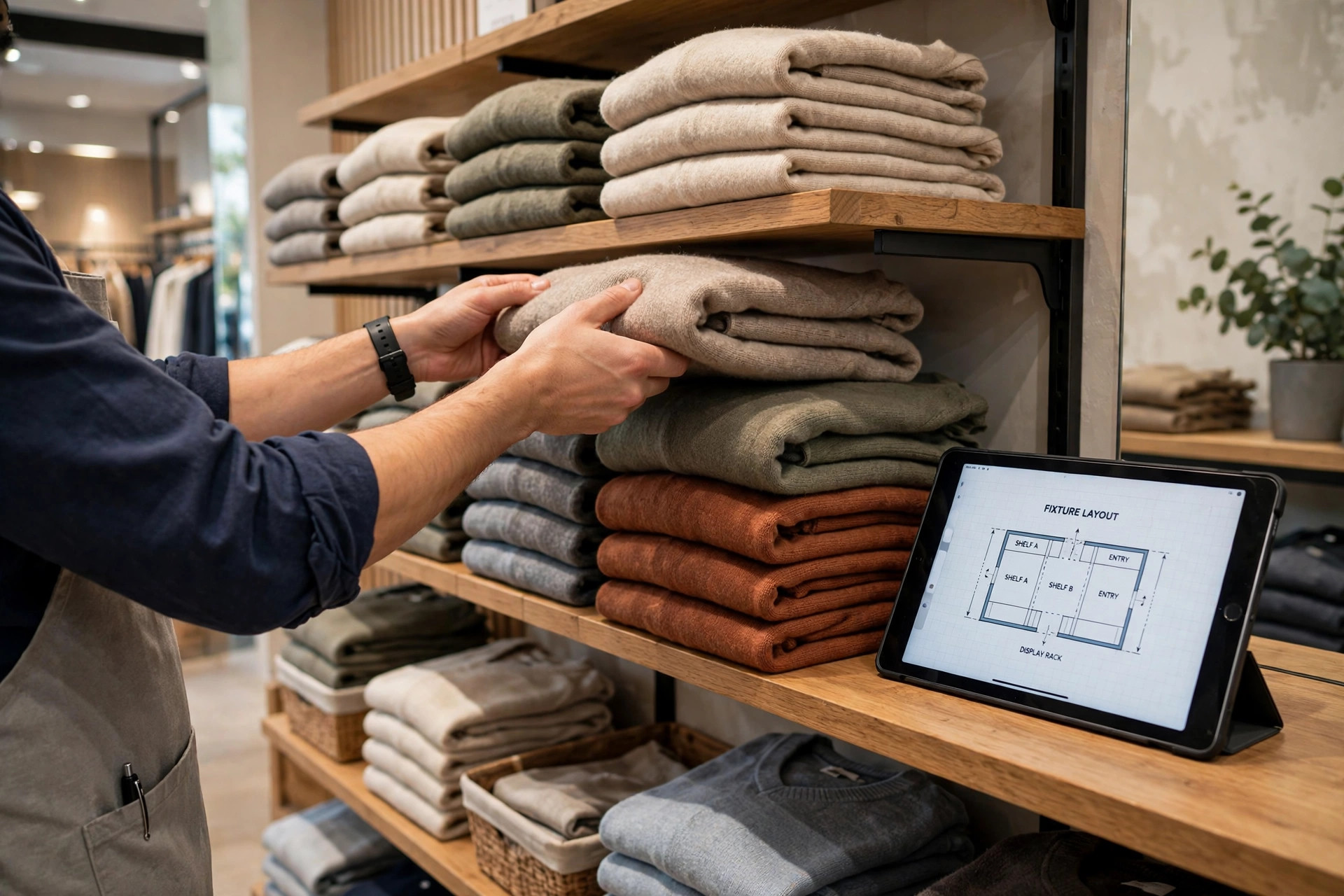
A planogram is the map a store is set by: this style, on this fixture, in these sizes, next to that one. This page explains how planograms work specifically in apparel — the building process, the size and capacity problems clothing creates, and how a plan stays alive after the reset. It builds on our introductory planogram guide, and it is the planning half of our visual merchandising guide: the planogram decides what goes where, and visual merchandising decides how it looks when it gets there.
What an Apparel Planogram Actually Specifies
For each fixture — a wall bay, a four-way rack, a table, a shelf run — the planogram records the assigned styles, the quantity each style holds at full capacity, the order of sizes and colors, and the neighbors each style sits beside. In a chain, it also fixes the presentation standard so a customer (and a district manager) finds the same arrangement in every location. Behind the drawing sits an economic decision: fixture space is the scarcest resource in the store, and the planogram is where newness, margin, and proven sellers compete for it.
Apparel planograms come in three common forms: scaled diagrams from planogram software, annotated photographs of a model store or mock fixture, and — for independents — sketches or photo sets kept as the store's own reference. The medium matters less than the discipline of having one version everyone sets from.
Building an Apparel Planogram, Step by Step
- Measure the fixtures. Record true linear footage, shelf counts, and hanging space for every fixture type. Capacity planned from guessed measurements fails on the floor.
- Rank the assortment. Sort incoming styles by role: new-season stories, proven sellers, basics that must never gap, and markdown stock. The ranking decides position before anything is drawn.
- Assign zones, then fixtures. Place departments and stories on the floor plan first (the layout logic in our clothing store layout guide), then assign styles to individual fixtures within each zone.
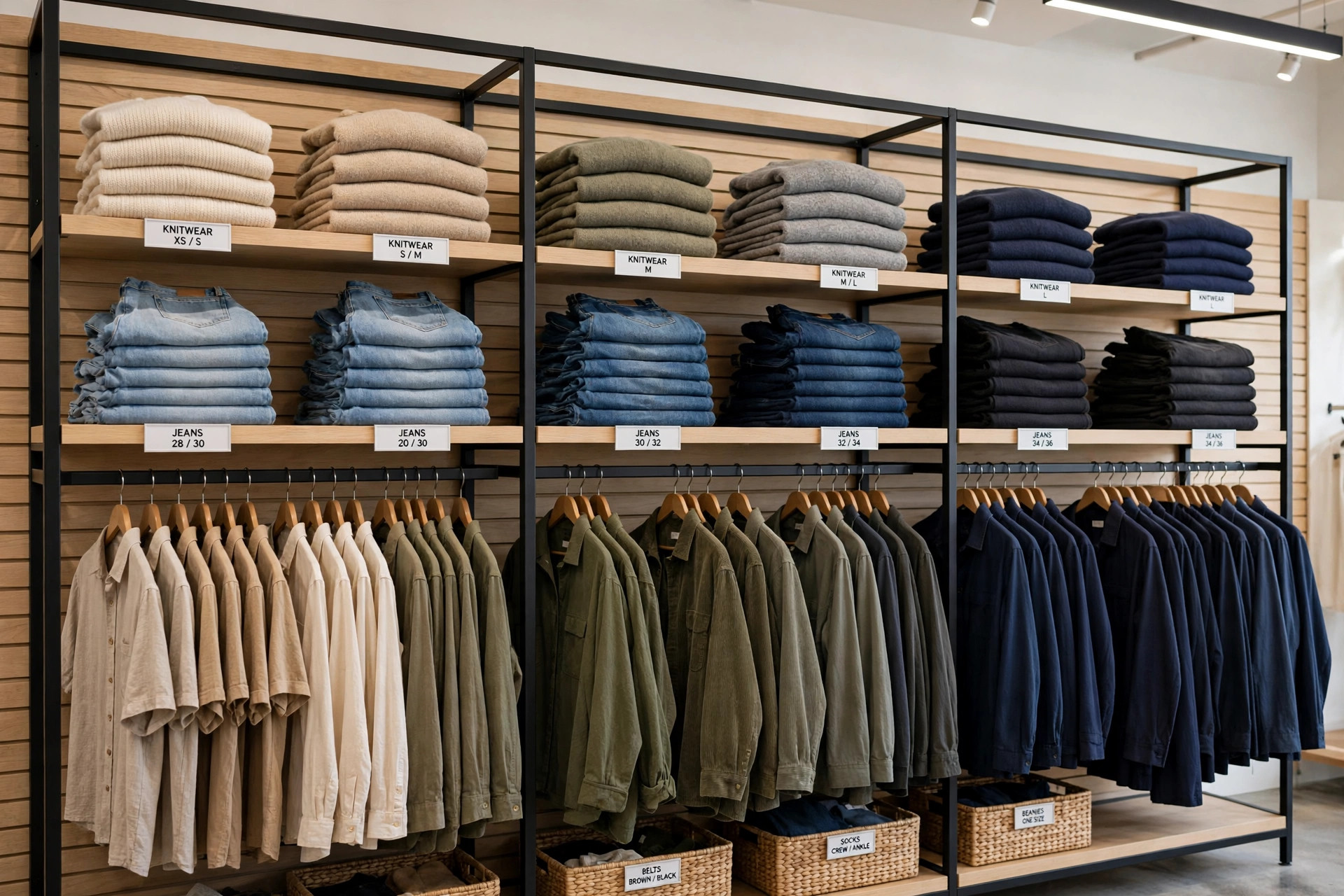
- Set size and color order. Fix the convention — sizes ascending left to right or front to back, colors light to dark or in story order — and apply it everywhere, so customers can shop any fixture without relearning it. The presentation side of this ordering is covered in color blocking and fixture presentation.
- Check capacity against stock. A style assigned a full fixture bay but stocked two deep will look empty by the weekend. Match the plan to real depth, or plan the neighboring style that expands into the space.
- Issue it with photographs. Send the plan with pictures of the finished fixture. In apparel, where folding, spacing, and drape carry the standard, a photo prevents a hundred interpretation errors a diagram allows.
The Apparel Problems: Sizes, Softness, and Seasons
Packaged goods hold their shape and their facing; clothing does neither. Size runs break — the medium sells out and the fixture's neat order becomes a scatter of extremes, so apparel planograms plan for replenishment from the stockroom and for consolidating broken runs at reset. Capacity is elastic: a shelf of chunky knitwear holds a third of what the same shelf holds in tees, so quantities must be planned per garment type, not per shelf. Seasons turn over completely: unlike a grocery aisle with a stable core, an apparel planogram is rebuilt several times a year, and its most perishable ingredient is the fashion story itself.
Compliance without policing: the planogram survives when store teams can actually execute it — realistic quantities, fixtures they own, and a photo standard that is achievable on a Tuesday with two staff, not only on reset day with six.
Keeping the Plan Alive
A planogram decays the moment selling starts. Sizes sell, deliveries land, a style is recalled to another store. Healthy routines include a weekly walk with the plan in hand, marking fixtures that no longer match and why; a standing rule for what fills a gap (expand the neighbor, pull the reserve style, or re-face); and a photo check after each reset sent back to whoever issued the plan. When a planogram no longer matches the stock a store actually holds, the correct move is to revise the plan — a plan everyone quietly ignores is worse than a simpler plan everyone follows.
Common Questions
- What does an apparel planogram show?
- Exactly which styles go on which fixtures, in what quantity, in what size order, and next to which other styles — drawn or photographed fixture by fixture so any store in a chain can set the same presentation and hold the same stock depth.
- How is an apparel planogram different from a grocery planogram?
- Clothing is soft, seasonal, and sized. Apparel planograms must handle size runs that break as sizes sell, folded versus hanging capacity that changes with garment thickness, and color order across a fixture — problems rigid packaged goods never present.
- How often should a clothing planogram be reset?
- At each season change and major delivery, with smaller revisions between resets as styles sell out and are replaced. A planogram that no longer matches the available stock stops being followed and stops being useful.
- Can an independent store use planograms without software?
- Yes. A sketched fixture map or a set of reference photographs of each fixture at its best, kept in a binder or shared folder, performs the same job for one store: it records the intended presentation so any staff member can restore it.
Back to the Visual Merchandising & Retail Display Guide
Return to the main guide for the full picture — windows, mannequins, layout, planograms, lighting, and presentation working together.