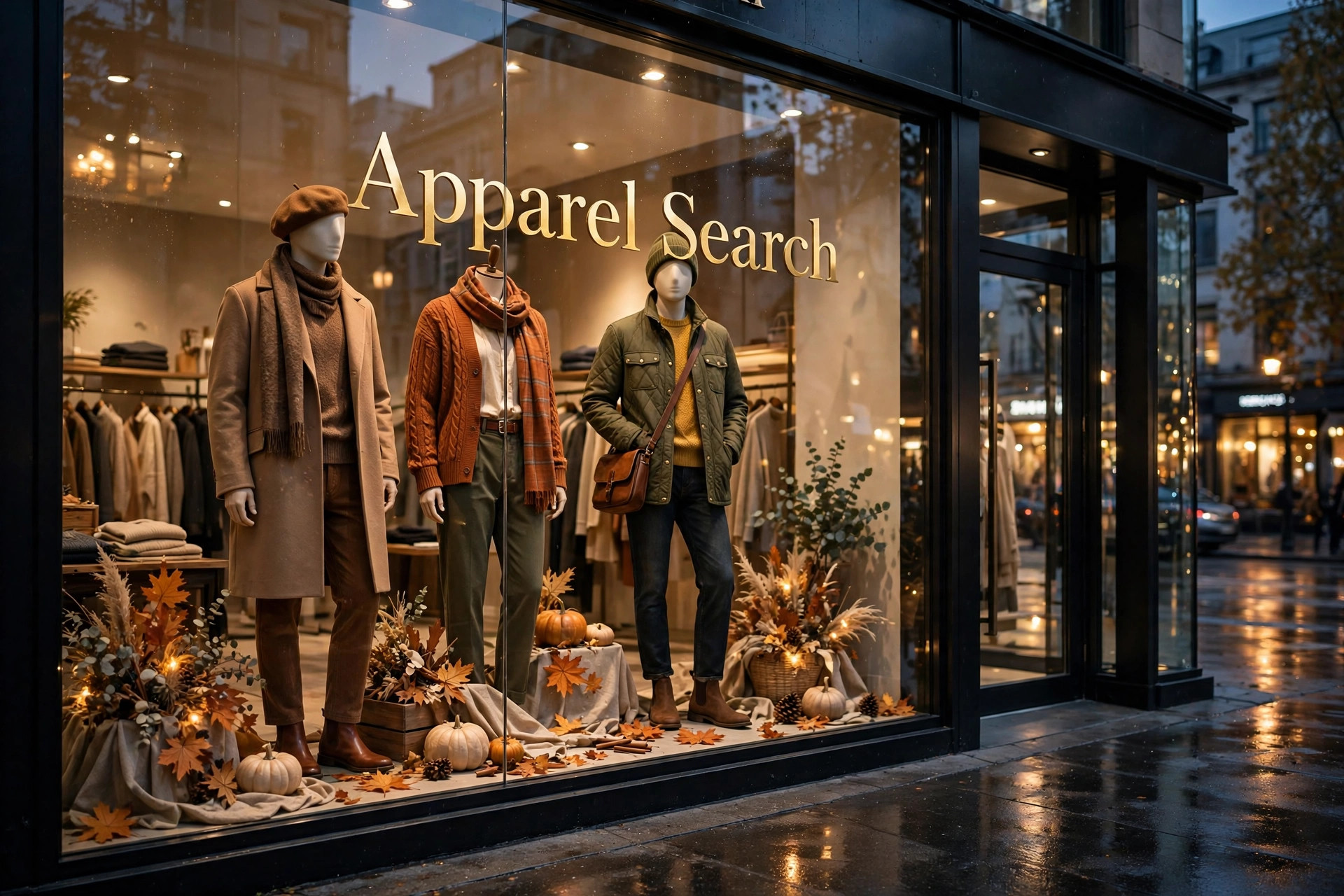
A store window is the only advertisement a shop runs every hour it is open, and it works on people who had no intention of shopping. This page covers how apparel windows are designed — the story, the structure, the props, and the change schedule. It is one part of our full visual merchandising guide, which puts windows in context with mannequins, store layout, lighting, and the rest of the selling floor.
One Window, One Story
Every effective window answers a single question instantly: what is this about? A new season's color, a holiday, a fabric, a price event, a local occasion. The mistake beginners make is treating the window as a sample tray of the store — a few dresses, a jacket, some shoes, a handbag — which reads as clutter from ten feet away. A themed window, by contrast, can be understood from across the street: three mannequins in rust and cream knits among autumn branches says "fall has arrived here" before a single garment is examined.
Storytelling in a window is literal scene-setting. Props, backdrop, and garments all support the same idea, and anything that does not support it is removed. The outfits are the product being sold; everything else is stage dressing whose job is to make the outfits look desirable and to signal the occasion they are for. If a prop draws more attention than the clothing, the window is advertising the prop.
Open-Back and Closed-Back Windows
A closed-back window is a box: a backdrop wall separates the display from the store, so the designer controls the entire scene — background color, lighting, and sight lines. It suits dramatic, theatrical displays and protects merchandise from the visual noise of the floor behind it. Its cost is that the store itself is hidden, so the window alone must earn the entry.
An open-back window has no backdrop; shoppers see through the display into the store. The display is usually shallower — mannequins or forms near the glass — and the store interior becomes part of the picture, which means the first fixtures inside must be dressed as carefully as the window itself. Open backs let in daylight, make small stores feel larger, and let a busy, well-stocked floor do some of the persuading. Many stores compromise with a partial back or a low platform that stages the display while keeping the view open above it.
Building the Scene: Composition and Props
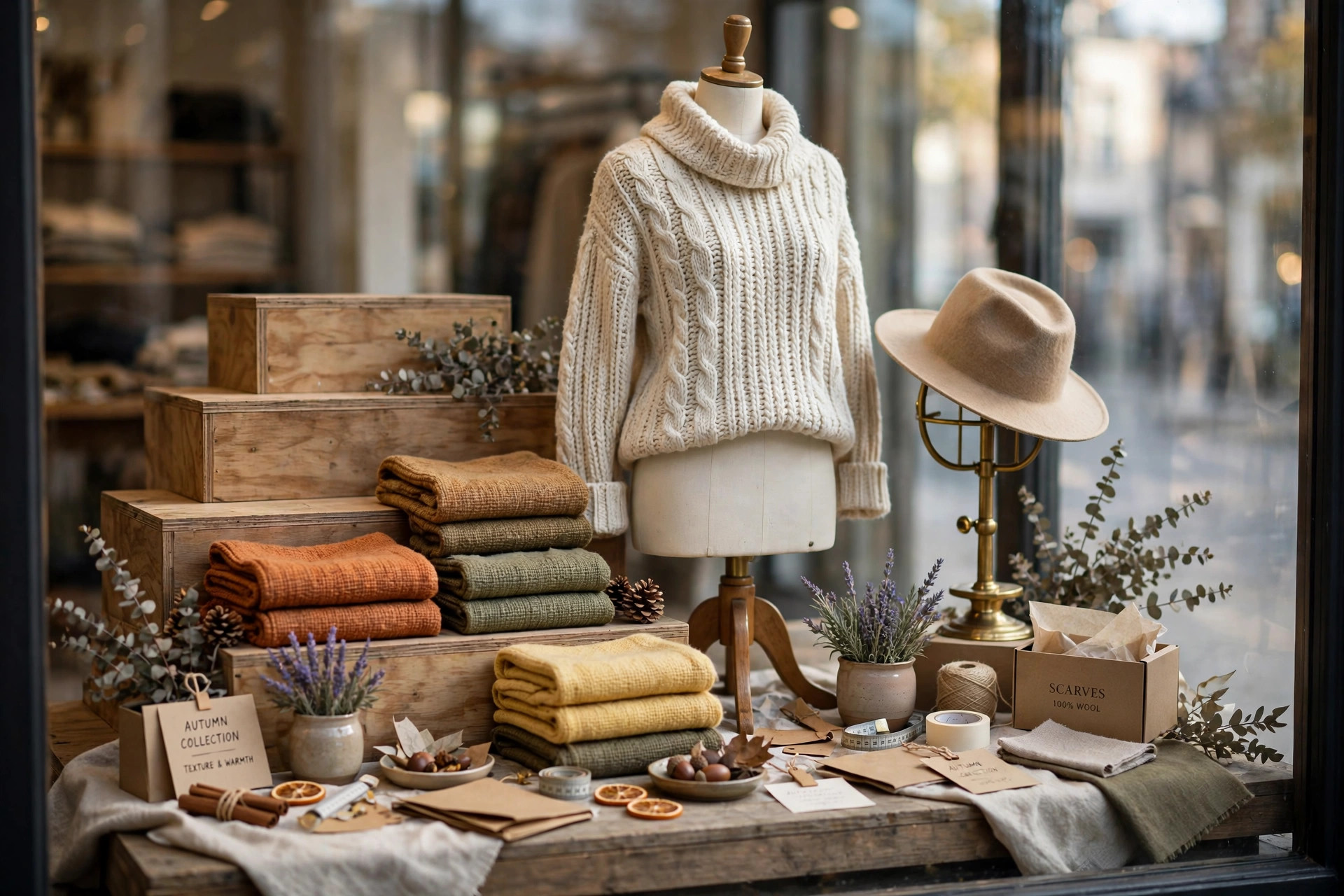
Window composition borrows from theatre and photography. A focal point — usually the central, tallest, or most brightly lit mannequin — anchors the scene, and supporting figures are grouped around it rather than spaced in an even row. Groups of three or five read as scenes; even, evenly spaced rows read as inventory. Height is built deliberately with platforms, risers, and hanging elements so the eye travels up and down instead of skimming a single flat line at eye level.
Props earn their place by clarifying the story: luggage beside travel clothing, skis beside ski jackets, a picnic basket beside summer dresses. Scale matters — props slightly larger or smaller than life size add theatre, while realistic clutter shrinks the scene. Signage inside the window stays minimal: a theme line and, where the store's policy allows, a price point. A window full of tickets and banners is a window whose story has been replaced by shouting. For background terminology, see the glossary entry on fashion windows and store window displays.
The availability rule: everything worn in the window must be in stock inside, in a reasonable range of sizes, for as long as the window is up. A window that sells out its hero outfit in two days and stays dressed for two more weeks is advertising disappointment.
Change Cadence: Keeping the Window Current
Windows change with the selling calendar: season launches, major deliveries, holidays, local events, and promotions. The right interval depends on how often the same audience passes. A commuter-route store whose regulars walk by twice a day may refresh every two to four weeks, even if only the outfits change on the same set. A destination store in a mall can run a strong seasonal window longer, because its audience rotates.
Between full changes, windows need maintenance: straightening after vibration and bumps, replacing a mannequin whose outfit sold, dusting, and checking lights. Window lighting is part of the design — spots aimed at the mannequins, not the glass, and bright enough to compete with daylight reflections; our guide to retail lighting for clothing stores covers window lighting in detail, and the choice of forms is covered in the mannequins and dress forms guide.
Common Questions
- What makes a clothing store window display effective?
- One clear story told at a glance: a small group of mannequins in complete outfits, a single theme supported by props, and lighting that separates the display from the street. A window that tries to show everything in the store communicates nothing.
- What is the difference between open-back and closed-back windows?
- A closed-back window is a self-contained stage with its own backdrop, giving full control of the scene. An open-back window lets shoppers see into the store, trading some control for a view of the selling floor and natural light. Each needs different composition and lighting.
- How often should a store window display change?
- With each season and major delivery or promotion at minimum, and sooner when the featured merchandise has sold down. Busy high-street locations often refresh every two to four weeks because the same audience passes daily.
- How many mannequins should a window display use?
- Usually two to five, grouped rather than lined up. Odd numbers and varied heights read as a scene instead of a row, and every mannequin should wear a complete, purchasable outfit with the accessories shown available inside.
Back to the Visual Merchandising & Retail Display Guide
Return to the main guide for the full picture — windows, mannequins, layout, planograms, lighting, and presentation working together.