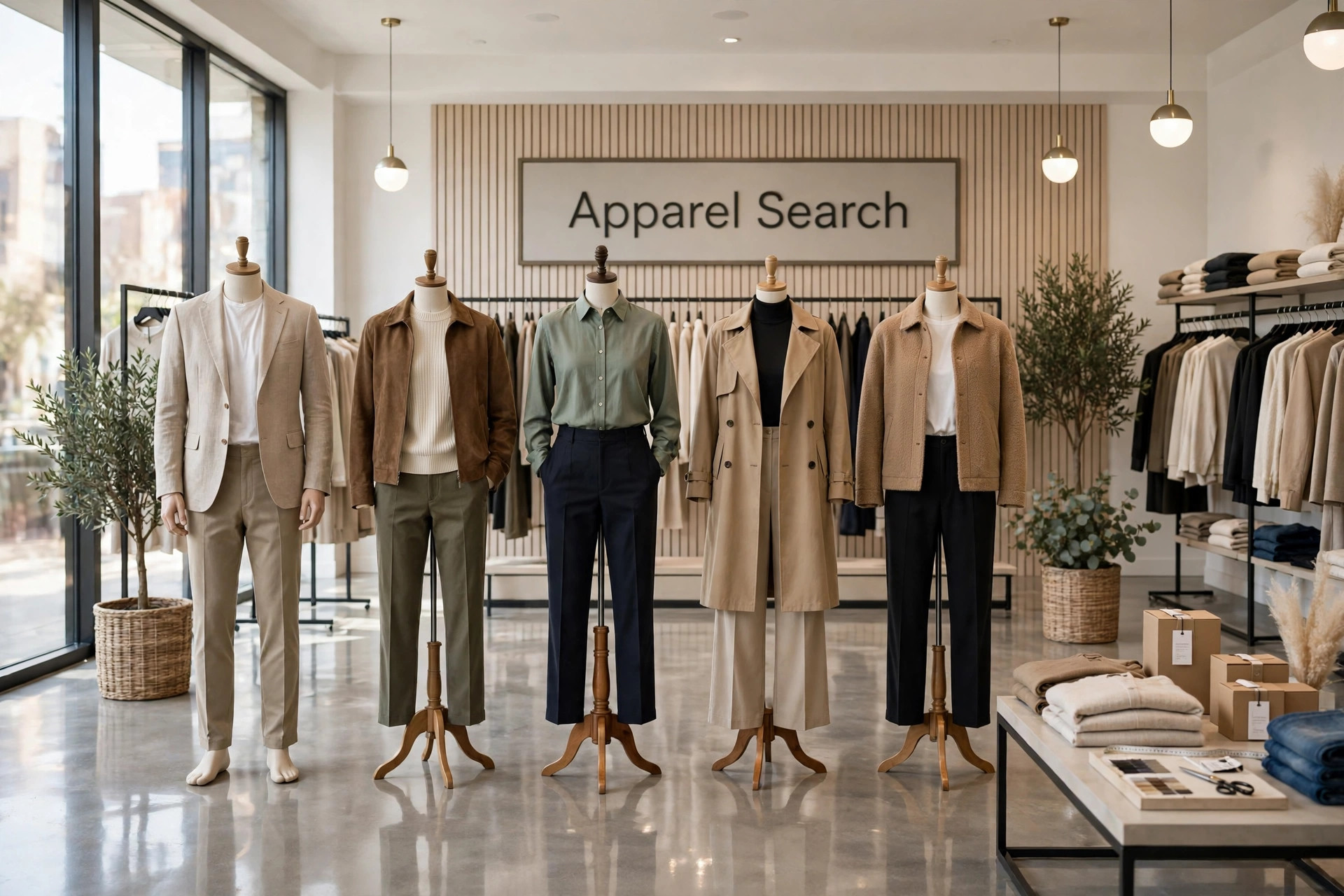
Flat garments tell a customer almost nothing: not how a dress moves, not how a jacket sits on shoulders, not what a sweater looks like with trousers and a scarf. Mannequins and dress forms supply the missing body. This guide explains the main types and how retailers use them; it is part of our broader visual merchandising guide, and it is a knowledge companion to our supplier directories — when you are ready to buy, see the mannequin and forms directory and retail mannequins and forms suppliers.
Full Mannequins: Realistic, Abstract, and Headless
Realistic mannequins reproduce a person in detail — sculpted or molded features, wigs, makeup, natural poses. They present a complete character the customer can relate to, and they suit traditional department stores and brands with a defined customer image. Their costs are ongoing: wigs and makeup date quickly, faces can look uncanny under poor light, and a realistic figure commits the display to one age and look.
Abstract mannequins keep the human shape but drop the detail — smooth egg heads, featureless faces, matte finishes in white, grey, or metallic tones. They read as modern, never clash with an outfit's colors, and age slowly. Headless mannequins end at the neck, which solves the face problem entirely and shortens the figure for low windows and tabletops. Flexible and soft mannequins, with bendable arms or foam bodies, allow seated and action poses for sportswear and children's clothing.
Dress Forms, Torso Forms, and Ghost Mannequins
The dress form is the tailor's tool adopted by retail: a torso in linen or jersey over a molded body, on a tripod or dress-stand base, often with a cage skirt frame at the hem. It signals craft and fit, suits boutiques and bridal and tailored clothing, and its pinnable surface recalls the workroom. Torso forms — cheaper half-body shells, sometimes with a hanging hook instead of a stand — do the everyday work on shelves, tables, and wall fixtures, showing knitwear and shirts in quantity without the cost of full figures.
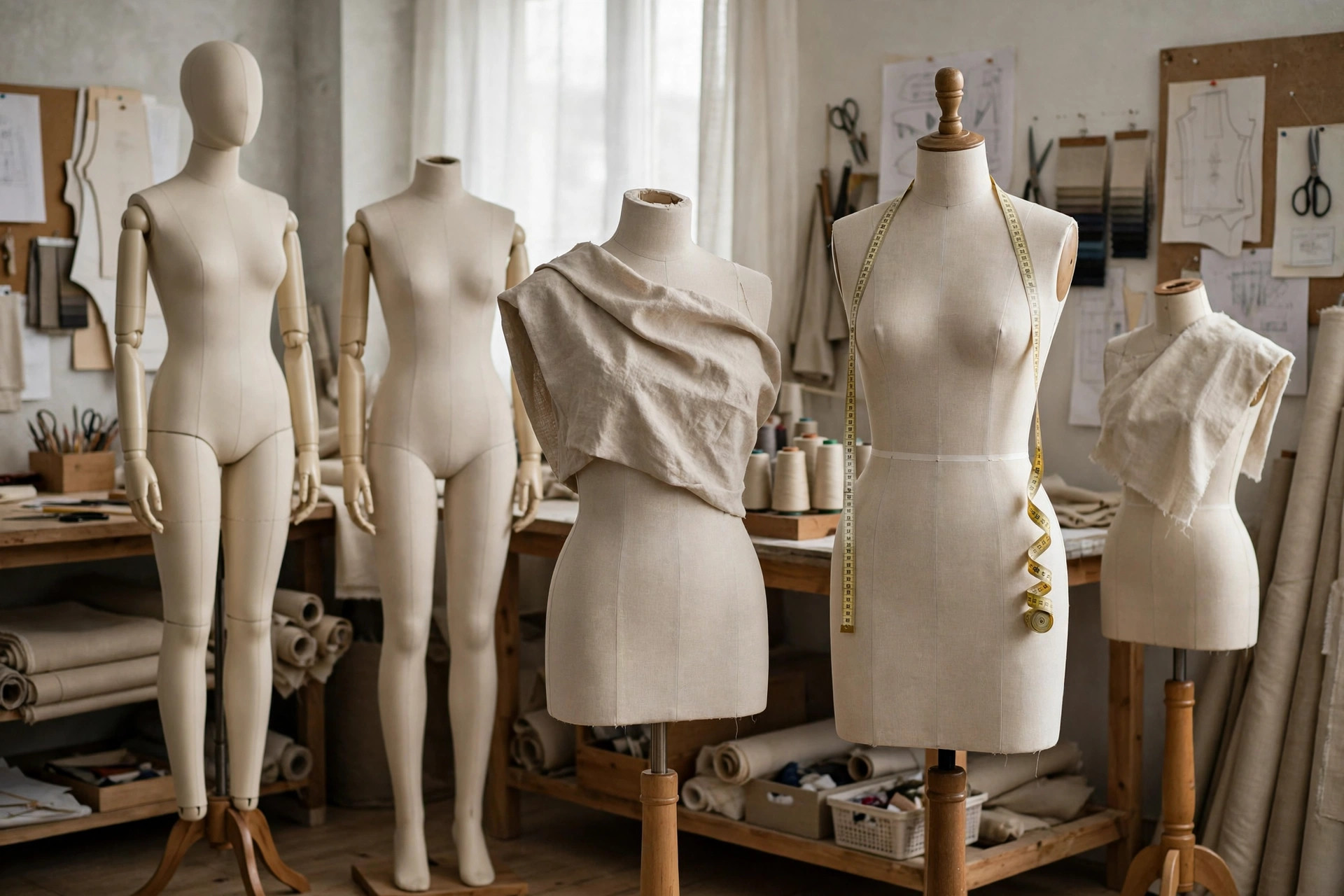
The ghost mannequin (or invisible mannequin) is built in removable sections. Dress the form, photograph or display the garment, and the missing neck and arm pieces let the inside of a collar or lining show as if an invisible person wore it. It belongs mainly to e-commerce photography, but the same sectional forms appear in stores for floating, minimal displays.
How Stores Put Forms to Work
Forms do three jobs. First, outfit building: a dressed mannequin shows the complete look — the jacket with the shirt, trousers, belt, and shoes — and customers buy outfits far more readily than separates they must assemble mentally. Second, fit communication: drape, length, and proportion are visible at a glance in a way a folded stack never achieves. Third, structure: mannequin groups create the focal points that organize a floor, which is why they anchor the windows described in our window display design guide and the feature displays in a clothing store layout.
Dressing standard: a mannequin's outfit should be steamed, pinned at the back for fit rather than left baggy, accessorized completely, and priced or signed so the look can be bought without hunting. A half-dressed form — shoes missing, sleeves uneven — quietly tells customers the store does not finish things.
Choosing forms is a budget and brand decision. Buy neutral finishes before colored ones, flexible poses before theatrical ones, and sizes that match the store's actual customer rather than an idealized sample size — shoppers notice when every form wears the smallest size on the rail. Handle forms by the body, not the hands and fingers, which are the most fragile and most replaced parts; store spare hands, and retire chipped or yellowed figures, because a damaged mannequin makes new clothing look second-hand.
Common Questions
- What is the difference between a mannequin and a dress form?
- A mannequin is a full or partial human figure — with head, arms, and legs in realistic or abstract form — used to display complete outfits. A dress form is a torso-only shape, traditionally on a stand, used to show how a garment falls on the body and borrowed from the tailor's workroom.
- Why do stores use headless or abstract mannequins?
- Abstract and headless forms keep attention on the clothing instead of a face, age more slowly than realistic figures with wigs and makeup, suit a wider range of customers who can project themselves onto the garment, and are usually cheaper to buy and maintain.
- What is a ghost mannequin?
- A ghost mannequin is a modular form whose removable neck, arm, and body sections let a garment be photographed or displayed as if worn by an invisible person, showing the inside of necklines and linings. The term is most common in e-commerce photography.
- How many forms does a small clothing store need?
- Enough to dress the window and one or two focal points inside — typically two to four full mannequins plus a few torso or dress forms for tables and shelves. Versatile poses and neutral finishes stretch a small set across many stories.
Back to the Visual Merchandising & Retail Display Guide
Return to the main guide for the full picture — windows, mannequins, layout, planograms, lighting, and presentation working together.