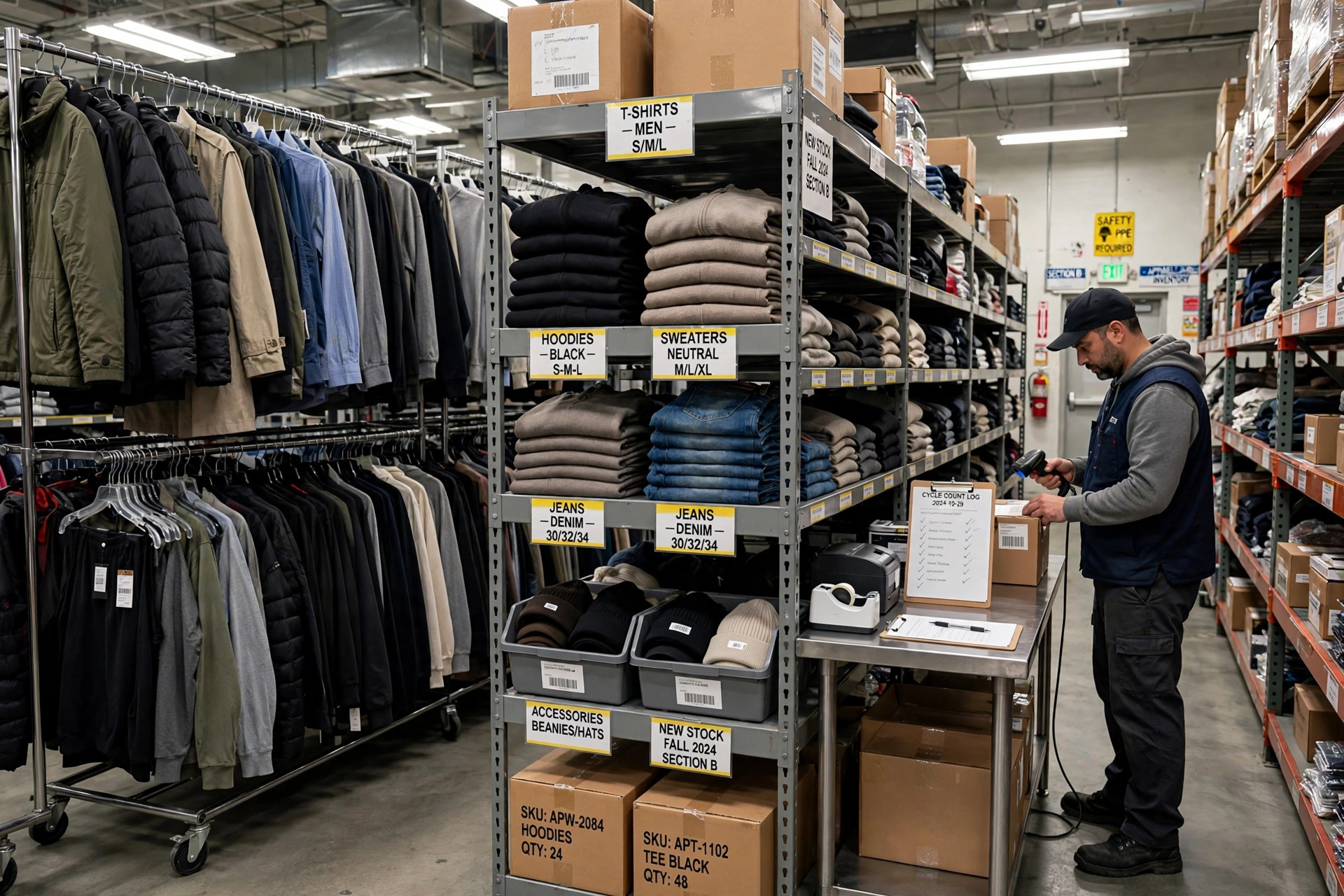
Inventory turnover is the number of times a retailer sells and replaces its inventory during a period, usually a year. In apparel it is the clearest measure of how hard the money tied up in stock is working: fashion inventory loses value as seasons pass, so stock that sits is not neutral — it is on its way to a markdown. Turnover is read by category, because a store can be turning basics briskly while seasonal fashion quietly ages in the same building.
The Inventory Turnover Formula
Formula: inventory turnover = cost of goods sold ÷ average inventory (at cost)
Worked example: a store's cost of goods sold for the year is $480,000, and its average inventory at cost is $80,000. Turnover = $480,000 ÷ $80,000 = 6.0 turns per year. Both figures use cost values so the comparison is like for like; mixing retail sales with cost inventory produces a meaningless number.
Turnover converts directly into days of supply — how long the average stock would last at the current selling rate:
Days of supply: 365 ÷ turnover. For 6.0 turns, 365 ÷ 6 = about 61 days of supply on hand at any time.
Average inventory should be averaged from several counts across the period, not taken from a single stocktake, because apparel inventory swings sharply between delivery weeks and clearance weeks.
What Fast and Slow Turnover Tell a Buyer
Slow turnover usually means one of three things: the buy was too deep, the product was wrong, or prices were set too high for the demand that existed. Its cost is not just storage. Capital is trapped in stock that could have funded new product, and in fashion the eventual exit is almost always a markdown, so slow turns and margin loss arrive together — which is why turnover is one of the two ingredients of GMROI.
Very fast turnover is not automatically good news. If a category turns far faster than comparable ones, the store may simply be under-bought: shelves empty before the season ends, best sizes disappear first, and sales are lost that a deeper buy would have captured. The practical target is a planned turnover for each category, set with its season length and replenishment options in mind. Replenishable basics can be planned to turn steadily all year; one-shot seasonal fashion must effectively turn within its season, because whatever remains afterward is clearance stock.
Managing Turnover Through the Season
Turnover is managed before the season starts as much as during it. An open-to-buy plan limits how much inventory can be committed at any point, keeping room to chase proven sellers instead of forcing the whole budget into first orders. During the season, weekly sell-through figures flag the styles that will drag turnover down while there is still time to transfer, promote, or mark them down in a planned way.
At category level, buyers compare turnover across stores and seasons to reset future buy depths: a category that planned four turns and delivered two and a half gets a smaller, shallower buy next year, or a different size run if the leftovers were concentrated in particular sizes. The goal is never the highest possible number. It is stock that arrives close to when customers want it, sells at the best achievable margin, and leaves before the season makes it old.
Common Questions
- What is a good inventory turnover for a clothing store?
- Many apparel retailers plan somewhere around four to six turns a year overall, with basics turning faster and seasonal fashion needing to clear within its season. The right target is the planned rate for that category, compared consistently over time.
- Why are cost figures used instead of retail sales?
- Inventory is recorded at cost, so dividing retail sales by cost inventory would mix two different valuations and overstate turnover. Cost of goods sold divided by average inventory at cost keeps both sides of the formula consistent.
- How do I convert turnover into days of supply?
- Divide 365 by the turnover rate. Six turns a year equals about 61 days of supply, and four turns equals about 91 days. The days figure shows how long current stock would last at the present rate of sale.
- Can inventory turnover be too high?
- Yes. Turnover that is far above plan often means the store was under-bought, with empty sizes and lost sales. High turnover raises GMROI on paper but can reduce total margin dollars and disappoint customers.
Retail Math & Fashion Business Guides
This page is part of the Apparel Search retail math and fashion business series. Browse the full series below, or start from the apparel industry tools hub.