Fashion Photographer Job Description
Photographing clothing so people want it — editorial, catalogue and e-commerce, runway and campaign work
A fashion photographer makes the images the clothing industry sells with. Almost no garment is bought unseen: it is bought from a photograph — in a magazine editorial, a brand campaign, a catalogue, a retailer's website, a lookbook sent to buyers. The photographer's job is to make clothing look like itself at its best: its cut, colour, fabric and movement rendered truthfully and desirably at once, on a model, on a mannequin or laid flat, in a studio or on location. It is a craft of equal parts eye, technique and production discipline, practised staff-side for brands and retailers and freelance for magazines and clients of every size.
More Miscellaneous Job Descriptions by Letter:
What a Fashion Photographer Does
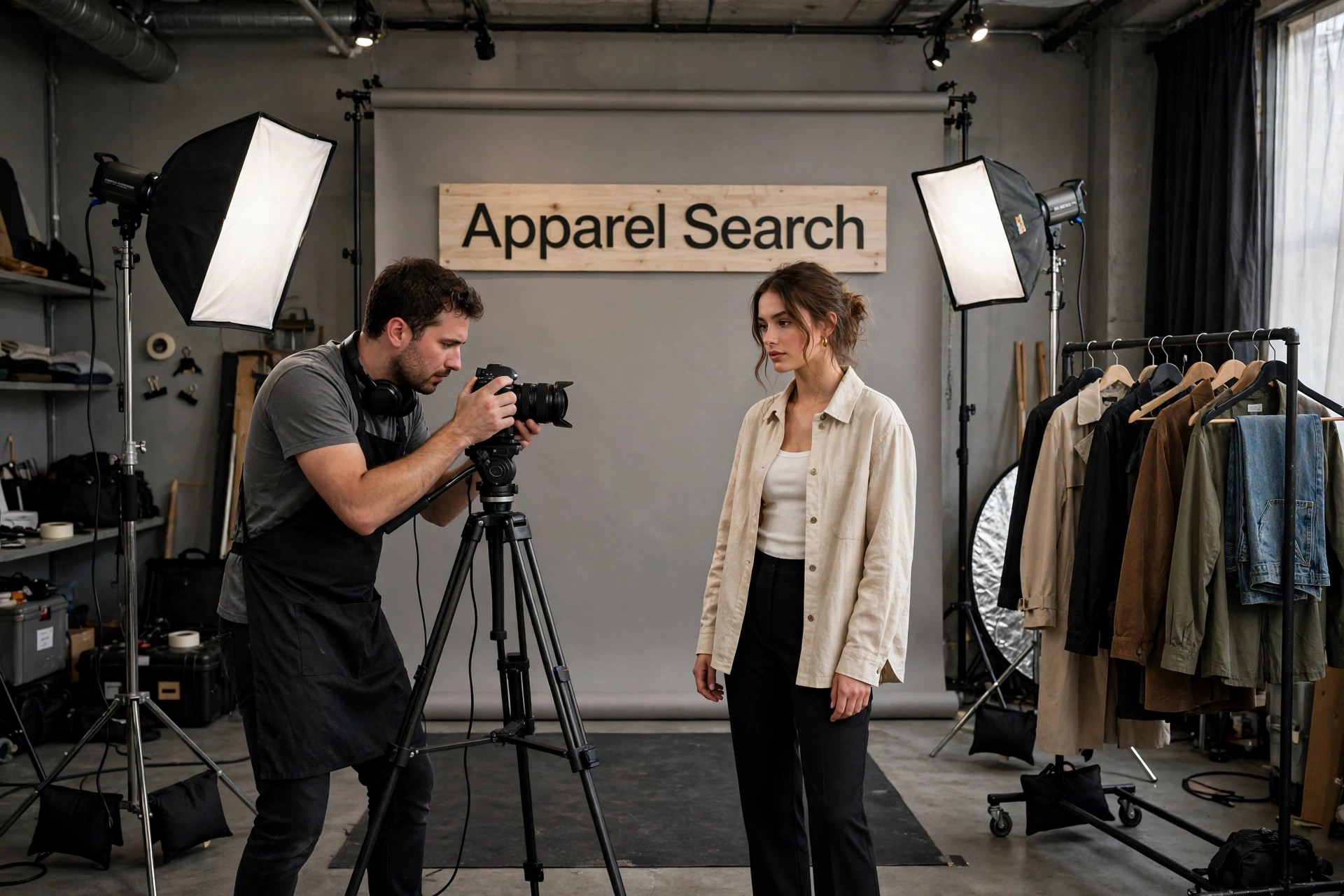
Work begins before the camera: reading the brief, casting or confirming models with the client, planning locations or studio sets, and agreeing the shot list — which garments, in which combinations, in what order, against which deadlines. On the shoot itself the photographer directs the set: positioning lights, choosing lenses and angles, guiding the model's poses and expressions, and working with the stylist, hair stylist and makeup artist so garment, styling and image agree. Clothing is checked constantly on screen — a twisted seam, a creased skirt or a wrong colour under the lights is fixed on set, not in apology afterwards.
Everything in that workflow — the brief, the casting, the shot list, the set — is production work, and the Apparel Search Fashion Photography & Media Production Guide covers that side of the craft in depth: planning a photo shoot, producing a lookbook, e-commerce clothing photography, shoot budgeting and image licensing.
After the shoot, the photographer edits: selecting the frames that fulfil the brief, colour-correcting so the garment on screen matches the garment in hand — a professional obligation in fashion, where a returned purchase often begins with a misleading photograph — and delivering files in the formats and sizes each use requires, from print-resolution editorial to the standardised image sets e-commerce runs on. Staff photographers repeat this cycle to a retail calendar of hundreds of products; editorial and campaign photographers build fewer, larger productions, each with its own creative team and budget.
The Branches of Fashion Photography
E-commerce and catalogue photography is the industry's volume employer: consistent, accurate product images — front, back, detail, on-model and flat — produced at speed to house style, where discipline and throughput are the valued skills. Editorial photography for magazines trades volume for narrative: a story told across a series of images, with greater creative freedom and greater competition for the commissions. Advertising and campaign work sits between them, building a brand's seasonal image under an art director's concept, at the highest budgets and scrutiny the field offers.
Runway and event photography is its own specialism — fast lenses, faster judgement, images filed to picture desks within the hour — and backstage and lookbook work serve designers and wholesale brands directly. Many photographers build a portfolio career across branches: e-commerce contracts providing the steady base, editorial and campaign commissions providing the reputation. Understanding which branch a job belongs to matters, because the same camera skills are judged by different standards in each: accuracy in one, originality in another, speed in a third.
Skills and Abilities the Role Requires
Technical command is assumed: cameras and lenses, studio and location lighting, colour management, and the editing software through which every professional image now passes. The fashion-specific eye sits on top of it — seeing how fabric drapes and moves, how a garment's proportions read in two dimensions, what styling and pose do to a silhouette — and it is developed by studying clothing as much as photography. Direction is the third skill: a photographer leads a set of models and specialists, often under time pressure, and the atmosphere they create is visible in the pictures.
Professional reliability decides careers as much as talent. Fashion photography is booked on trust: turning up with working backups of everything, delivering edited files when promised, handling usage rights and model releases correctly, and pricing work — day rates, licensing, expenses — in language clients understand. Freelance photographers add the business itself: portfolio, marketing, invoicing and the patience to build a client list across seasons. Digital change keeps redefining the toolkit, from video clips captured alongside stills to the image standards of each selling platform, and working photographers budget time to keep current.
Qualifications, Training and Career Path
Fashion photography is a portfolio profession: clients hire the work they can see, and formal qualifications, while useful, come second to a strong, relevant book. Photography degrees and courses teach technique, lighting and image editing rigorously, and assisting established photographers remains the classic apprenticeship — loading, lighting, managing files on real shoots, learning how sets and clients work — followed by test shoots with models, stylists and makeup artists building the portfolio every collaborator needs.
Careers progress from assistant to staff photographer roles with retailers and studios, or from test work to commissioned editorial, catalogue and campaign work as a freelance name. Established photographers become lead and head photographers running studios and teams, specialise in a branch or a look that clients seek out, and expand into directing moving image as brands ask for film alongside stills. The constants at every level are the same three: pictures that serve the garment, delivered exactly as promised, for clients who come back next season.
Common Questions
What does a fashion photographer do?
A fashion photographer plans and shoots photographs of clothing — editorial stories, advertising campaigns, catalogues, lookbooks and e-commerce product images — directing models and styling teams, lighting the garments, then editing and delivering images that show the clothes accurately and desirably.
Do fashion photographers work staff or freelance?
Both. Retailers, brands and studios employ staff photographers for continuous catalogue and e-commerce work, while magazines, campaigns and many brands commission freelance photographers per shoot. Many careers combine a staff base with freelance commissions.
How do you become a fashion photographer?
Build technique through study and, classically, by assisting working photographers; create test shoots with models, stylists and makeup artists to build a portfolio; then win small commissions and repeat clients. The portfolio, not the certificate, is what gets a fashion photographer hired.