Apparel Search Consumer Guides
Postpartum Dressing Guide
Comfort-first dressing for the first weeks and months — forgiving waistbands, soft structure, and no timelines attached.
The first weeks after a baby arrives are not the time for a wardrobe with demands. What you wear has one job — to be comfortable, kind to a body that has just done something enormous, and easy enough that getting dressed is the simplest decision of the day. This guide builds that wardrobe in clothing terms: the waistbands that do not dig, the soft structure that lets you feel dressed without anything tight or complicated, and the gradual, pressure-free route back to your regular clothes. It is part of our nursing and postpartum clothing guide.
Start With the Waistband
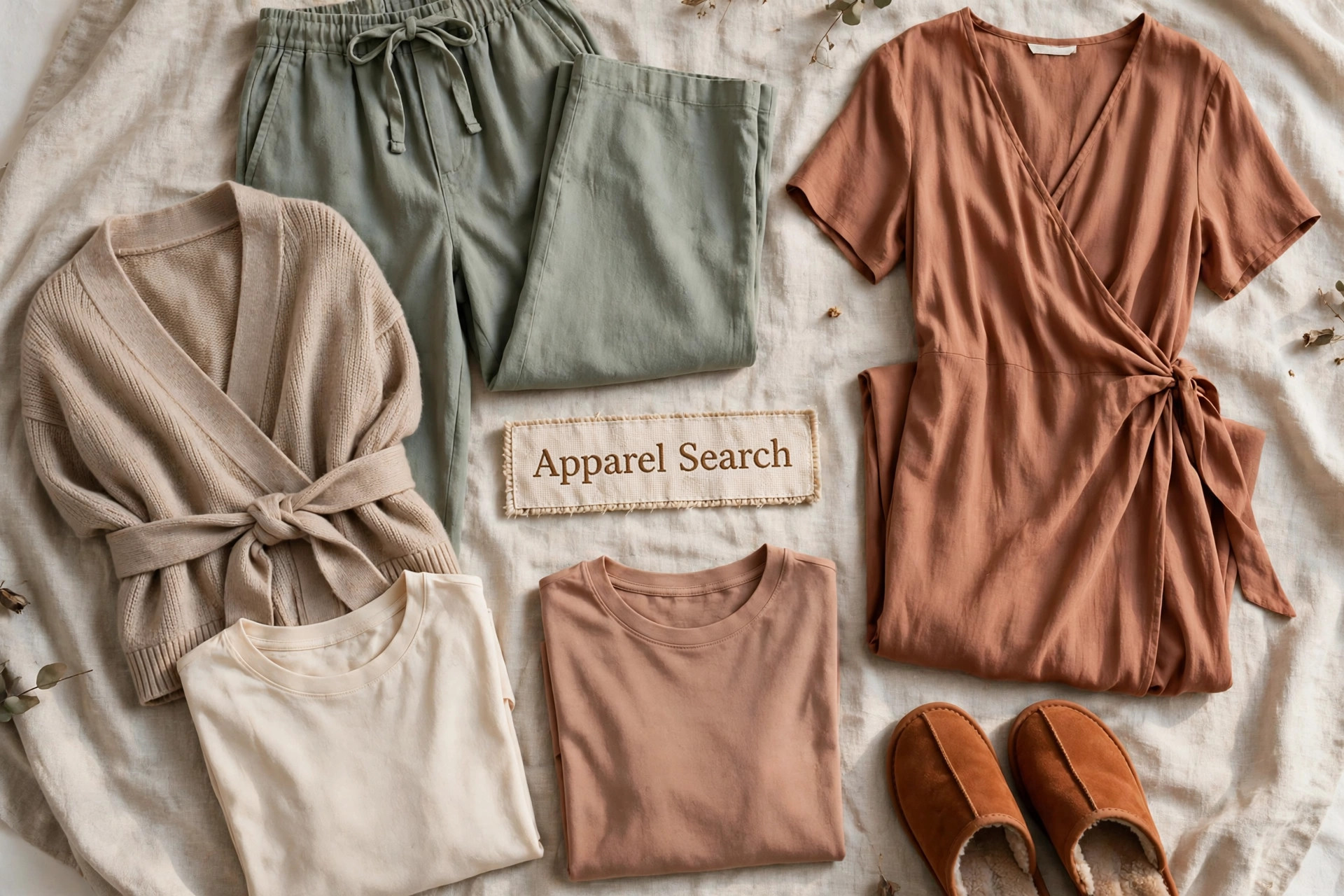
If one clothing feature decides comfort in the first weeks, it is the waistband. The kindest options share a trait — nothing rigid presses anywhere: drawstring waists that adjust through the day, wide, soft elastic that spreads pressure instead of concentrating it, and fold-over panels that can sit high or be folded down. This is why maternity bottoms stay in rotation so long after birth: a soft maternity panel is, functionally, the perfect early-postpartum waistband. Our maternity jeans guide covers the panel styles — worn now purely for comfort. Fixed buttons, tight belts and unforgiving waistbands can wait; there is no prize for wearing them early.
Soft Structure: Feeling Dressed Without the Effort
Comfort-first does not have to mean shapeless. The pieces that bridge the gap are softly structured: a wrap cardigan that closes loosely and opens for feeding, a shirt dress in a fluid fabric, a long open layer over a tee and leggings, knit dresses that skim instead of cling. Each gives you a finished outline — the feeling of being dressed — while asking nothing of your body in return. Fabrics do much of the work: brushed and modal knits, soft cotton jersey, and light stretch wovens feel gentle, layer without bulk, and forgive the constant washing this season of life involves. Seams and labels matter more than usual; flat finishes are worth seeking out.
A Small Rotation That Runs Itself
- Two or three bottoms. Soft-waist trousers, leggings or maternity jeans in rotation — dark, forgiving colors that mix with everything.
- Four or five tops. Tees, wrap tops and one or two shirts that open at the front if you are feeding — enough that the laundry cycle never leaves the rail empty.
- One long layer. A cardigan or soft jacket that pulls every combination into an outfit, for visitors, walks and photographs.
- Sleepwear that doubles. Pajamas presentable enough for the door — our maternity pajamas guide covers the styles that cross over — because in the first weeks the boundary between night and day clothes is mostly theoretical.
When Your Old Clothes Come Back
They come back gradually, piece by piece, and the order is unpredictable — a dress returns while the jeans wait; the jeans return while a fitted top waits. Treat it as a series of experiments, not a test with a date attached: try things on when you feel like it, keep what is comfortable back in the rotation, and return the rest to the rail without ceremony. Bridge pieces — the wrap tops, open layers and soft-waist bottoms of this guide — are exactly what carries the wardrobe across the gap, and most of them stay useful long after. Alterations and new-size shopping are decisions for later, when your size has settled; buying a whole wardrobe for a body still in transition is the one expensive mistake of this stage.
Shop Postpartum Clothing on Amazon
Ready to shop? Product links are kept in one place on the Apparel Search shopping guide:
Shop Clothing on AmazonThis link opens the Apparel Search shopping guide for Amazon, where the product links are kept in one place.
Common Questions
How long will I wear maternity clothes after giving birth?
Most women keep at least some maternity pieces in rotation for the first weeks and months — bottoms with soft panels usually last longest, because the waistband comfort has no equal in a regular wardrobe. There is no correct date to stop; pieces retire one at a time, as regular clothes become comfortable again. Think of it as a handover, not a deadline.
What waistband is most comfortable after birth?
The kind that presses nowhere: drawstrings you can adjust through the day, wide soft elastic that spreads pressure, and fold-over panels that sit where you want them. That is functionally what maternity waistbands already are, which is why maternity jeans and trousers are the postpartum uniform. Rigid waistbands, fixed buttons and tight belts can simply wait until they are comfortable again.
When should I buy clothes in a new size?
Later — when your size has settled enough that a purchase will still fit in a few months. In the transition, bridge pieces earn the money: wrap tops, open layers and soft-waist bottoms that work across sizes. A whole new-size wardrobe bought for a body still in motion is the expensive mistake of this stage; a few well-chosen pieces are the fix.
What fabrics feel best in the first weeks after birth?
Soft, breathable and washable ones: cotton jersey, modal and brushed knits, and light stretch wovens. Flat seams and soft labels matter more than usual, and fabrics that survive frequent washing without losing shape will carry the whole rotation. Anything fussy, delicate or dry-clean-only can rest until life is less laundry-driven.
Back to the Nursing & Postpartum Clothing Guide
The whole after-baby wardrobe, stage by stage — the first weeks, the nursing months and the transition back.