Apparel Search Consumer Guides
Breastfeeding-Friendly Outfits
Outfit formulas from ordinary clothes — the two-piece advantage, layers that work, and the dress fronts that cooperate.
Dedicated nursing clothes are convenient, but they are not the only route to feeding-friendly dressing. Most wardrobes already contain the makings of excellent nursing outfits — because the secret is rarely a special garment; it is how pieces combine. A top that lifts over a layer that stays put, a wrap front that pulls aside, a shirt worn open over a camisole: these are ordinary clothes doing the job through arrangement. This page collects the formulas that work, the dress styles that cooperate, and a way to audit your own closet for candidates. For the purpose-built side, see our nursing clothing guide; both pages belong to our nursing and postpartum clothing guide.
The Two-Piece Advantage
Separates beat one-pieces for nursing, for a simple mechanical reason: only half the outfit has to move. A top lifts or opens while the bottom — skirt, trousers, jeans — stays exactly where it was, and a layer underneath means lifting the outer top does not mean baring your midriff. Dresses, being one piece, have to build the access into the dress itself, which is why the dress section below is a shortlist rather than a general rule. When in doubt on any given morning, default to two pieces.
Outfit Formulas That Work
- The lift-and-layer. A camisole or vest underneath, any top over it. The top lifts, the camisole stays — the classic arrangement, and the one that makes the largest share of an ordinary wardrobe usable as-is.
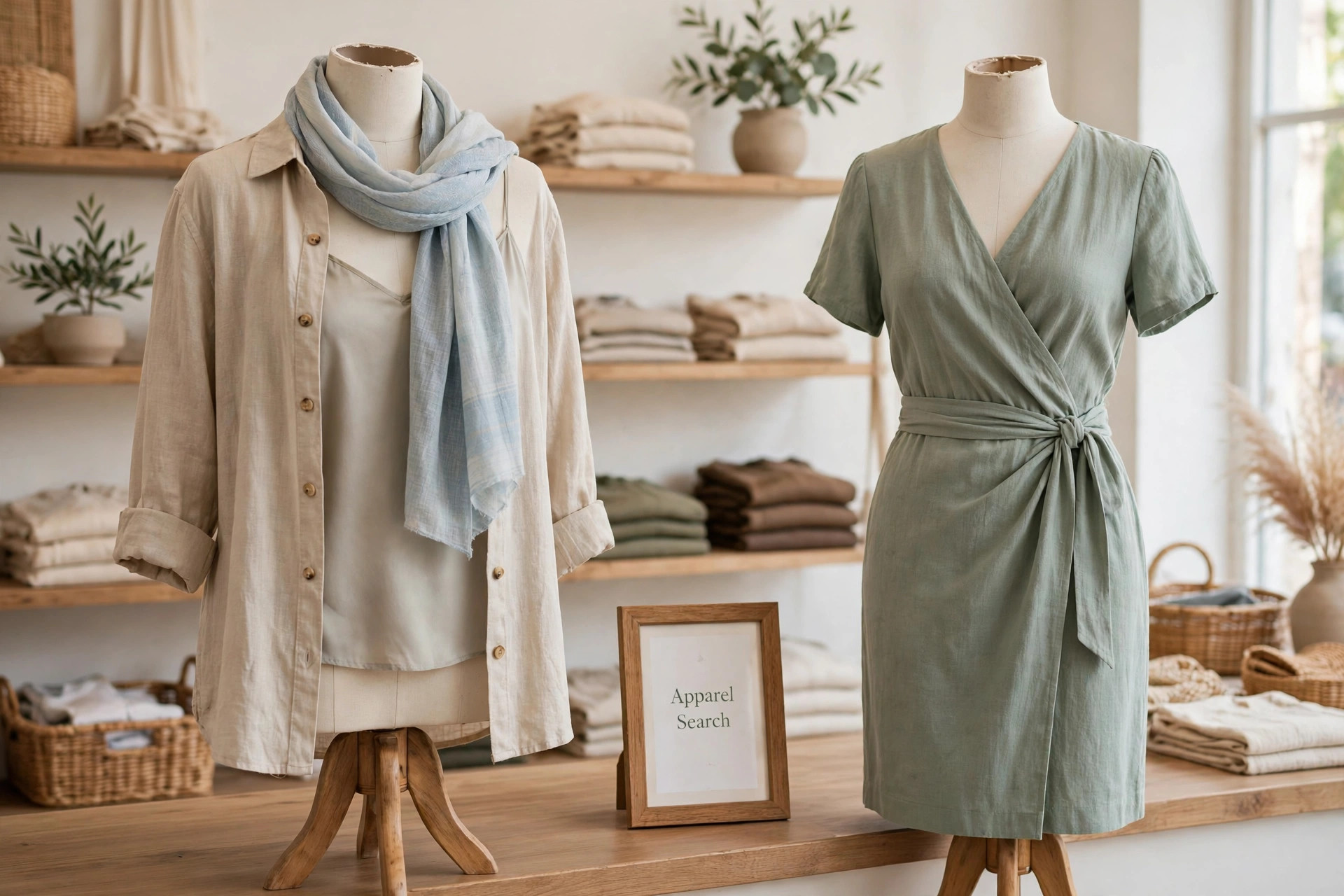
- The open shirt. A button-front shirt worn open over a stretch camisole or tee: unbutton as much or as little as needed, and the shirt becomes part of the coverage. Shirts you already own in a size up are ideal.
- The wrap pairing. A wrap top — genuinely crossing over, not a fixed faux-wrap — over trousers or a skirt. The front pulls aside and settles back; add a camisole beneath if the crossover sits low.
- The cardigan frame. An open cardigan or light jacket over a pull-aside top: the layers give you arrangement options and a pulled-together look for visitors, photographs and first trips out.
- The scarf finish. A large scarf or shawl is a styling piece first — it finishes an outfit of basics — with the practical side benefit of drape exactly where you may want it. Keep it light, washable and nowhere near dangling ties at the neckline.
Dresses: The Fronts That Cooperate
A dress works for nursing when its front opens or moves: wrap and surplice fronts that pull aside, button- or snap-front shirt dresses, dresses with zips at the front or in the side seams, and empire styles with a lift-up layer beneath the bust seam. Deep stretch necklines can work if the fabric recovers well. The styles that do not cooperate are equally definite: fitted dresses with a back zip and no front opening, high fixed necklines in non-stretch fabric, and anything you would have to remove entirely. When shopping our maternity dresses guide with feeding in mind, filter every style through that one question — how does the front open?
Dressing for Occasions While Nursing
Occasions add two constraints: you want to look dressed up, and you may need to feed in an unfamiliar place. Two-piece dressing solves most of it elegantly — a good skirt or tailored trousers with a wrap or button-front top reads as an outfit, not a compromise. For dresses, the occasion styles with working fronts (wrap dresses above all) are formal enough for weddings while keeping access simple. The practical checks: sit down in the outfit before the day, test the access with the actual bra or camisole you will wear, and favor fabrics that shrug off small marks between now and the wash.
Audit Your Own Closet First
Before buying anything, pull every top you own and sort it by one test: can the front lift, open or pull aside, over a layer that stays in place? Most people find a working rotation already hanging there — the purpose-built purchases then only need to fill the genuine gaps, like sleepwear and one dressier piece.
Shop Nursing-Friendly Clothing on Amazon
Ready to shop? Product links are kept in one place on the Apparel Search shopping guide:
Shop Clothing on AmazonThis link opens the Apparel Search shopping guide for Amazon, where the product links are kept in one place.
Common Questions
Can you breastfeed in a dress?
Yes — if the dress front is designed, or happens, to open. Wrap and surplice fronts pull aside, shirt dresses unbutton, and some dresses hide zips or a lift-up layer at the bust. The dresses that fail the test are fitted styles with only a back zip and a fixed, high neckline: there is simply no way in. Judge every dress by its front, and the answer is obvious at a glance.
What is the easiest breastfeeding outfit formula?
The lift-and-layer: a camisole underneath and any top over it. The top lifts for feeding while the camisole keeps your midriff covered, and it works with clothes most people already own. Separates in general beat one-pieces for nursing, because only the top half of the outfit ever has to move.
Do I need special clothes to breastfeed?
No. Purpose-built nursing clothes add convenience — hidden openings, one-handed clips, double layers — but ordinary clothes arranged well do the same job: two-piece outfits, wrap fronts, button fronts worn open or closed, and stretch necklines. Most people end up with a mix: regular clothes doing daily duty, and a few designed pieces where the convenience matters most, like sleepwear.
What should I wear to a wedding while nursing?
A wrap dress is the classic answer — formal, comfortable and quick to open and re-tie. Two-piece occasion dressing works just as well: a smart skirt or trousers with a wrap or button-front top. Whatever you choose, sit down in it and test the access at home first, with the bra or camisole you plan to wear, so there are no surprises on the day.
Back to the Nursing & Postpartum Clothing Guide
The whole after-baby wardrobe, stage by stage — the first weeks, the nursing months and the transition back.