Apparel Search Consumer Guides
Maternity Workwear Guide
Working through pregnancy: the small office capsule, trimester-by-trimester dressing, and footwear for long days.
Working through a pregnancy means dressing a changing body to an unchanging standard: the office expects the same polish in month eight as in month three, while the wardrobe underneath has been rebuilt twice. The efficient answer is a small, deliberate work capsule — a handful of maternity pieces that mix freely, chosen for structure where it shows and stretch where it counts. This guide builds that capsule, walks the office wardrobe trimester by trimester, and covers the footwear question honestly. It sits in our nursing and postpartum clothing guide, alongside the after-baby guides it leads into.
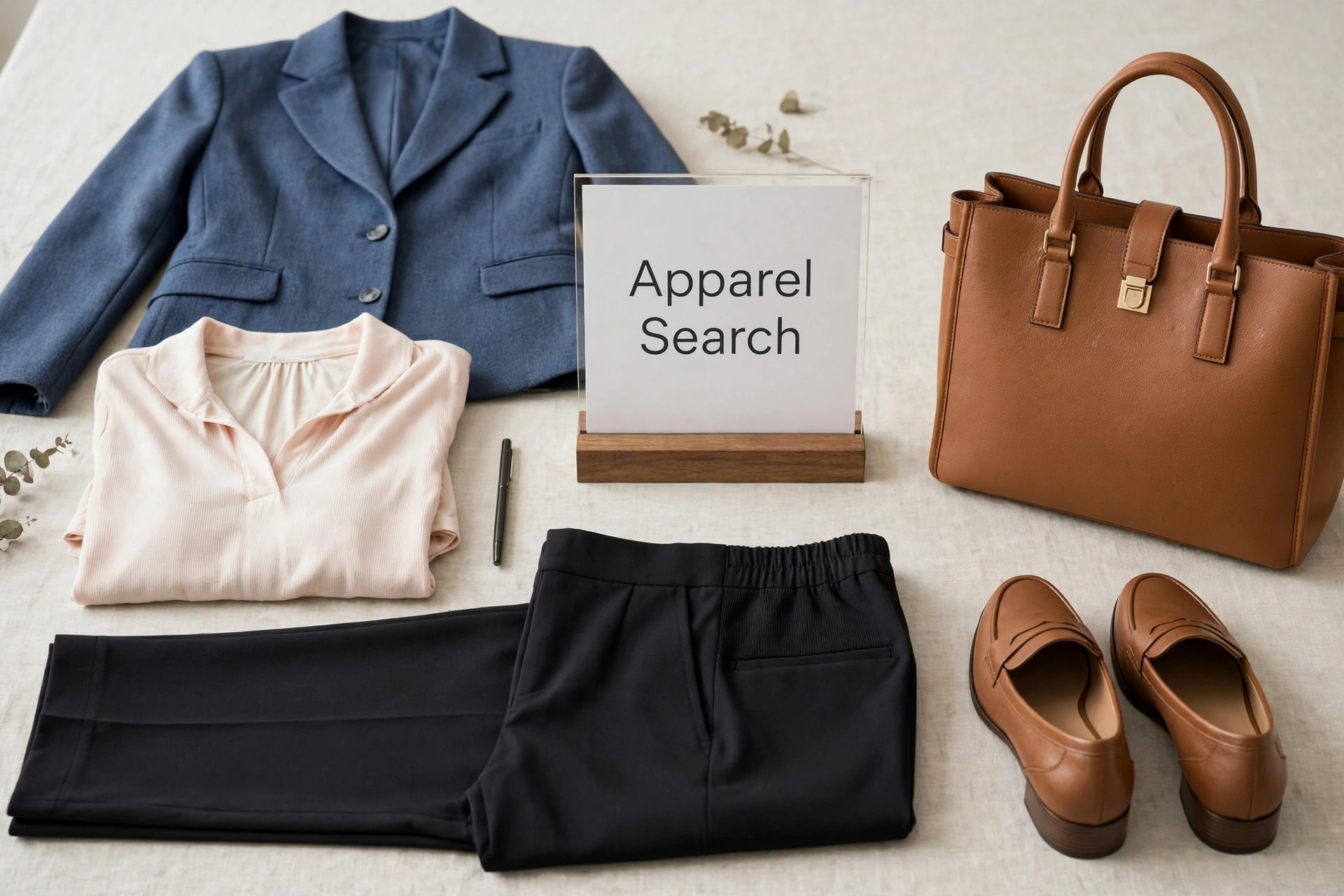
The Small Work Capsule
- Two bottoms that carry the week. Tailored-look trousers with a stretch or panel waist, and a skirt or second trouser in a different color. Everything else in the capsule exists to vary these.
- Three to four tops. Blouses and knit tops with room engineered in — ruching, wrap fronts, extra front length — in colors that all work with both bottoms and the blazer.
- One structured layer. A blazer or tailored cardigan. Early on, your regular blazer worn open does the job; later, a maternity or stretch version keeps the outline. Structure on top is what makes stretch underneath read as an outfit.
- One dress. A wrap or empire dress in a work-appropriate weight: the no-thought morning option, and usually the piece that serves longest — many work through the return to the office as well.
- Shoes that finish it. One polished, genuinely comfortable pair for long days — see the footwear section below — beats three pairs that pinch by noon.
Trimester by Trimester
First trimester: mostly your regular wardrobe, quietly adjusted. Waistbands get a longer top over them, blazers are worn open, and the first maternity purchases are best kept to one pair of panel trousers and a few tops — buy for the change you can see, not the one you are guessing at. Second trimester: the capsule proper. Bump room becomes the requirement in every piece, and this is when the full set above earns its keep: everything mixing, nothing repeated obviously within a week. Third trimester: comfort engineering dominates — stretch where you sit, structure where you are seen, dresses coming into their own as the easiest complete outfit, and footwear chosen for full days on your feet. Across all three, the dress codes guide is the reference for what your office's code actually requires, so the capsule can be built to the code rather than to habit.
Footwear for Long Days
Feet ask more of shoes as a pregnancy goes on — many women find they want more room, more cushioning and a lower, steadier heel by the final trimester. Office-appropriate answers exist at every dress code: loafers and ballet flats with cushioned insoles, low block heels instead of stilettos, and ankle boots in cooler months. Our maternity footwear guide goes through the styles; the work capsule needs only one great pair, bought for the feet you have now.
Stretching the Capsule Further
A small capsule survives on variety tricks: scarves, necklaces and belts above the bump change a top's read without changing the top; rotating the structured layer between blazer, cardigan and jacket triples the visible outfits; and keeping the palette tight — two neutrals plus one or two colors — guarantees that everything bought mixes with everything owned. The arithmetic is the same as any capsule wardrobe: a maternity work wardrobe is worn daily for months, so cost per wear on even well-made pieces falls quickly. Buy the best quality you reasonably can in the few pieces, rather than a rail of cheap ones.
Shop Maternity Workwear on Amazon
Ready to shop? Product links are kept in one place on the Apparel Search shopping guide:
Shop Clothing on AmazonThis link opens the Apparel Search shopping guide for Amazon, where the product links are kept in one place.
Common Questions
How many maternity work pieces do I actually need?
Fewer than you would expect, if they all mix: two bottoms, three to four tops, one structured layer such as a blazer, and one dress will dress a full working week without an obvious repeat. The capsule works because every top goes with every bottom and layer. Add pieces only when a genuine gap appears — a second dress is the most common worthwhile addition.
Can I wear my regular blazer during pregnancy?
For a good while, yes — worn open over maternity tops, a regular blazer keeps its structure and your outline while the bump is small. As pregnancy progresses, a blazer that no longer meets at the front starts to look borrowed; that is the moment a maternity or stretch blazer, designed to sit correctly over a bump, takes over the job.
What shoes are best for office days while pregnant?
Polished but engineered for comfort: loafers or ballet flats with cushioned insoles, low block heels rather than narrow stilettos, and ankle boots in cooler months. Many women want more room in their shoes later in pregnancy, so buy for the feet you have now, and favor one genuinely comfortable pair over several that pinch by midday.
When should I switch to maternity workwear?
When your regular clothes stop closing comfortably — that is the only signal that matters, and it arrives at a different week for everyone. Most people start with a single pair of panel trousers and a few roomier tops, then build the small capsule as the change becomes obvious. Buying the whole set early, for a shape you are guessing at, wastes money on the wrong sizes.
Back to the Nursing & Postpartum Clothing Guide
The whole after-baby wardrobe, stage by stage — the first weeks, the nursing months and the transition back.