Apparel Search Consumer Guides
Nursing Clothing Guide
What makes a piece nursing-friendly — the access styles explained, and how to detect good design before you buy.
'Nursing-friendly' on a label is a promise about engineering: somewhere in the garment there is a way to feed a baby without taking the top off, pulling a dress up, or wrestling with fabric. But the label rarely says which engineering you are getting — and the styles differ a lot in how they work, how discreet they feel, and how they behave in the wash. This page names the main access styles, shows you how to detect each one in a product description or photograph, and covers the fabrics and fit that make a nursing top worth its place in a small rotation. It is part of our nursing and postpartum clothing guide.
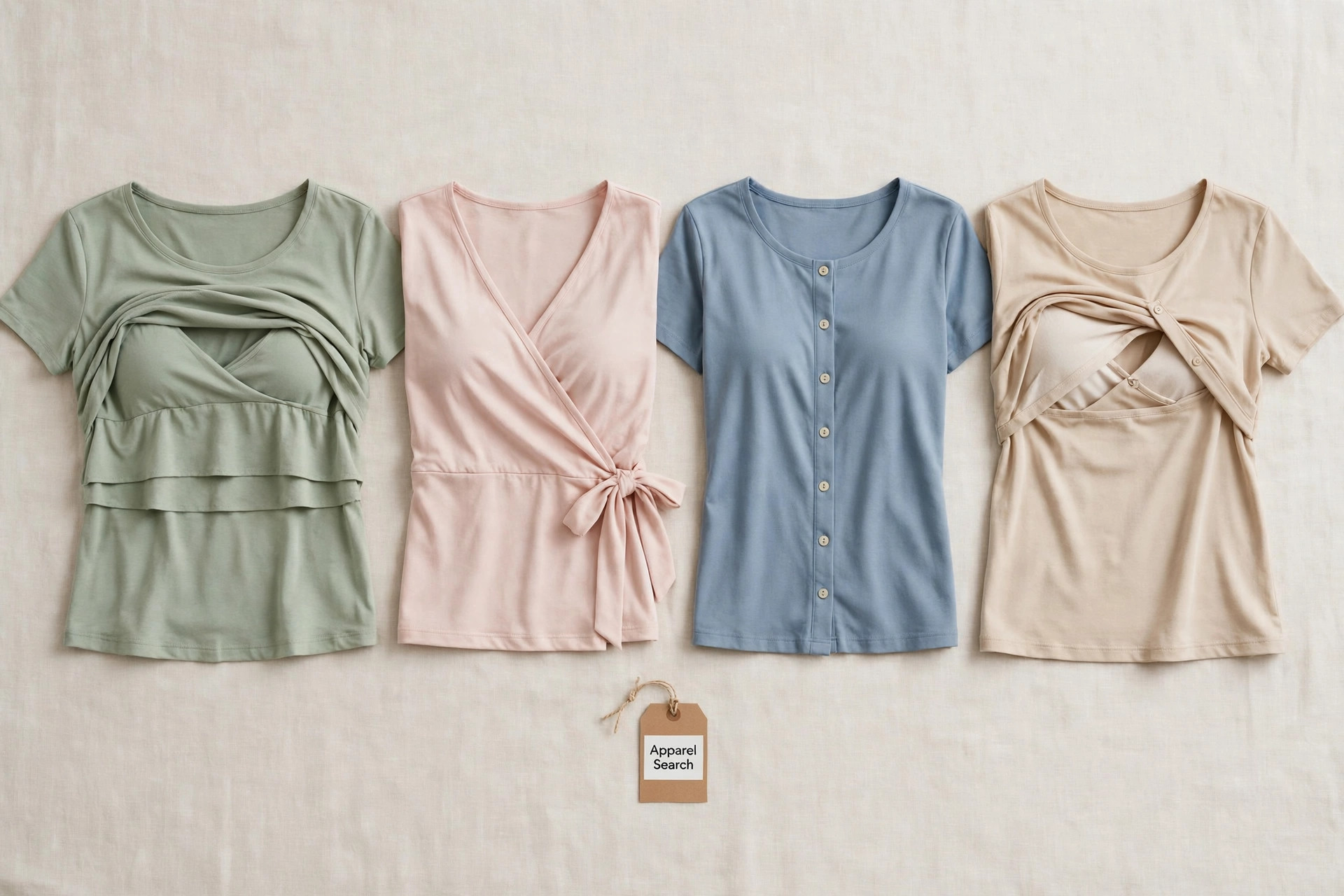
The Main Access Styles
- Lift-up (double layer). The most common design: a top made of two layers, where the outer layer lifts from a horizontal seam — often empire-line, under the bust — and the inner layer has openings underneath. From the outside it looks like an ordinary top with a seam; the access is invisible until used. Check where the seam sits: it should fall comfortably below the bust, not across it.
- Pull-aside (crossover and stretch necklines). Wrap fronts, surplice necklines and deep stretch scoop or V-necks that simply pull to one side. Nothing to unclip and nothing to re-fasten, which makes them the fastest style to use — and the most dependent on fabric: the neckline must stretch and then recover, wash after wash, or it will sag into a permanent gape.
- Drop-cup clips. Found on nursing bras and camisoles: each cup is held by a small clip at the strap and unclips — ideally one-handed — to fold the cup down. Our nursing bra guide covers the bra side in full; in tops, look for clip quality, because a clip that takes two hands and a struggle defeats the design.
- Hidden zips. Vertical or diagonal zips concealed in seams, prints or color blocking, usually at the sides of the bust. Nearly invisible when closed and common on dressier pieces and dresses — check that the zip pull is smooth, lies flat against the body, and opens far enough to be useful.
- Button and snap fronts. The oldest access of all: shirts, shirt dresses and henleys that open down the front. Buttons gap less on looser cuts; snaps are faster than buttons and kinder to one-handed use. How many fasteners actually need opening is the practical question — a front that opens three buttons down is quicker than one that must open to the waist.
- Empire slits and side openings. Discreet slits hidden in the folds under an empire seam or in side seams, most often on dresses and occasion pieces, where the opening disappears into the design. Elegant, and the style most likely to be described vaguely — 'nursing-friendly design' — so photos matter more than words here.
Reading a Product Description Like a Buyer
Descriptions use a handful of phrases that each point at a specific mechanism: 'lift-up panel' and 'double layer' mean the two-layer style; 'discreet feeding access' with no further detail usually means slits or a hidden zip — look for a photograph of the opening in use, and be suspicious if none exists. 'One-handed clip' signals drop-cups. For bras and camisoles, our maternity bras guide explains the crossover with nursing styles. In photos, study three things: where the access seam falls, whether the fabric lies flat around it (puckering shows), and whether the model photo shows the layer underneath — a visible inner layer means the coverage you will actually get.
Fabrics and Construction That Earn Their Keep
Nursing clothes live a hard life: opened and closed many times a day, washed constantly. The fabrics that cope are soft knits with real stretch recovery — cotton or viscose with a few percent elastane — that return to shape after every pull-aside. Fabric should stay opaque when stretched, hold its neckline through the wash, and feel soft against skin that is in near-constant contact with the garment. Seams around openings should be finished flat; a raw or bulky seam edge sits exactly where you least want it. None of this requires luxury pricing — it requires reading the fabric content line and the close-up photos, the two places product pages cannot hide construction.
Building a Small Rotation
- Start with tops. A rotation of everyday nursing tops — enough that laundry day never leaves you without one — does most of the work; two-piece outfits built from them cover nearly every day.
- Add the bra layer. Soft nursing bras or camisoles under ordinary tops turn half a regular wardrobe nursing-friendly; fit them to your current size, and refit rather than endure a size that no longer matches.
- Cover the night. Night feeds argue for sleepwear with the same access logic — our maternity pajamas guide covers the styles, most of which cross over directly.
- Finish with one dressier piece. One dress or smart top with discreet access removes the what-do-I-wear problem for every occasion in the nursing months.
Shop Nursing Tops & Clothing on Amazon
Ready to shop? Product links are kept in one place on the Apparel Search shopping guide:
Shop Clothing on AmazonThis link opens the Apparel Search shopping guide for Amazon, where the product links are kept in one place.
Common Questions
What does "nursing access" mean on a clothing label?
It means the garment contains a built-in way to feed without removing it — a panel that lifts, a front that pulls aside, cups that unclip, a hidden zip or a buttoned opening. The label rarely names which mechanism, so treat the phrase as a starting point: the product photos and the detailed description should show you the actual opening before you trust it.
How many nursing tops do I need?
Enough to match your laundry rhythm. Nursing tops are worn daily and washed often, so most rotations run to a handful of everyday tops — commonly five to seven — plus a dressier piece for occasions. Start at the smaller end: access style is a personal preference you can only judge by wearing one, and the second purchase can follow the style that won.
Are nursing clothes and maternity clothes the same thing?
No, though many garments are both. Maternity design gives a bump room — panels, ruching, stretch. Nursing design gives access — openings, layers, clips. A maternity top without access becomes awkward at feeding time, and a nursing top without bump room will not serve a pregnancy. Pieces that genuinely do both are the hardest workers in the whole wardrobe.
What fabric is best for nursing tops?
Soft knits with stretch and recovery — cotton or viscose blended with a few percent elastane — cope best with being pulled aside and washed constantly. The fabric should stay opaque when stretched and the neckline should spring back rather than sag. Read the content line before the marketing line: recovery lives in the elastane, and comfort lives in a soft, flat finish against the skin.
Back to the Nursing & Postpartum Clothing Guide
The whole after-baby wardrobe, stage by stage — the first weeks, the nursing months and the transition back.