Apparel Search Consumer Guides
Period Underwear Buying Guide
Absorbent underwear explained as clothing: how the layers are built, how absorbency is labeled, and how to choose styles, fabrics, fit and quantity.
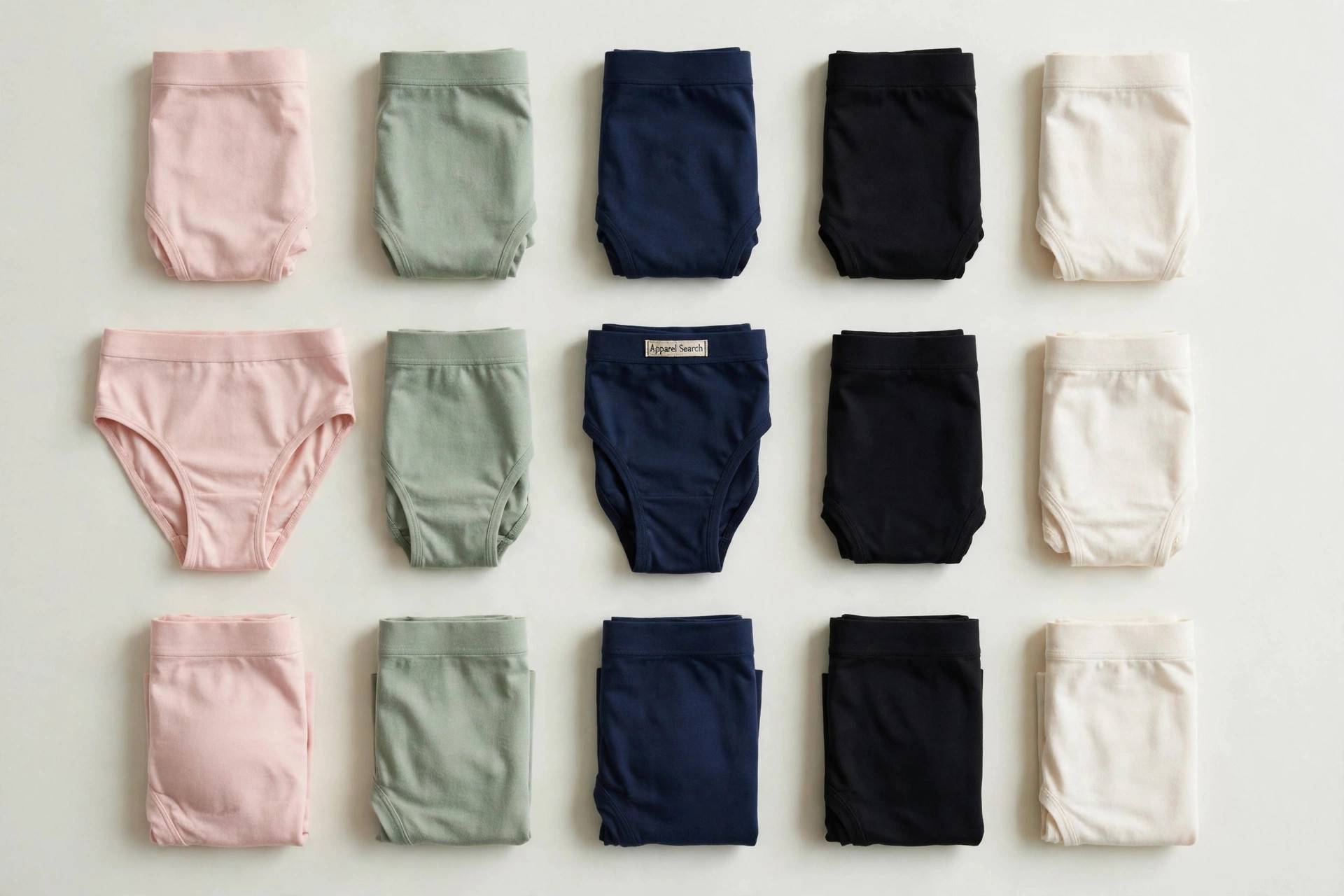
Period underwear is ordinary-looking underwear with a second job built into the gusset: a layered panel designed to absorb menstrual flow the way a pad does, inside the underwear itself. It has grown from a niche product into a full category, with its own styles, fabrics and absorbency systems — and, like any young category, its own labeling habits that take some decoding. This guide explains the garment side of the category: how the absorbent panel is constructed, what the absorbency labels on the packet actually say, which styles exist and who each suits, and how many pairs a working rotation takes. The washing half of ownership — rinsing, machine care, drying and lifespan — has its own page, our period underwear care and washing guide.
Search Apparel Search
How Period Underwear Works: The Layered Gusset
The working part of the garment is the gusset — the panel between the legs — rebuilt as a stack of functional layers. The top layer, against the skin, is a moisture-wicking fabric chosen to feel as dry as a fabric can feel. Beneath it sits the absorbent core: one or more layers of thirsty material (microfiber, terry-style knits and cotton-rich blends are the usual recipes) that hold the liquid the top layer passes down. The bottom layer is a leak-resistant backing, a thin water-resistant film or coated fabric that keeps the core’s contents from reaching your outer clothes. The three layers are laminated or stitched into a single panel that is thicker than an ordinary gusset and thinner than most people expect — in most styles it reads, worn, as a slightly more substantial pair of underwear.
Construction details separate the strong designs from the weak ones. Panel coverage matters as much as panel thickness: a higher-absorbency pair extends the layered gusset further up the front and back, because sleep and movement move liquid beyond the center. The leg elastic matters too — the gusset absorbs, but the seal at the leg opening is what keeps anything from escaping sideways, which is why fit (below) is a performance feature and not a comfort footnote. Seams through the absorbent zone are kept flat and are usually bound, so the panel sits like part of the garment rather than a pad glued into it.
Absorbency Levels — and Why the Labels Vary
Nearly every brand sorts its range into levels with names like light, moderate, heavy, super and overnight. There is no industry standard behind those words: no shared test, no regulated scale, and no requirement that one brand’s “heavy” hold what another’s does. Brands usually anchor the levels with a second unit — teaspoons of liquid, or an equivalence in tampons or pads (“holds up to 3 tampons’ worth”) — which makes comparisons inside one brand’s range reliable and comparisons across brands approximate at best.
The practical way to read a product page is to use three numbers together: the stated capacity, the panel’s coverage (a long panel in a moderate absorbency often outperforms a short panel in a heavy), and the style’s rise — higher rises carry longer panels. Start one level above where you think you land if you are buying a first pair to test on a heavier day, and count a brand’s lightest level as the one intended for the last, lightest days and for backup duty under other products.
The Styles
The category has settled into the same style map as the rest of the underwear drawer. Briefs are the workhorse — full coverage, the longest panels, most of the heavy and overnight absorbencies; our women’s briefs guide covers the underlying cut. Bikinis and hipsters trade a little panel length for a lower rise and are the everyday middle of most ranges. Boyshorts add leg coverage, which sleepers and anyone who moves a lot in the day tend to prefer — see our boy leg underwear guide for the cut itself. Thongs exist only at the lightest absorbencies, as backup and last-days wear. Sleep shorts and boxer-style pairs are the overnight specialists: the longest panels in the category, front and back, in a cut built for turning over in bed. High-waist versions of several styles add a firmer, held feeling that many wearers choose for the heaviest days.
Fabrics
The body fabric and the gusset fabric are separate decisions. Bodies come in cotton (soft, breathable, slower to dry), modal and bamboo viscose (smoother, cooler against the skin — the same qualities that anchor our bamboo underwear guide), and nylon-elastane blends (the sport end of the category: sleek under leggings, quick to dry, the usual choice for exercise). The gusset’s skin layer is often merino wool in premium ranges, valued because it wicks and resists odor between washes. Shoppers who already choose next-to-skin clothing by fabric — the readers of our eczema-friendly clothing guide — will recognize the logic: flat seams, no sewn-in tags, and fibers picked for long hours against skin.
Fit and Sizing
Period underwear only works at the fit it was designed for: snug. The leg openings must sit flush against the body through movement, because the absorbent panel cannot catch what never reaches it. Buy by hip measurement rather than by your size in another brand — size charts differ across the category more than they do in ordinary underwear — and expect the first pair from a new brand to be a fit test as much as a product test. Between sizes, most makers advise sizing by the hip number on their own chart rather than by habit; a pair that gaps at the leg will underperform its label no matter how thick its core is.
How Many Pairs to Own
The arithmetic is the laundry’s, not the shop’s. Count the pairs you would wear in a day (one for many wearers on light days; two on heavy ones, a day pair and a night pair), multiply by the days between laundry loads, and add a drying day, because these garments air-dry (the routine is in our care and washing guide). A five-day cycle washed twice a week lands most people between five and eight pairs for full-time wear, and two or three pairs covers the backup-and-light-days pattern. Multipacks are priced for exactly this math, and a mixed-absorbency set — heavies for the first days, lights for the last — usually matches a real cycle better than a drawer of one level.
Who Reaches for Them
The same garment serves several different shoppers. Teenagers and first-period wearers get a product with no separate supplies to manage at school. Athletes get absorbency that moves with the body under kit and leggings. Sleepers get the long-panel overnight styles instead of a pad that shifts. Plenty of wearers use them as backup — worn under a tampon or cup on heavy days as insurance — and as the only product on the light days at either end of a cycle. And they have a second life after the baby arrives: the weeks covered by our postpartum dressing guide are full of soft-waist, high-absorbency underwear for a reason.
Period Underwear vs. “Leakproof” Underwear
The two labels describe the same construction at different strengths. Period underwear is built and rated for menstrual flow, in the leveled absorbencies above. Underwear sold as “leakproof” usually carries a thinner version of the same layered gusset, aimed at light leaks, discharge and sweat — a light-absorbency garment by another name. Read the stated capacity, not the headline word, whichever label the packet uses.
Shop Period Underwear on Amazon
Ready to shop? Product links are kept in one place on the Apparel Search shopping guide:
Shop Clothing on AmazonThis link opens the Apparel Search shopping guide for Amazon, where the product links are kept in one place.
Common Questions
How does period underwear work?
Through the gusset. The panel between the legs is built as a stack: a moisture-wicking layer against the skin, an absorbent core beneath it, and a leak-resistant backing at the bottom. Higher-absorbency styles extend that panel further up the front and back. The underwear itself is the product — nothing is inserted or attached — and a snug fit at the leg openings is part of how the design works.
How many pairs of period underwear do you need?
Work it out from the laundry, not the packet. Multiply the pairs you wear per day (often one, two on heavy days counting a night pair) by the days between washes, and add a day for air drying. Full-time wear across a five-day cycle usually lands between five and eight pairs; two or three pairs covers wearing them as backup and on light days only.
What do the absorbency labels mean?
Light, moderate, heavy, super and overnight are brand labels, not a regulated scale — there is no industry standard, and one brand’s heavy may hold less than another’s moderate. Brands usually add a capacity in teaspoons or a tampon equivalence; use that number, plus the panel’s coverage, to compare, and expect comparisons inside one brand’s range to be more reliable than comparisons across brands.
Can period underwear be worn on its own?
That is what it is designed for, on the days its absorbency level matches. Wearers commonly wear a heavy or super pair alone on their heaviest days, lighter levels alone on light days, and any level as backup under another product when they want insurance. Which pattern suits a given day is a flow judgment each wearer makes from experience with the brand they own.