Apparel Search Consumer Guides
Slow Fashion, Explained
What slow fashion means, how it differs from fast, sustainable and ethical fashion, and how to practice it — gradually, at your own pace, with the clothes you already own.
Slow fashion is easiest to understand as a deliberate change of pace. Where the modern clothing industry runs on speed — new styles every few weeks, prices low enough to treat garments as nearly disposable — slow fashion asks buyer and maker alike to decelerate: fewer garments, chosen with more care, made to a standard that repays years of wear, and kept in use for as long as they can reasonably serve. It is an approach rather than a product category. There is no certification, no official label and no membership list, and nothing about it requires a particular brand, budget or wardrobe. Most people who practice it do so in degrees, and that is exactly how it is meant to work.
What Slow Fashion Is
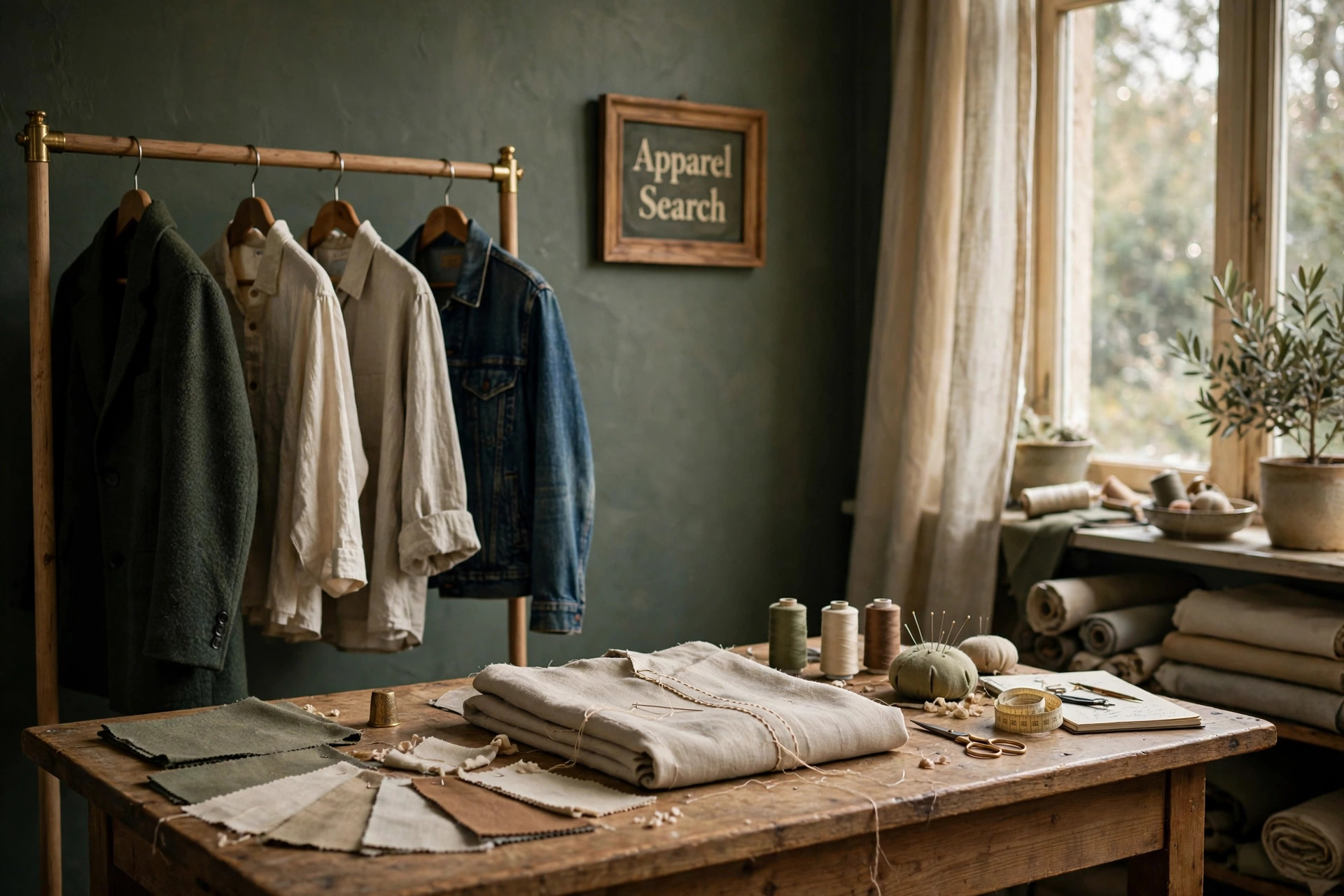
Slow fashion is an approach to making, buying and wearing clothes that favors quality over quantity and time over speed: garments designed and constructed to last, purchased deliberately rather than impulsively, worn for years instead of weeks, and repaired, resold or recycled at the end of a long working life rather than discarded at the end of a season.
The term borrows deliberately from the slow food movement, which made the same argument about meals a generation earlier: that speed and cheapness, pursued without limit, cost more than they save — in quality, in waste and in the pleasure of the thing itself. Applied to clothing (the phrase is generally credited to design researcher Kate Fletcher, writing in 2007), it describes both a way of producing clothes — smaller collections, considered design, durable construction — and a way of consuming them. The two halves meet in the middle: a well-made garment only fulfills the idea if someone actually wears it for years.
Four Ideas That Are Not the Same Idea
Slow fashion is often used interchangeably with sustainable fashion and ethical fashion, and defined simply as the opposite of fast fashion. The four terms are related, and they overlap in practice, but each answers a different question — and confusing them leads shoppers to expect one word to guarantee things it never promised.
The question of speed and volume. A business model built on rapid trend turnover and very low prices: designs move from runway or social media to store racks in weeks, collections are replaced constantly, and garments are priced to be bought often and worn briefly. The model is defined by turnaround and quantity, whatever fibers the clothes happen to use.
The question of pace and lifespan. The counterweight: fewer purchases, made deliberately, of garments built to last and styled to outlive trends — and a commitment to keep them in use through care, repair and restyling. It concerns time above all: how long things take to make, how long they are owned, and how long they are worn.
The question of environmental footprint. Clothing produced and used with reduced environmental impact — recycled or lower-impact fibers, cleaner dyeing, less water and energy, less waste, circular systems that recover materials. A garment can carry sustainable materials yet be sold and discarded at a fast-fashion pace, so this word alone says nothing about lifespan.
The question of people. Clothing made under conditions that respect the workers in the supply chain: fair wages, safe factories, reasonable hours, no child or forced labor. It overlaps with slow fashion — small, transparent producers often do both — but a brand can treat workers well and still produce at high volume, and vice versa.
Read together, the four give a shopper four separate checks: how fast was this made and marketed, how long will it stay in use, what did it cost the environment, and what did it cost the people who made it? Slow fashion speaks mainly to the second question, while often improving the others as a side effect.
The Working Principles
- Fewer, better purchases. The foundation. Buying less often, and putting the saved money into one well-made piece rather than several flimsy ones, changes every other number — cost per wear, closet size, waste.
- Durability and repairability. Slow garments are built to be kept: substantial fabrics, secure seams, finished edges, linings where they matter, spare buttons included. They are also built to be mended — seams a tailor can open, hems that can be let down, construction that rewards the repair habits in our garment care and repair guides.
- Transparency about production. Makers working slowly tend to say where and how: which factory, which fabric, what the garment cost to produce. The information lets shoppers judge claims instead of trusting adjectives.
- Wearing what you own, longer. The largest and least glamorous principle. The most slow-fashion garment in any closet is the one already there, worn another season. Every additional year of wear spreads a garment's cost and footprint thinner.
- An end-of-use path. When a garment truly wears out, it leaves by resale, donation, repurposing or textile recycling — in that rough order — rather than by the trash. Long use first; responsible exit last.
The Honest Trade-Offs
Slow fashion is not costless, and a fair guide should say so. Price: well-made garments usually cost more up front — sometimes considerably more — even when they win on cost per wear over time; that up-front gap is real for tight budgets. Time: shopping slowly takes longer — researching, waiting, hunting secondhand — in a life where time is also scarce. Availability: slower brands run smaller ranges, fewer sizes and less stock; some shoppers, including those who need adaptive clothing or extended sizes, will find fewer options. And no purchase is impact-free: the approach reduces harm and waste; it does not eliminate them. Adopting it partially — even just buying less and repairing more — captures much of the benefit.
How to Practice It
- Start with the clothes you already own. Wear the back of the closet before buying anything. A simple wardrobe audit — what fits, what you reach for, what has not been worn in a year and why — shows where your real gaps are. Our capsule wardrobe guide walks through exactly that audit and the small, hard-working wardrobe it can produce.
- Slow the purchase down. Keep a written list of genuine needs, and let wants sit on it for a few weeks before acting. Pieces that still seem necessary after the wait usually are; most impulse purchases quietly expire. When something new does come in, consider what it replaces.
- Judge cost per wear, not price. Divide the price by the number of times you will realistically wear the garment. A coat worn two hundred times over ten winters can be the cheapest clothing you own; a cheap top worn twice can be the dearest. Our consumer guide to cost per wear works through the arithmetic with examples.
- Read construction, not marketing. Turn the garment inside out: Are the seams dense and even? Is the fabric substantial for its purpose? Do buttons, zips and hardware feel solid? Are there seam allowances and a spare button? These checkable details predict lifespan far better than any label vocabulary — and they work in secondhand shops just as well as in new ones.
- Care for and repair what you have. Wash gently and less often, store garments properly, and mend small damage before it becomes big damage. The companion guide to making clothes last longer covers the habits — pilling, fading, wash frequency, and the repair-or-replace decision — that stretch a wardrobe's working life furthest.
- Pass it on when it is truly done. Sell or donate wearable garments so their use continues with someone else, and send the genuinely worn-out pieces to textile recycling rather than landfill. Our guide to circular fashion and textile recycling explains how those recovery systems work and what happens to garments in each stream.
Common Questions
Is slow fashion just expensive clothing?
No — price is not the test. A secondhand wool coat bought cheaply and worn for ten winters is slow fashion in practice; an expensive trend piece worn twice and discarded is not, whatever it cost. Higher prices often do reflect better fabric, better construction and better-paid labor, but the approach is measured by how much use a garment gives, not by its ticket. That is why cost per wear, not price, is the number that matters.
How is slow fashion different from sustainable fashion?
They overlap but they measure different things. Slow fashion is about pace and lifespan: how often you buy, and how long each garment stays in use. Sustainable fashion is about environmental footprint: the materials, energy, water and waste involved in making and disposing of clothing. A pair of jeans made from recycled cotton by a high-volume, rapid-turnover brand is a sustainable-fiber product sold at a fast pace; a conventionally made coat kept and repaired for twenty years is slow in use. The two approaches combine well, but neither word guarantees the other.
Do I have to replace my wardrobe to practice slow fashion?
No, and replacing everything at once would contradict the idea. Slow fashion starts with the clothes already in your closet: wearing them more, repairing them, and pausing before adding anything. Most people adopt it gradually — the next purchase is chosen more carefully than the last, and the habit builds from there. Nothing about it requires a particular wardrobe, brand or budget.
How can I tell whether a brand is genuinely slow?
Look for evidence rather than vocabulary. Practical signs: small or seasonless collections instead of constant new drops, detailed information about fabrics and where garments are made, repair services or spare parts offered, sturdy construction you can inspect in person, and designs that are not chasing this month's trend. No label or certification defines slow fashion, so a brand's claims rest on these checkable details — and a shopper's own use of the garment matters as much as any of them.