Microfibers
Fabric Definitions — fabric and textile definitions from Apparel Search
Search Apparel Search
At a Glance
Definition: Microfiber is a fiber with strands finer than one denier; fabrics made from microfibers are exceptionally soft, hold their shape well, wick moisture in apparel and leave no lint in cleaning.
Category: Fabric Definitions
Microfiber is a term for fibers with strands thinner than one denier. Fabrics made with microfibers are exceptionally soft and hold their shape well. Microfiber performance apparel has become a popular alternative to cotton for athletic wear, because the material wicks moisture away from the body and keeps the athlete cool and dry, and microfiber is also widely used for cleaning tasks, where its fine fibers leave no lint or dust.
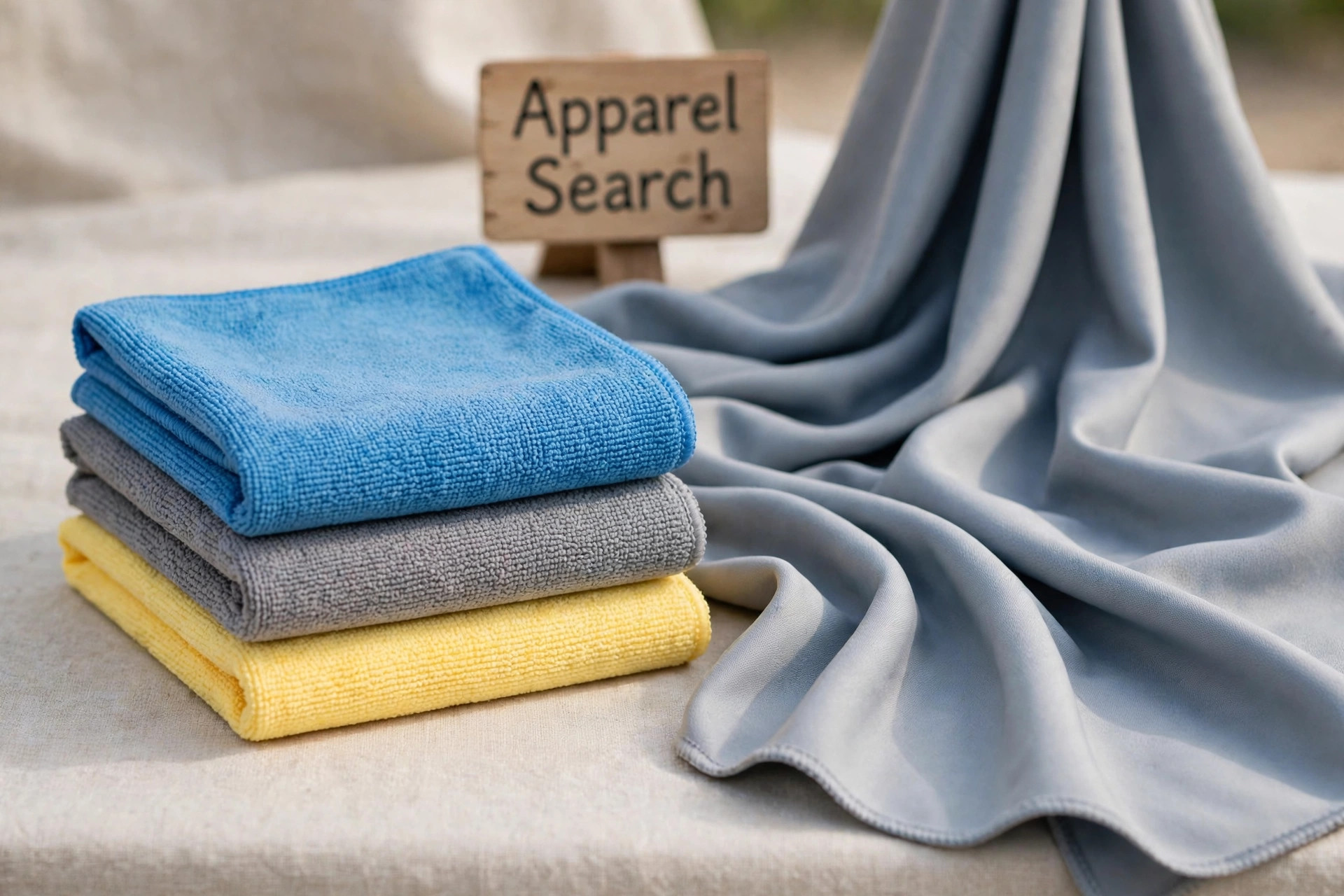
Fineness as a Manufacturing Specification
Microfiber is one of the few fabric words defined by a number. Below one denier, a single filament is finer than silk — a small fraction of the diameter of a human hair — and everything characteristic of the material follows from that scale. A yarn spun from microfibers contains far more filaments than a yarn of ordinary fibers at the same weight, so the fabric surface is denser, smoother and softer; the cloth drapes in smaller folds and holds its shape well, because the fine filaments distribute stress across many more contact points. Once spun, microfiber yarns are made into fabrics by the ordinary constructions, woven and knitted alike — it is the fineness of the fiber, not the construction, that makes them microfiber fabrics.
Most apparel and cleaning microfibers are polyester or polyester-polyamide, and the premium cleaning grades are split microfibers: each filament is manufactured as a bundle of wedge-shaped segments that are split apart in finishing, opening the star-shaped channels that give split microfiber its exceptional absorbency and dirt capture. Unsplit microfiber, used in apparel and suede-like fabrics, keeps the softness and the wicking with a smoother surface. The one-denier line in the definition is therefore not trivia — it is the border between an ordinary synthetic fabric and a different handling class.
Two Careers: Performance Apparel and Precision Cleaning
The same fineness built two unrelated markets. In athletic wear, microfiber answered cotton's weakness: cotton absorbs sweat and holds it against the skin, growing heavy and cold, while microfiber transports moisture along its fiber channels to the surface to evaporate, so garments stay lighter and the athlete stays drier — the definition's direct claim, and the reason microfiber became the popular alternative to cotton for sport.
In cleaning, the physics repeat at a different task. Microfiber is widely used by car detailers for removing wax, quick detailing, cleaning interiors, cleaning glass and drying: the fine split fibers reach into microscopic surface texture, lift particles and hold them, are soft enough not to scratch paint or glass, and release no lint or dust — which is why the definition calls microfiber the ultimate all-in-one choice of towel for detailers and enthusiasts. Care links the two careers: microfiber should be washed without fabric softener, whose residues coat the fine fibers and destroy both wicking and pickup, and dried at moderate heat. Washed correctly, the fineness that defines the material is durable; washed with softener, a microfiber cloth becomes an ordinary cloth with an extraordinary name.
Common Questions
What does thinner than one denier mean?
Denier measures fiber fineness as weight per unit length: a fiber of one denier weighs one gram per 9,000 metres. A microfiber is finer than that — finer than a strand of silk at about one denier, and a small fraction of the diameter of a human hair — which is why microfiber fabrics feel exceptionally soft: thousands of very fine fibers bend easily against the skin.
How does microfiber wick moisture?
By capillary action through the dense spaces between its very fine fibers, greatly increased when the fibers are split into wedge-shaped segments during manufacture, multiplying surface area and channels. Sweat is drawn along those channels and spread to evaporate, which is the mechanism behind microfiber athletic apparel keeping the athlete cool and dry.
Why do car detailers use microfiber cloths?
The fine fibers leave no lint or dust, pick up and hold dirt and wax residue in their dense structure instead of pushing it around, and are soft enough not to scratch paint or glass. The uses are removing wax, quick detailing, cleaning interiors and glass, and drying — microfiber is the all-in-one choice of towel for detailers.