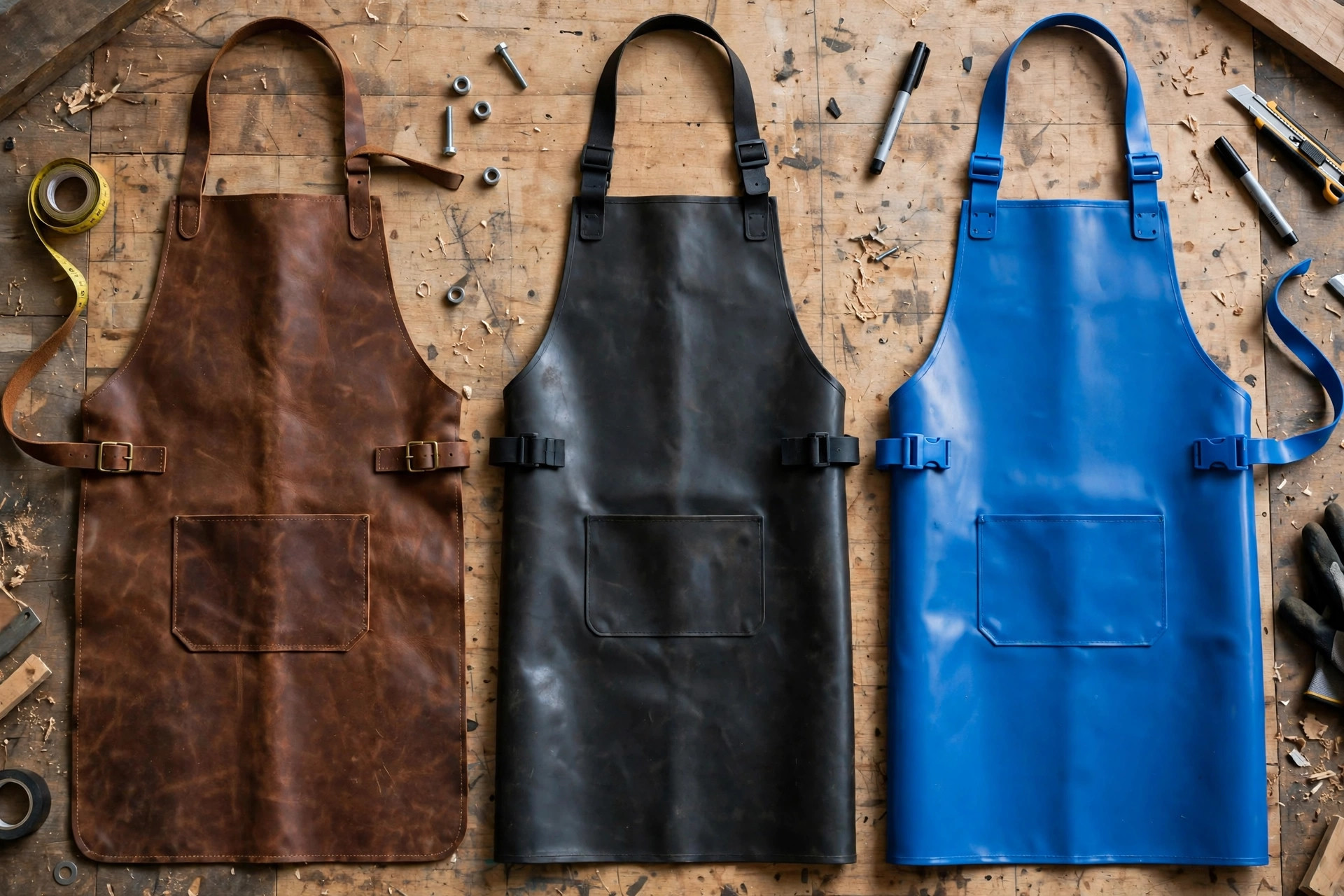
A protective apron shields the front of the body — and, in split-leg styles, the legs — from heat, sparks, liquids, chemicals, cuts, and abrasion. Aprons are specified by material first: leather for heat and sparks, PVC and rubber-family materials for water and chemicals, and cut-resistant constructions for blade work. Bib aprons cover chest to shin; waist aprons cover below the waist for lighter duty; split-leg aprons let the wearer stride, crouch, and sit with coverage that moves with each leg.
Materials and Where They Belong
Leather aprons serve welders, blacksmiths, glass workers, and foundry crews: leather sheds sparks, resists abrasion, and lasts for years (see also welding apparel). PVC and vinyl aprons are the dish room, fish and meat plant, and janitorial standard — waterproof, easy to sanitize, and resistant to many food and cleaning chemicals. Rubber and neoprene aprons step up chemical resistance for plating, battery, and chemical-handling work, chosen against the specific chemicals in the safety data sheets. Cut-resistant aprons, often metal mesh or engineered-yarn constructions, protect butchers and food processors, worn with cut-resistant sleeves and gloves as one system. Denim and canvas aprons are workshop and woodshop wear — abrasion and dirt protection, not rated PPE.
Fit, Features, and Choosing
Length should cover to below the knee for splash and spark work; straps should distribute weight at the waist rather than hanging the whole apron from the neck, and quick-release or breakaway features matter around rotating machinery, where a caught strap is a hazard of its own. Grommets and sewn eyelets outlast punched holes; seamless constructions clean more easily in food and chemical service. Choose by the worst credible exposure at the station, then verify the material against it — an apron that dissolves, cracks, or soaks through in its environment is costume, not PPE.
Care and Retirement
Wash or wipe aprons per material: leather conditioned and kept dry, PVC and rubber rinsed and inspected for cracking and stiffening, mesh and cut-resistant aprons laundered per label and checked for broken links or cut yarns. Store hanging flat, away from sunlight and ozone that degrade rubber-family materials. Retire aprons with cracks, deep cuts, failed straps, or chemical damage, and keep food-service aprons in the sanitation program rather than personal laundry.
FAQs
- What is the best apron material for welding?
- Leather, traditionally split cowhide, is the standard for welding because it sheds sparks and spatter and resists abrasion. FR fabric aprons serve lighter duty. See our welding apparel guide for how the apron fits the full ensemble.
- How long should a protective apron be?
- For spark, splash, and chemical work, coverage to below the knee is typical so drips and spatter fall clear of footwear. Waist aprons are shorter because they serve lighter tasks such as serving, light assembly, and shop work.
- Are mesh aprons really cut-resistant?
- Metal mesh aprons used in meat processing are engineered cut protection and are worn as part of a rated glove-and-sleeve system. They are heavy, specialized PPE — different in kind from a denim or canvas shop apron, which offers no rated cut protection.
Workwear & PPE Guides
This guide is part of the Apparel Search workwear and PPE systems series. Browse the full series and the related trade uniform guides below.
- High-Visibility Clothing
- Hi-Vis Classes
- Arc-Rated Clothing
- NFPA 2112
- Flame-Resistant Clothing
- Welding Apparel
- Chainsaw Chaps
- Cut-Resistant Sleeves
- Disposable Coveralls
- Safety Toe Boots
- Composite Toe Boots
- Specialty Safety Toe Features
- Steel-Toe Boots (Men's Clothes Guide)
Trade Uniform Guides
Apparel Search: explore the Clothes Guide and shopping directory for more workwear and uniform resources.