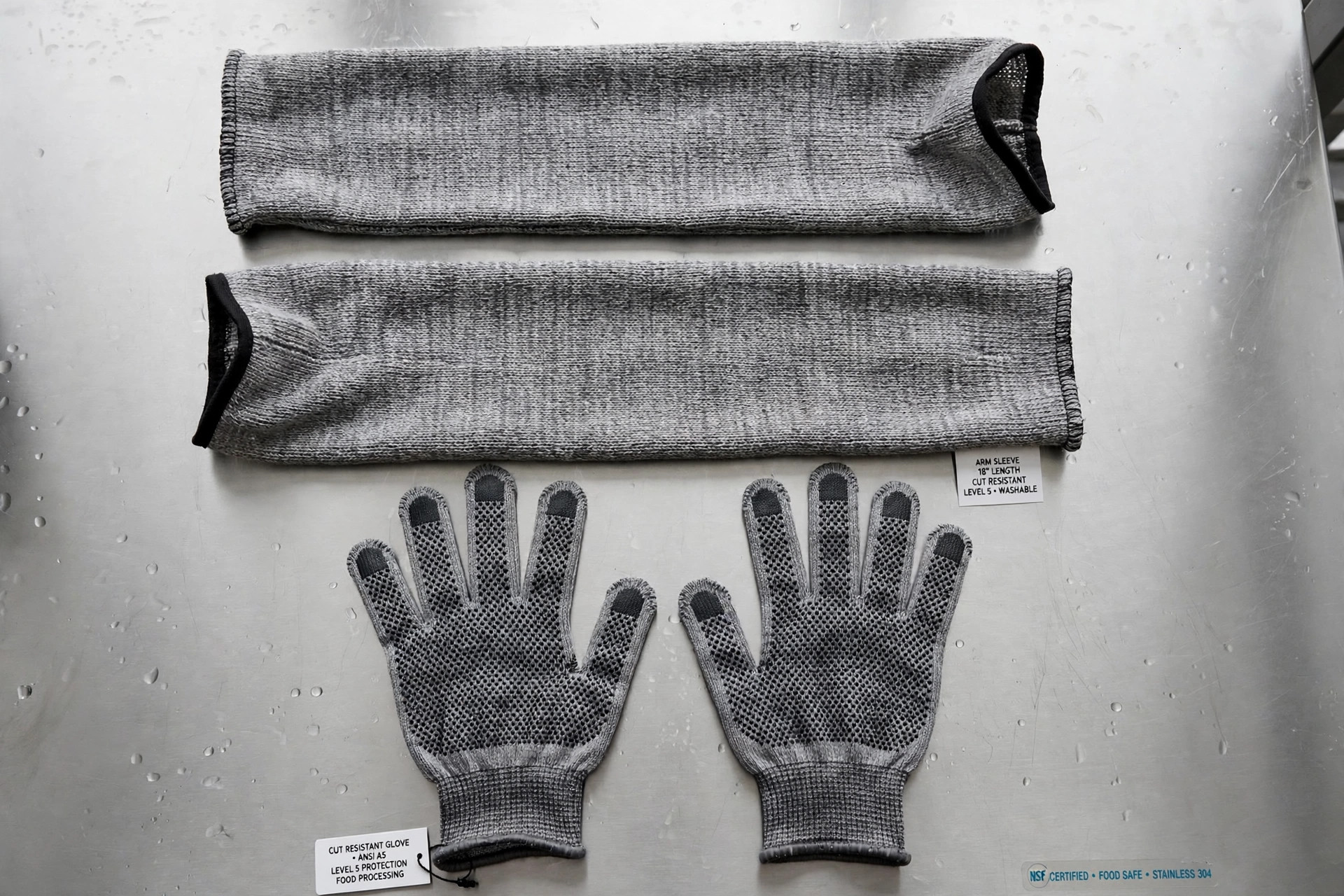
Cut-resistant sleeves protect the forearm and upper arm — skin that gloves cannot cover — in food processing, glass and sheet-metal handling, and assembly work. Sleeves are rated on the same cut-resistance scale used for gloves under ANSI/ISEA 105, which runs from A1 (lightest) to A9 (highest). The rating describes laboratory cut resistance of the material; the right level depends on the blade, the force, and how the arm moves across edges during the task.
The A1–A9 Scale, in General Terms
The scale groups materials by the weight a standardized blade test requires to cut through them: low levels (A1–A3) suit light hazards such as handling parts with nuisance edges and light assembly; middle levels (A4–A6) cover much food-processing, glass, and metal-handling work; the highest levels (A7–A9) address severe hazards such as heavy sheet metal and stamping. Treat the numbers as a ladder, not a promise: real cuts involve sliding, force, and blade condition that no bench test fully reproduces, and cut resistance is not cut proofing. Sleeves often combine engineered yarns — high-performance polyethylene, aramid, or steel- and glass-core yarns — knitted for a balance of resistance, dexterity, and comfort.
Features and Uses
Look for thumb slots that keep the sleeve from riding up and expose no wrist gap, clips or straps at the top, and lengths matched to the task. Food plants favor washable, sometimes metal-detectable, sleeves paired with cut gloves and protective aprons; HVAC, automotive, and appliance lines use them against sheet-metal edges; glass plants pair them with disposable coveralls or work uniforms depending on the station. Where heat is also present, choose sleeves rated and labeled for both hazards rather than assuming one rating implies the other.
Fit, Care, and Limits
A sleeve that slides down gets pushed out of the way, so sizing and securement are safety features, not comfort extras. Launder per the label — some yarns lose performance with bleach or high heat. Inspect for cuts, thinning, and fraying; a sleeve already cut through in a spot has told you its limit there. Retire damaged sleeves, and train wearers that the rating belongs to the material tested, which is strongest when the sleeve is worn flat, snug, and as designed.
FAQs
- What cut level do I need for food processing?
- Many food tasks fall in the middle of the scale, but the correct level comes from the employer's hazard assessment for the specific knives, blades, and motions involved. Match the sleeve level to the glove level and the task rather than copying another plant's choice.
- Are cut-resistant sleeves also heat-resistant?
- Not unless they are made and labeled for it. Some aramid sleeves offer both cut and heat resistance; many high-performance polyethylene sleeves do not. Check both ratings when both hazards exist.
- Why do sleeves have a thumb hole?
- The thumb slot anchors the sleeve so it cannot slide up the arm and expose the wrist, and it keeps the sleeve aligned over the forearm during reaching and lifting. It works together with the glove worn over it.
Workwear & PPE Guides
This guide is part of the Apparel Search workwear and PPE systems series. Browse the full series and the related trade uniform guides below.
- High-Visibility Clothing
- Hi-Vis Classes
- Arc-Rated Clothing
- NFPA 2112
- Flame-Resistant Clothing
- Welding Apparel
- Chainsaw Chaps
- Disposable Coveralls
- Protective Aprons
- Safety Toe Boots
- Composite Toe Boots
- Specialty Safety Toe Features
- Steel-Toe Boots (Men's Clothes Guide)
Trade Uniform Guides
Apparel Search: explore the Clothes Guide and shopping directory for more workwear and uniform resources.
Please note: ANSI/ISEA 105 cut resistance requirements are maintained by ANSI and the International Safety Equipment Association (ISEA) and revised over time. This page is a general overview provided for information only — it is not legal or compliance advice, and it may not reflect the most current version. Always confirm the current requirements directly with ANSI and the International Safety Equipment Association (ISEA) rather than relying on this website.