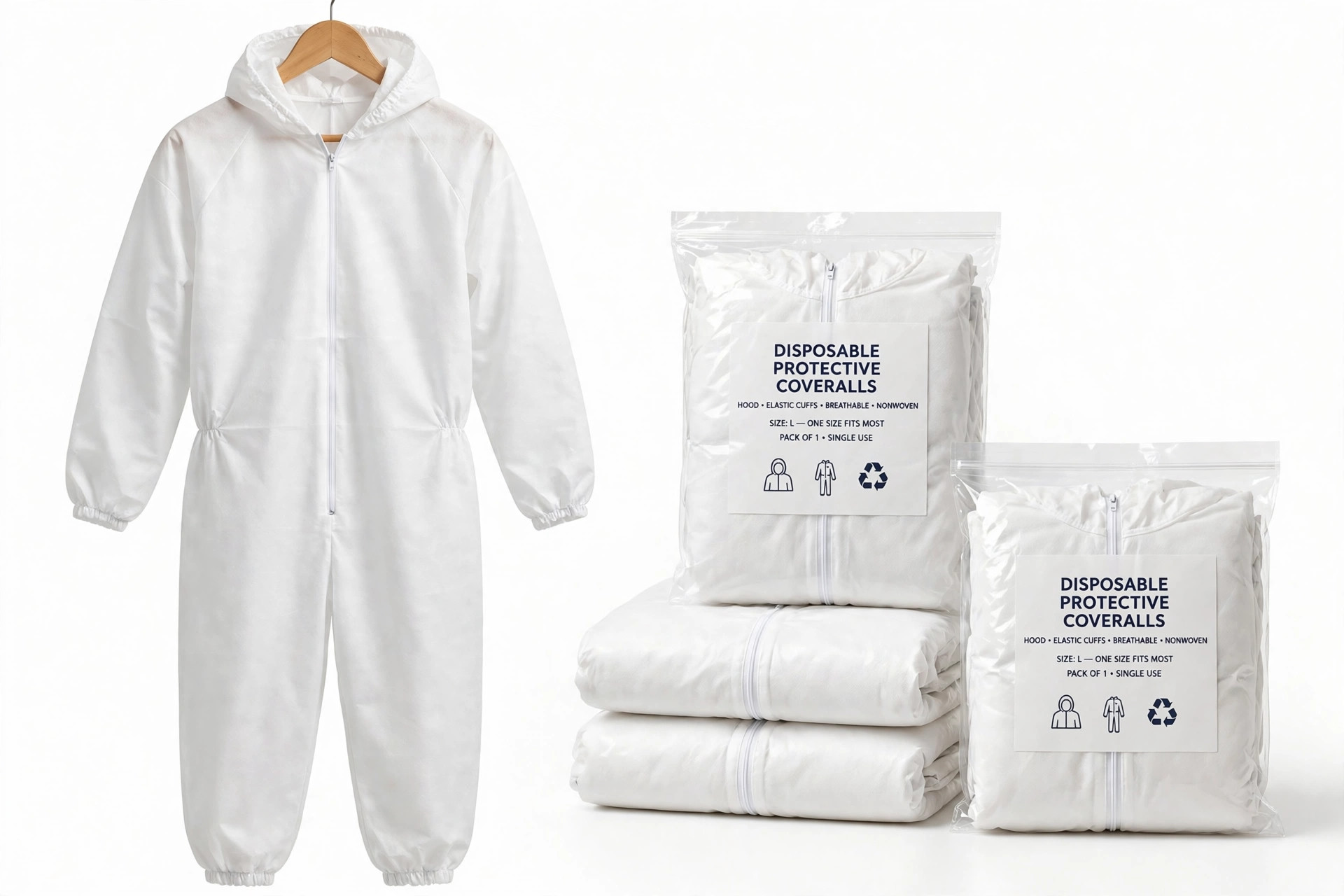
Disposable coveralls are single-use (or limited-use) one-piece suits that protect the wearer’s clothing and skin from dusts, sprays, and splashes, then go in the bin instead of the laundry. Three fabric technologies dominate: SMS polypropylene, microporous film laminates, and flashspun polyethylene (the Tyvek-style material). They look similar on a hanger and behave very differently on the job, so selection starts with the material, not the price per suit.
The Three Material Families
SMS (spunbond–meltblown–spunbond) polypropylene is the breathable, economical option for dry particulates and dirty work — insulation, agriculture, warehousing, and general maintenance. Microporous film laminates bond a breathable film to a spunbond base, adding resistance to light liquid splashes and fine particulates while staying more comfortable than fully coated suits; they are common in painting, fiberglass, and light chemical handling. Flashspun polyethylene suits offer a strong barrier to fine particles and many water-based liquids with good tear resistance, and are widely used in remediation, clean manufacturing, and pharmaceutical settings. Fully coated and taped-seam chemical suits are a higher, separate category with their own standards — do not treat a general-purpose disposable suit as chemical protective clothing.
Styles and Selection
Choose hooded or collared styles, elastic or open cuffs, with or without attached booties, and serged versus bound or taped seams according to the exposure: seams are the weak path for liquids and fine dust. Size generously — disposables tear at the seat and shoulders when they bind — and plan the ensemble with gloves, respirators, and safety footwear so interfaces overlap. Painters, asbestos and mold remediation crews (under their specific regulated programs), food plants, and cleanrooms each land on different combinations; the crew’s other PPE in this series, such as cut-resistant sleeves, layers where tasks combine hazards.
Use, Limits, and Disposal
Inspect each suit before donning, don and doff without dragging the outside across skin or clothing, and treat a torn or heavily contaminated suit as finished — patching defeats the purpose. Disposables are not flame-resistant unless explicitly made and labeled as such, and they must never be worn for hot work such as welding. Dispose of used suits under the site’s rules for whatever they were exposed to; a suit that protected against a regulated contaminant is itself regulated waste.
FAQs
- What is the difference between SMS and microporous coveralls?
- SMS is a layered polypropylene nonwoven suited mainly to dry particles and dirt, and it breathes well. Microporous suits add a film layer that resists light liquid splashes and finer particles while remaining somewhat breathable. Choose by whether liquids are part of the exposure.
- Can disposable coveralls be reused?
- They are designed as single-use or limited-use garments. If a suit is undamaged and uncontaminated, some programs allow limited reuse for the same wearer, but a torn, soiled, or contaminated suit should be discarded. Follow the site program and the manufacturer's guidance.
- Are disposable coveralls flame-resistant?
- Standard disposable coveralls are not flame-resistant and can melt. FR disposable options exist for wearing over FR clothing in dirty flash-fire environments, and they are labeled as such. Never assume a white suit is FR.
Workwear & PPE Guides
This guide is part of the Apparel Search workwear and PPE systems series. Browse the full series and the related trade uniform guides below.
- High-Visibility Clothing
- Hi-Vis Classes
- Arc-Rated Clothing
- NFPA 2112
- Flame-Resistant Clothing
- Welding Apparel
- Chainsaw Chaps
- Cut-Resistant Sleeves
- Protective Aprons
- Safety Toe Boots
- Composite Toe Boots
- Specialty Safety Toe Features
- Steel-Toe Boots (Men's Clothes Guide)
Trade Uniform Guides
Apparel Search: explore the Clothes Guide and shopping directory for more workwear and uniform resources.