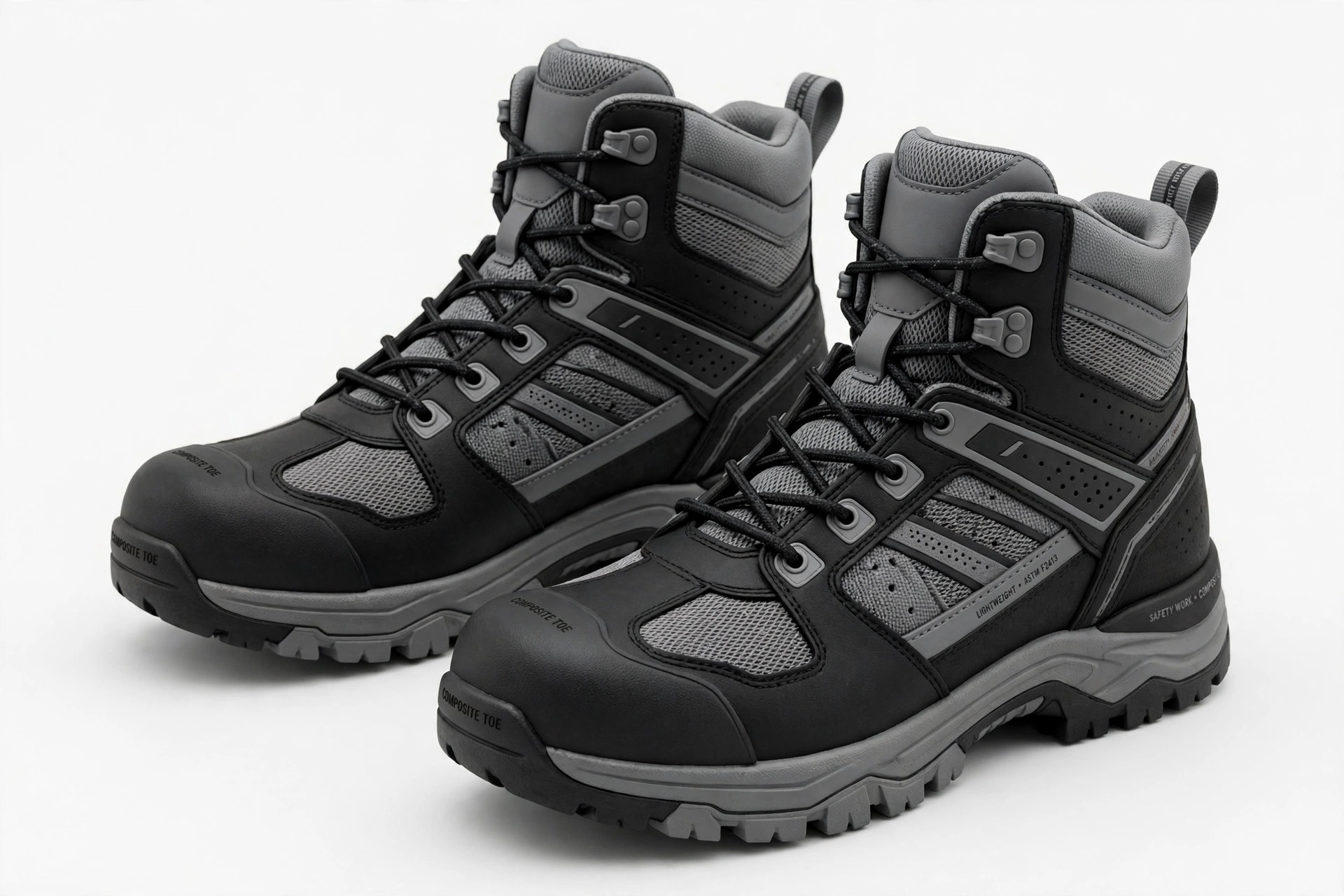
Composite toe boots use a non-metallic protective cap made from materials such as carbon fiber, fiberglass, Kevlar-type aramid, or engineered plastic. Built and labeled to the same ASTM F2413 impact and compression ratings as steel toe footwear, they trade a somewhat bulkier cap shape for three signature advantages: they contain no metal, they do not conduct heat and cold like a metal cap, and they feel lighter over a long shift. This guide is the spoke to our safety toe boots family guide.
Pros and Cons, Honestly Weighed
Pros: no metal means no alarms at detectors and no cap to corrode; non-conductive materials blunt the flow of heat in summer and cold in winter that a steel cap transmits; and the weight saving, while modest per boot, is real across ten thousand steps. Cons: to reach the same ratings without metal, caps are typically thicker, so the toe box can look and feel bulkier and some slim boot styles cannot use them; prices often sit above basic steel toe models; and a composite cap that has taken a major impact should be retired just like steel — damage can be less visible, so inspection matters more, not less. For the steel benchmark itself, see the steel-toe boots guide.
Where Composite Earns Its Keep
Workers who clear security screening daily — airport, courthouse, warehouse, and data-center staff — are the classic composite wearers. Outdoor crews in cold climates value a cap that does not act as a cold sink against the toes, and hot-environment workers the reverse. On electrical contexts, be precise: a non-metallic cap is not the same as an electrical hazard (EH) rating, which is a whole-boot tested property explained in our specialty safety toes guide. Composite is a cap material; EH, SD, and PR are tested features that any cap family may or may not carry.
Fit and Care Notes
Try composite boots in person if you are between sizes: the thicker cap changes internal volume and the fit break differs from steel. Keep the same care rules as any safety footwear — clean, condition leather, dry slowly, inspect the cap area after impacts, and retire when the label’s protection can no longer be trusted. Pair with the wider kit the site requires, from hi-vis clothing to chainsaw chaps for tree work.
FAQs
- Are composite toe boots as protective as steel toe?
- They are tested and labeled to the same ASTM F2413 impact and compression ratings. Read the label on the specific boot: the rating, not the cap material, states the protection. Both types should be retired after a significant impact.
- Do composite toe boots work in winter?
- They are a popular winter choice because the cap does not conduct cold to the toes the way steel can. Insulation, waterproofing, and sole grip for ice are separate boot features to specify alongside the cap.
- Can composite toe boots be X-rayed or scanned at work?
- The cap itself is non-metallic and detector-friendly. A fully non-metallic boot also uses non-metal shanks and hardware; check the product description if passing screening without removing boots is the goal.
Workwear & PPE Guides
This guide is part of the Apparel Search workwear and PPE systems series. Browse the full series and the related trade uniform guides below.
- High-Visibility Clothing
- Hi-Vis Classes
- Arc-Rated Clothing
- NFPA 2112
- Flame-Resistant Clothing
- Welding Apparel
- Chainsaw Chaps
- Cut-Resistant Sleeves
- Disposable Coveralls
- Protective Aprons
- Safety Toe Boots
- Specialty Safety Toe Features
- Steel-Toe Boots (Men's Clothes Guide)
Trade Uniform Guides
Apparel Search: explore the Clothes Guide and shopping directory for more workwear and uniform resources.