Mechanic Uniforms Guide
Built for grease, lifts and lying on creepers: mechanic work shirts, coveralls and shop coats, soil-release fabrics, and the rental-uniform system explained.
Shop Mechanic Uniforms Now
Shop Mechanic Uniforms on Amazon Shop Mechanic Uniforms on eBayThe Amazon and eBay links on this page are affiliate links. If you make a purchase through them, Apparel Search may earn a commission.
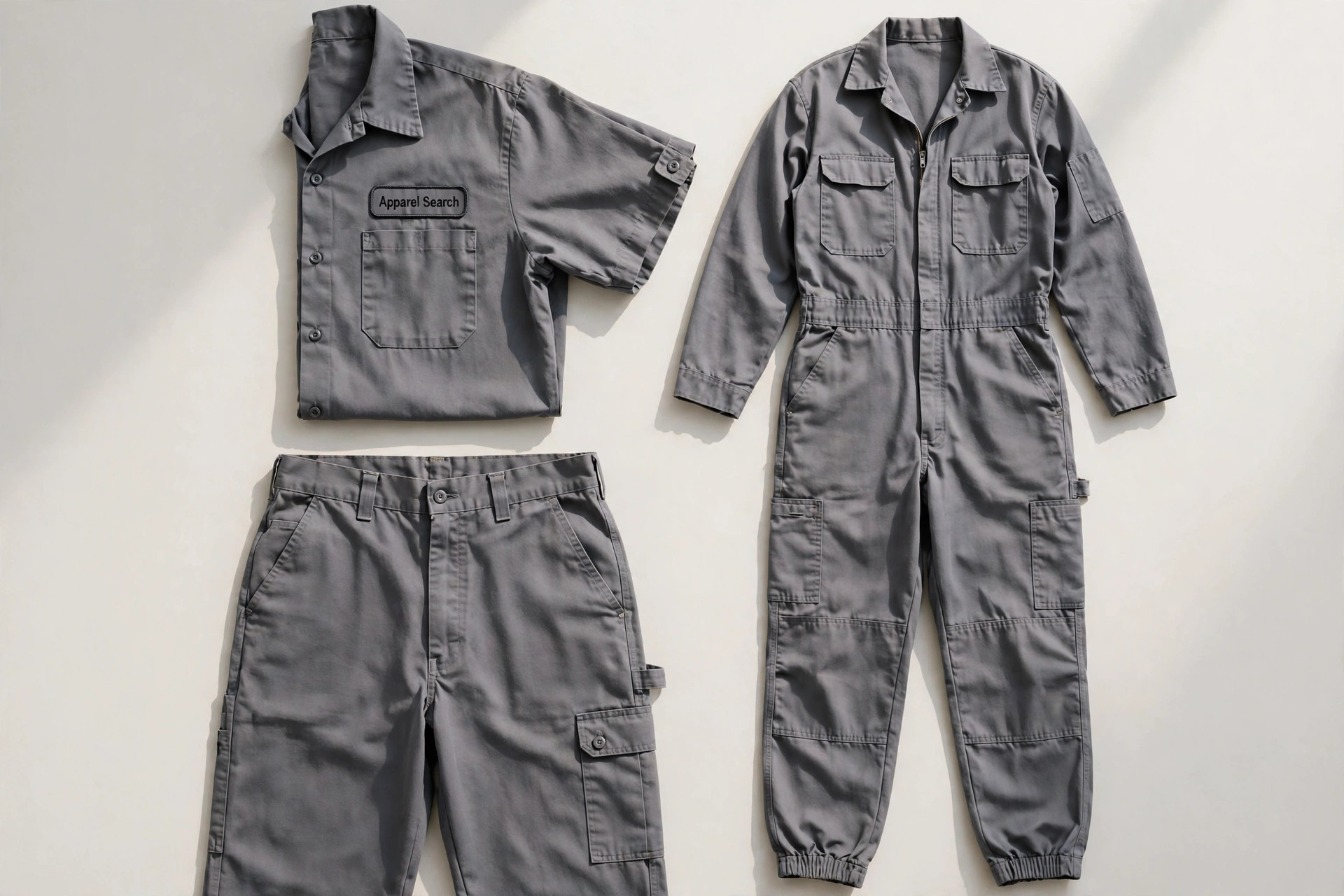
A mechanic's uniform is judged in the wash, not the showroom: it must release engine oil and road grease week after week, protect skin from hot, sharp and dirty work, and still present a customer with a clean, named professional at the service desk. The standard kit — a work shirt and work trousers, with coveralls and shop coats for specific jobs — is one of the oldest uniform systems in industry, and much of it is supplied through rental programmes that deliver clean sets and take the dirty ones away.
This guide covers the garments piece by piece, the fabrics and finishes that make them washable, and how rental and purchase compare. It belongs to the trade-uniform family alongside security uniforms, indexed in the men's uniforms guide.
The Kit: Shirts, Trousers, Coveralls, Shop Coats
The work shirt is the uniform's face: button-front or polo, usually two chest pockets (one with a pencil stall), a name patch on one side and the company logo on the other, in a colour that hides the day's work — charcoal, navy and grey dominate for a reason. Work trousers are plain-front or cargo, cut for kneeling and crouching, with a heavy-duty zip and a waistband that survives a tool belt's companions: a belt, a radio, a torch.
Coveralls are the full-body answer for the dirtiest work — underbody, transmission and diesel jobs — in one piece with elastic or snap cuffs that keep sleeves out of machinery. Shop coats, the long coats worn by service advisors, parts staff and inspectors, protect ordinary clothes while signalling a cleaner, customer-facing role. Technicians often layer: shirt and trousers as the base, coveralls pulled over for the dirty hour.
Fabrics: Soil Release Is the Whole Game
The classic specification is a poly-cotton twill with a soil-release finish: the polyester gives strength and colour-fastness, the cotton gives comfort, and the finish lets oil lift out in an industrial wash instead of baking in. Pure cotton duck and canvas serve heavy-duty and welding-adjacent work; where sparks or flame are a genuine risk, flame-resistant (FR) rated garments are a separate, regulated category and must be specified as such — ordinary workwear is not FR protection.
Colour is a fabric decision too: mid-dark shades show the least soil between washes, which is why the industry converged on them. Stitching should be heavy and bar-tacked at pocket corners and stress points; metal zips outlast plastic under grit. Snaps and buttons must be covered or non-scratch where the work involves leaning on customers' paintwork — a detail every good shop specifies.
Rental vs Purchase, and Care
Most mid-size and large shops rent: the laundry company supplies sized sets per technician, collects and industrially washes them, repairs or replaces worn pieces, and manages the name and logo patches. Rental converts a laundry problem into a weekly fee and keeps presentation consistent. Purchase suits owner-operators and specialists who want specific garments — but the buyer then owns the washing problem, and home washing rarely matches industrial soil release, which is why purchased kits fade to grey faster.
Whichever route, the wearer's rules are simple: change out of contaminated kit before it sets, report tears near machinery immediately (loose fabric is a hazard, not a cosmetic issue), and keep a clean set for customer-facing moments. Employers should re-measure and re-issue on a cycle — a uniform that no longer fits gets worn open, untucked and wrong.
Common Questions
What do mechanics wear as a uniform?
Typically a work shirt and work trousers in poly-cotton twill with soil-release finish, with a name patch and company logo on the shirt. Coveralls are worn over the base kit for the dirtiest work, and shop coats by service advisors and parts staff.
Why do mechanics use rental uniforms?
Rental programmes supply correctly sized sets, industrially wash them so oil and grease actually come out, and repair or replace worn garments. It keeps the whole shop's presentation consistent and removes the laundry burden from staff.
What is soil-release fabric?
A finish on workwear fabric — usually poly-cotton twill — that lets oil and ground-in soil wash out instead of bonding to the fibres. It is the key technology in mechanic uniforms, because ordinary fabrics absorb engine oil permanently.
More Trade Uniform Guides in This Cluster
The other trade uniform guides in this wave — hospitality, security, salon and spa, mechanic and restaurant server uniforms:
Workwear & PPE Guides
Protective workwear systems from Apparel Search — hi-vis, flame-resistant and arc-rated clothing, welding and chainsaw protection, and safety footwear:
More to Explore on Apparel Search
Back to the dining room — finish the cluster with the server uniforms guide.
Next: Women's Server Uniforms Guide: Restaurant Shirts, Aprons & Vests »Looking for Men's Clothing Stores?
This guide helps you choose mechanic uniforms that release grease in the wash and survive the shop. To browse where to buy, visit our mens clothing store directory, where you can find retailers that carry them.