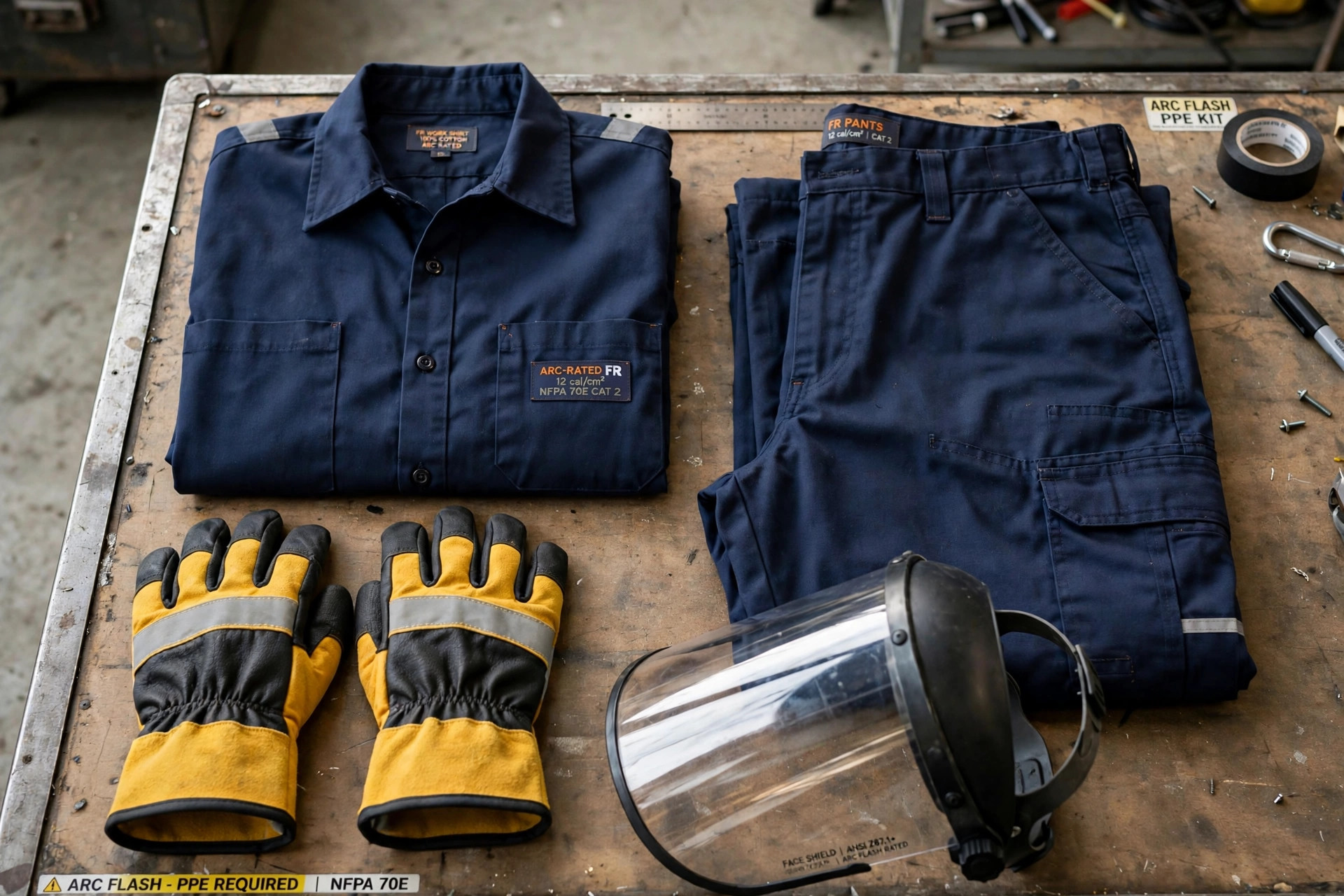
Arc-rated (AR) clothing is flame-resistant workwear that has also been tested for its ability to protect against the thermal energy of an electric arc flash — the explosive release of energy when current jumps through air between conductors. Every arc-rated garment carries an arc rating, commonly expressed as an ATPV value, which employers match to the incident energy their hazard assessment finds at the task. Not all flame-resistant clothing is arc-rated, and the distinction matters.
What the Rating Means, in General Terms
An arc rating summarizes laboratory testing of a fabric or garment system. The most common expression, ATPV (Arc Thermal Performance Value), describes the incident energy level at which there is a significant chance of a second-degree burn through the fabric; a related value, EBT, describes the point at which the fabric breaks open. The higher the rating, the more thermal energy the clothing system is designed to withstand. Ratings apply to the tested fabric or layered system — layering arc-rated garments can raise the total, but only tested combinations should be relied on. For the related flash-fire standard, see our NFPA 2112 guide; for everyday FR basics, see flame-resistant clothing.
NFPA 70E and PPE Categories
In the United States, workplace electrical safety is framed by NFPA 70E, which employers use alongside OSHA requirements. NFPA 70E’s approach starts with a risk assessment: identify the task, the equipment, and the available incident energy or PPE category, then specify the clothing system — shirt and pants or coverall, plus items such as arc-rated face shields, balaclavas, gloves, and outerwear for the conditions. Electricians, utility line workers, and industrial maintenance staff are the classic wearers, often in arc-rated daily wear rather than special-occasion suits.
Care and Limits
Follow the garment label for laundering: arc-rated fabrics can be inherent or treated, and the wrong wash chemistry, fabric softener, or bleach can degrade performance. Inspect before each use for holes, thin spots, and contamination with flammable substances, which can undermine protection. Never layer non-FR synthetics that can melt under arc-rated clothing, and replace damaged garments rather than patching them with ordinary thread and fabric.
FAQs
- Is all flame-resistant clothing arc-rated?
- No. Flame-resistant describes resistance to ignition and self-extinguishing behavior. Arc-rated clothing has additionally been tested against arc flash thermal energy and carries an arc rating such as an ATPV value. All arc-rated clothing is flame-resistant, but the reverse is not true.
- What does ATPV mean in plain language?
- ATPV is a laboratory value expressing how much arc thermal energy a fabric can withstand before a second-degree burn becomes likely through it. Employers compare the garment's ATPV with the incident energy found in their hazard assessment.
- Can I layer ordinary clothes under arc-rated workwear?
- Avoid meltable synthetic underlayers, which can melt against the skin in an arc event. Follow the employer's program and the garment instructions; natural-fiber or arc-rated underlayers are the usual choice.
Workwear & PPE Guides
This guide is part of the Apparel Search workwear and PPE systems series. Browse the full series and the related trade uniform guides below.
- High-Visibility Clothing
- Hi-Vis Classes
- NFPA 2112
- Flame-Resistant Clothing
- Welding Apparel
- Chainsaw Chaps
- Cut-Resistant Sleeves
- Disposable Coveralls
- Protective Aprons
- Safety Toe Boots
- Composite Toe Boots
- Specialty Safety Toe Features
- Steel-Toe Boots (Men's Clothes Guide)
Trade Uniform Guides
Apparel Search: explore the Clothes Guide and shopping directory for more workwear and uniform resources.
Please note: Arc flash PPE and NFPA 70E requirements are maintained by the National Fire Protection Association (NFPA) and revised over time. This page is a general overview provided for information only — it is not legal or compliance advice, and it may not reflect the most current version. Always confirm the current requirements directly with the National Fire Protection Association (NFPA) rather than relying on this website.