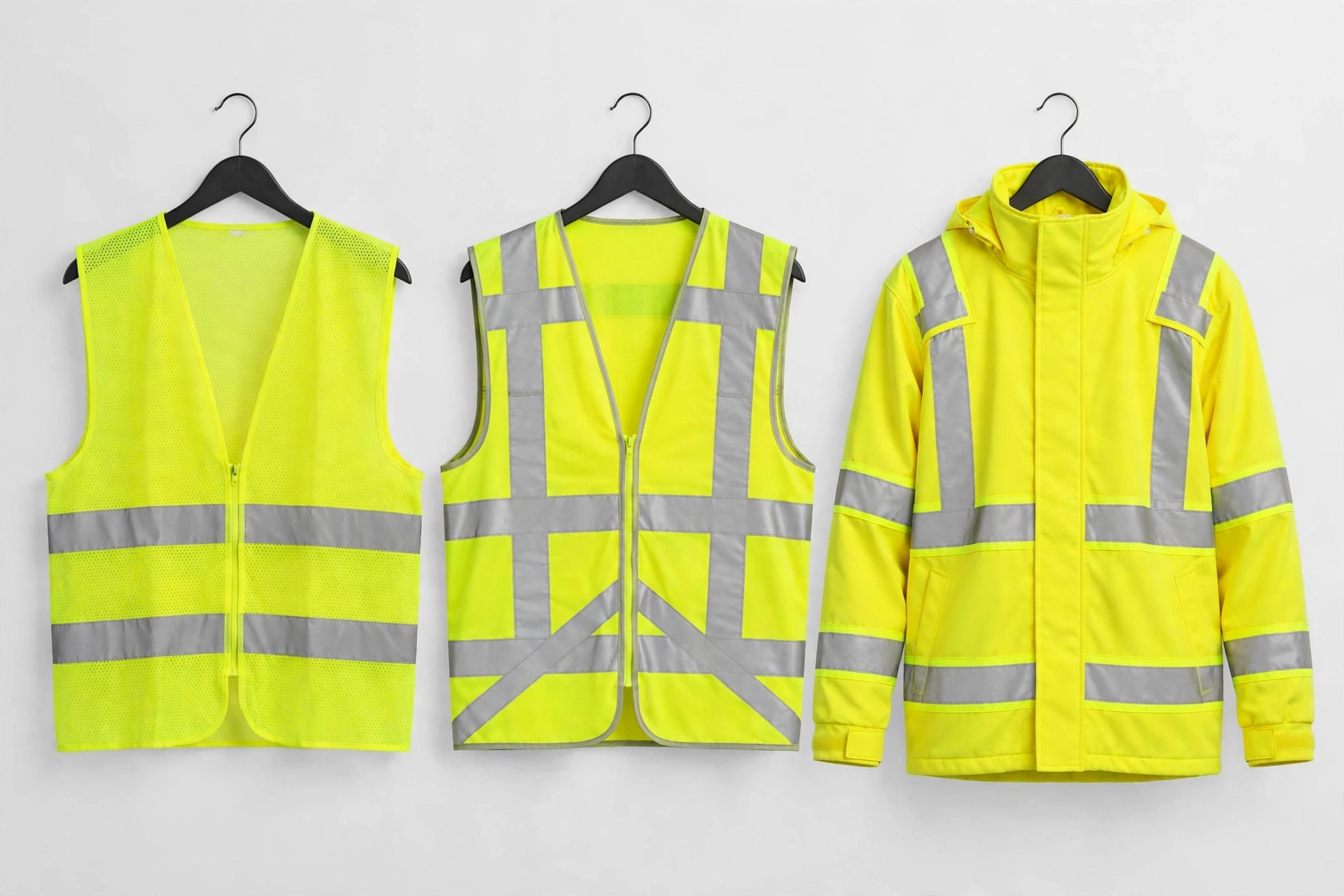
Under ANSI/ISEA 107, a hi-vis garment’s performance class reflects how much fluorescent background material and retroreflective tape it carries, and how that material is arranged. Class 1 is the lightest level, Class 3 the highest. Choosing a class is a risk decision: the faster the traffic, the darker or more visually cluttered the setting, the higher the class should be. This page compares the classes in general terms; our high-visibility clothing systems guide covers types and the wider system.
Class 1: Lowest-Risk Settings
Class 1 garments carry the least background and reflective material and are intended for workers in off-road (Type O) settings where traffic is slow or separated and the visual background is simple — some warehouse, parking, and delivery roles, for example. A basic vest is the typical Class 1 garment. Class 1 is not intended for workers exposed to public roadway traffic.
Class 2: The Roadway Workhorse
Class 2 steps up both the fluorescent background area and the amount and placement of reflective tape, and it is the class most often seen on road and utility crews working near traffic, as well as airport ground staff, surveyors, and railway workers. Vests and shirts can both meet Class 2; the tape must encircle the torso so the wearer is visible from every angle.
Class 3: Maximum Visibility
Class 3 provides the most coverage: more background material, more reflective tape, and reflective bands on the sleeves (or full-length trouser legs on an ensemble), so a worker’s arms and movement are visible too — arm movement is a strong cue to drivers that a shape is a person. Class 3 suits high-speed roads, night work, severe weather, and complex backgrounds. A Class 2 garment can sometimes be combined with hi-vis trousers to form a Class 3 ensemble, provided both pieces are labeled for that use.
Reading the Label
Every compliant garment carries a label stating its type and class and care instructions. Buy and issue by the label, not by appearance: two similar vests can be different classes. When fluorescent color fades or tape is damaged, the garment no longer delivers its class and should be retired.
FAQs
- Can a Class 2 vest plus hi-vis pants equal Class 3?
- In many product lines, yes — a labeled Class 2 upper garment combined with labeled hi-vis trousers can form a Class 3 ensemble. Check both labels: the combination only counts when each piece is designed and labeled to be worn that way.
- Is Class 3 always better than Class 2?
- Class 3 gives the most visibility, but the right class is the one matched to the hazard assessment. In hot weather or low-risk settings, an unnecessarily heavy Class 3 garment may be worn open or taken off — which delivers no protection at all.
- What is a Class E garment?
- Class E refers to supplemental hi-vis bottoms — trousers or shorts with reflective bands — that are not standalone protection. Worn with a Class 2 top, they can complete a Class 3 ensemble.
Workwear & PPE Guides
This guide is part of the Apparel Search workwear and PPE systems series. Browse the full series and the related trade uniform guides below.
- High-Visibility Clothing
- Arc-Rated Clothing
- NFPA 2112
- Flame-Resistant Clothing
- Welding Apparel
- Chainsaw Chaps
- Cut-Resistant Sleeves
- Disposable Coveralls
- Protective Aprons
- Safety Toe Boots
- Composite Toe Boots
- Specialty Safety Toe Features
- Steel-Toe Boots (Men's Clothes Guide)
Trade Uniform Guides
Apparel Search: explore the Clothes Guide and shopping directory for more workwear and uniform resources.
Please note: ANSI/ISEA 107 high-visibility requirements are maintained by ANSI and the International Safety Equipment Association (ISEA) and revised over time. This page is a general overview provided for information only — it is not legal or compliance advice, and it may not reflect the most current version. Always confirm the current requirements directly with ANSI and the International Safety Equipment Association (ISEA) rather than relying on this website.