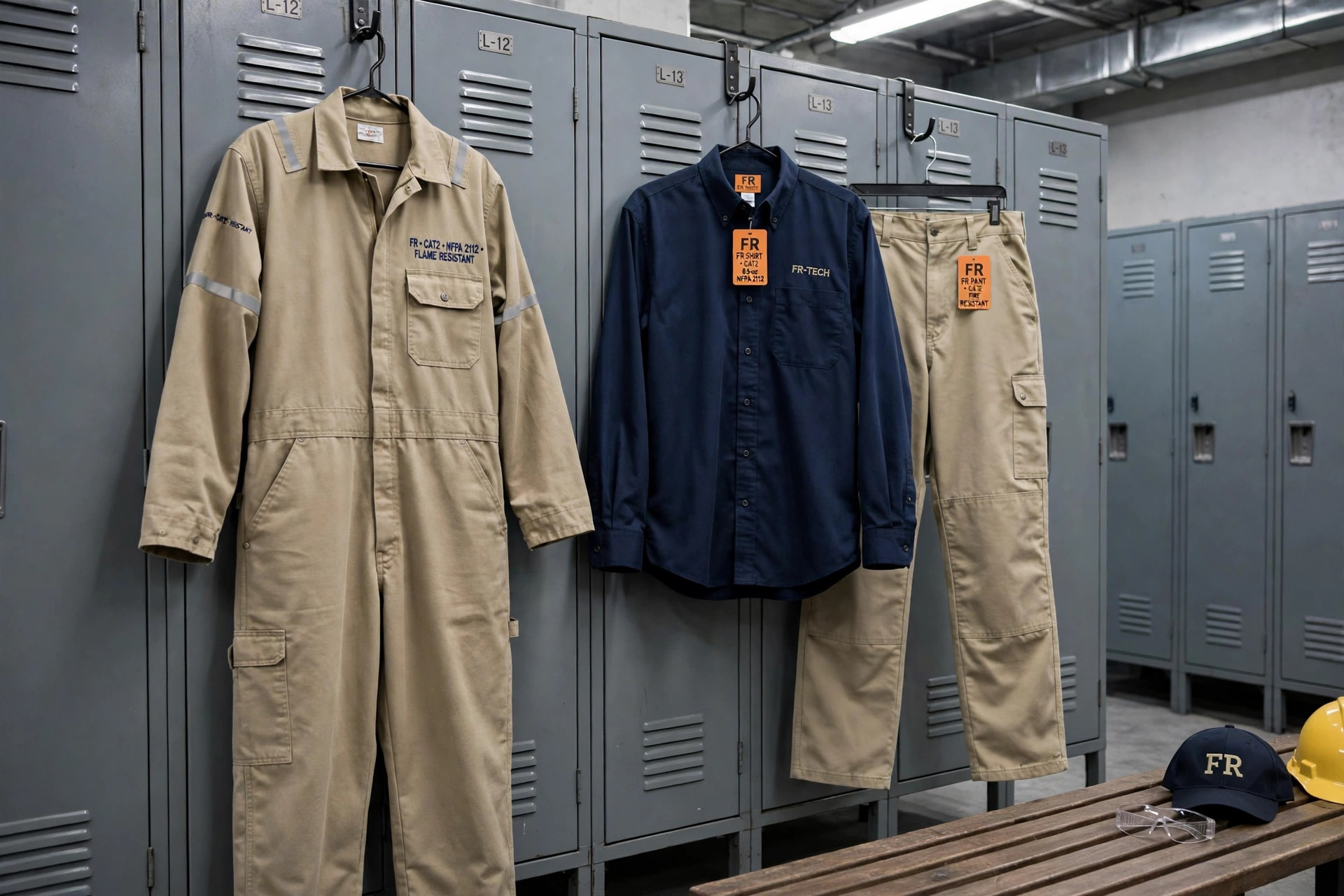
NFPA 2112 is the NFPA standard on flame-resistant clothing for protection of industrial personnel against short-duration thermal exposures from fire — commonly called flash fire. Where NFPA 70E addresses electric arc, NFPA 2112 addresses the sudden, brief engulfing flame that can occur around flammable gases, vapors, and dusts. A garment certified to NFPA 2112 has passed a battery of fabric and garment tests and is third-party certified and labeled.
What the Standard Covers
NFPA 2112 sets design and performance requirements for FR garments and the fabrics, threads, and hardware used in them. Fabrics are evaluated for flame resistance after repeated laundering, thermal shrinkage, and heat resistance, and garment systems are tested on instrumented manikins exposed to a short, controlled flash fire to estimate body burn injury. The standard also covers labeling and ongoing certification, so a compliant garment can be traced to a certified product rather than a one-off test. Details and thresholds are defined in the current edition of the standard itself — this page is an overview, not a substitute.
Who Wears 2112 Garments
Refinery, petrochemical, oil and gas, and some chemical and drilling crews wear NFPA 2112 garments as everyday workwear — coveralls, or FR shirts with FR pants &mdash because a flash fire allows no time to change into protective clothing. Employers select garments through their hazard assessment, considering the fuel, the task, and exposure duration assumptions, and they pair garments with the wider FR system described in our flame-resistant clothing guide. Electrical workers should note the distinction from arc-rated clothing: some garments carry both certifications, many carry only one.
Care, Inspection, and Retirement
Launder exactly as the label directs — typically no bleach or fabric softener — and keep garments free of flammable contaminants such as oil and grease buildup, which can ignite even on FR fabric. Inspect seams, closures, and fabric before use; repairs must use FR materials and thread, done to the manufacturer’s instructions. Retire garments with holes, heavy contamination, or degraded fabric, and record the program under the employer’s PPE procedures.
FAQs
- What is a flash fire?
- A flash fire is a short-duration fire that spreads rapidly through a cloud of flammable gas, vapor, or dust and then burns out in seconds. NFPA 2112 garments are designed to resist ignition, self-extinguish, and reduce burn injury during that brief exposure — they are not entry or proximity firefighting gear.
- How can I tell if a garment is NFPA 2112 certified?
- Look for the certification label inside the garment naming the standard, the certifying organization, and the manufacturer. Certification is third-party and ongoing; a hangtag claim without the garment label is not the same thing.
- Does NFPA 2112 clothing also protect against arc flash?
- Not automatically. Arc protection requires an arc rating under the electrical standards. Some garments are dual-certified; check both labels before relying on a garment for either hazard.
Workwear & PPE Guides
This guide is part of the Apparel Search workwear and PPE systems series. Browse the full series and the related trade uniform guides below.
- High-Visibility Clothing
- Hi-Vis Classes
- Arc-Rated Clothing
- Flame-Resistant Clothing
- Welding Apparel
- Chainsaw Chaps
- Cut-Resistant Sleeves
- Disposable Coveralls
- Protective Aprons
- Safety Toe Boots
- Composite Toe Boots
- Specialty Safety Toe Features
- Steel-Toe Boots (Men's Clothes Guide)
Trade Uniform Guides
Apparel Search: explore the Clothes Guide and shopping directory for more workwear and uniform resources.
Please note: NFPA 2112 requirements are maintained by the National Fire Protection Association (NFPA) and revised over time. This page is a general overview provided for information only — it is not legal or compliance advice, and it may not reflect the most current version. Always confirm the current requirements directly with the National Fire Protection Association (NFPA) rather than relying on this website.