Men's Anorak Guide
The men's anorak is a waterproof, hooded pull-over jacket with Arctic origins — invented by the Caribou Inuit for hunting and kayaking, and still defined by having no front opening.
Shop Men's Anoraks Now
Shop Men's Anoraks on Amazon Shop Men's Anoraks on eBayThe Amazon and eBay links on this page are affiliate links. If you make a purchase through them, Apparel Search may earn a commission.
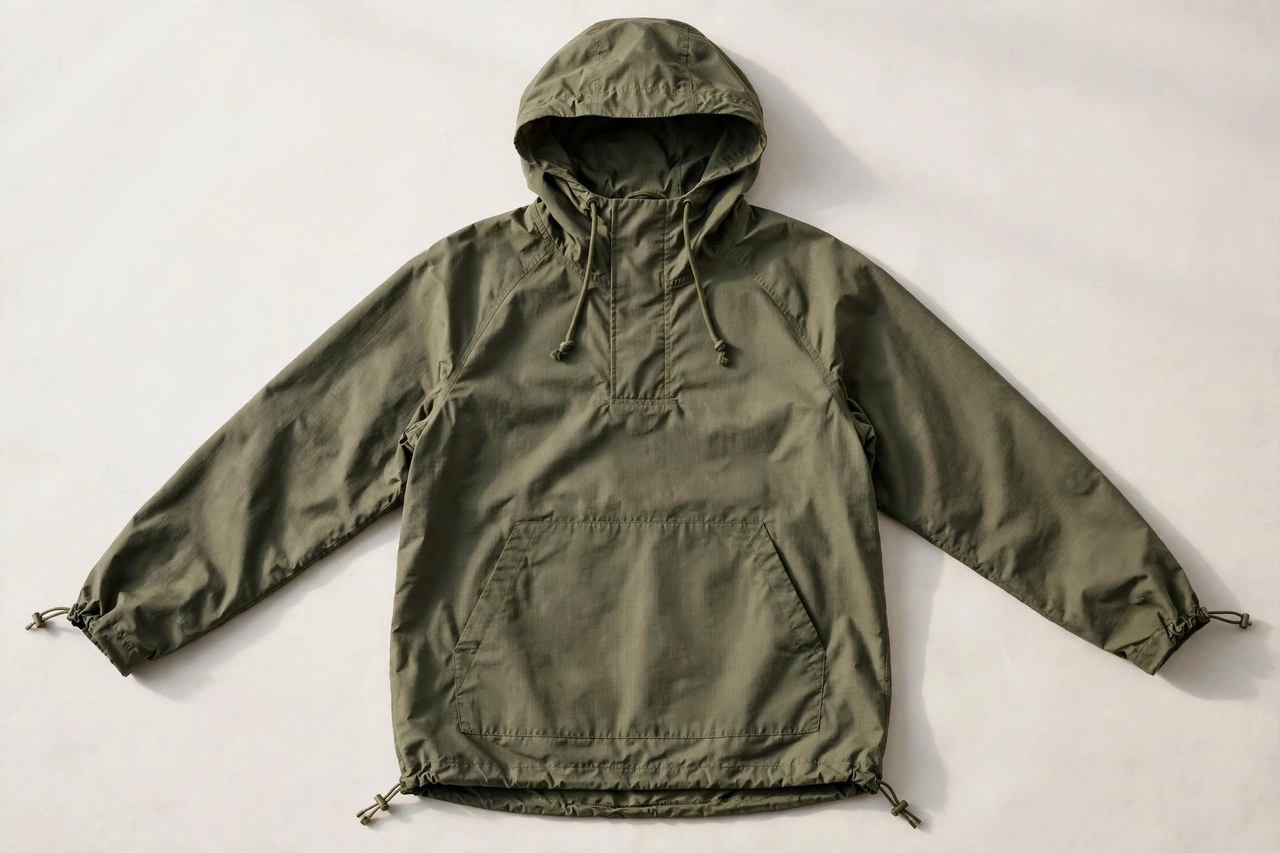
An anorak is often defined as a waterproof jacket, typically with a hood, of a kind originally used in polar regions. Strictly speaking, an anorak is a waterproof, hooded, pull-over jacket without a front opening, sometimes with drawstrings at the waist and cuffs. That pull-over construction is not a styling quirk; it is the whole idea, inherited from the garment's inventors. This guide covers the anorak's Arctic history, the difference between an anorak and a parka, and how to choose a modern one.
The words anorak and parka have been used interchangeably, but they are somewhat different garments, and the difference matters when you are buying for real weather.
Invented in the Arctic
A parka or anorak is a type of coat with a hood, often lined with fur or faux fur; the hood protects the face from freezing temperatures and wind. The Caribou Inuit invented this kind of garment, originally made from caribou or seal skin, for hunting and kayaking in the frigid Arctic. Every element of the design answered that environment: the pull-over front left no opening for wind and spindrift to enter, the hood carried the protection to the face, and drawstrings sealed the waist and cuffs.
Some Inuit anoraks require regular coating with fish oil to retain their water resistance — the original technical fabric, maintained by hand. Modern anoraks replace skin and fish oil with coated nylon and membrane fabrics, but the pattern a buyer should look for is unchanged: hood, sealed hems, and a front that weather cannot get through.
Anorak vs Parka: The Real Difference
An anorak is a waterproof, hooded, pull-over jacket without a front opening, and sometimes drawstrings at the waist and cuffs. A parka is a knee-length cold-weather coat, typically stuffed with down or very warm synthetic fiber, and with a fur-lined hood — and it opens down the front like a coat. Length, insulation and opening: those three checks separate the two garments on any rail.
Choose by the job. The anorak is a weather shell: windproof and water-resistant, light enough for hiking, sailing and wet city days, worn over whatever insulation the temperature demands. The parka is a warmth garment: the insulation is built in, the length covers the thighs, and it belongs to deep winter. Confusing them buys a shell when you needed a furnace, or a furnace when you needed a shell.
Choosing and Wearing a Modern Anorak
Modern anoraks divide into technical shells — membrane fabrics, taped seams, pit zips, kangaroo pockets with a through hand-warmer — and casual versions in cotton or uncoated nylon that borrow the silhouette for dry days. For real rain, the specification list is waterproof rating, seam taping and a hood that adjusts in two directions so it turns with your head. Half-zip and quarter-zip fronts are common modern compromises: they vent and ease dressing while keeping most of the sealed-front advantage.
Fit must allow the layers beneath: size an anorak over the fleece or sweater you will actually wear under it, and check that the hem drawstring seals without riding up. Care follows shell rules — wash with technical-wear detergent, refresh the water-repellent finish when water stops beading, and never coat a modern membrane in anything resembling the fish oil of its ancestors, however authentic the impulse.
Common Questions
What is an anorak?
Strictly speaking, an anorak is a waterproof, hooded, pull-over jacket without a front opening, sometimes with drawstrings at the waist and cuffs. The Caribou Inuit invented the garment, originally made from caribou or seal skin, for hunting and kayaking in the frigid Arctic - the sealed pull-over front leaves no opening for wind and spindrift.
What is the difference between an anorak and a parka?
Three things: opening, length and insulation. An anorak pulls over with no front opening and works as a weather shell. A parka is a knee-length cold-weather coat that opens down the front and is typically stuffed with down or very warm synthetic fiber, with a fur-lined hood. The words are used interchangeably, but the garments do different jobs.
How did Inuit anoraks stay waterproof?
They were made from caribou or seal skin, and some Inuit anoraks required regular coating with fish oil to retain their water resistance. Modern anoraks achieve the same end with coated nylon and waterproof membrane fabrics, maintained by washing with technical detergent and refreshing the water-repellent finish when water stops beading on the surface.
More in Men's Clothes Guide A
Anorak and Parka
A parka or anorak is a type of coat with a hood, often lined with fur or faux fur, and the hood protects the face from freezing temperatures and wind. The Caribou Inuit invented this kind of garment, originally made from caribou or seal skin, for hunting and kayaking in the frigid Arctic, and some Inuit anoraks require regular coating with fish oil to retain their water resistance. The words anorak and parka have been used interchangeably, but they are somewhat different garments: strictly speaking, an anorak is a waterproof, hooded, pull-over jacket without a front opening, and sometimes drawstrings at the waist and cuffs, while a parka is a knee-length cold-weather coat, typically stuffed with down or very warm synthetic fiber, and with a fur-lined hood.
Looking for Men's Clothing Stores?
This guide explains the men's anorak and how it differs from a parka. To browse where to buy, visit our men's clothing store directory, where you can find retailers that carry them, and the wider types of outerwear are covered across the site.