Men's Activewear Guide
Men's activewear is clothing built for movement across the whole day — training, travel, errands and rest — and this guide answers the first question: what is activewear?
Shop Men's Activewear Now
Shop Men's Activewear on Amazon Shop Men's Activewear on eBayThe Amazon and eBay links on this page are affiliate links. If you make a purchase through them, Apparel Search may earn a commission.
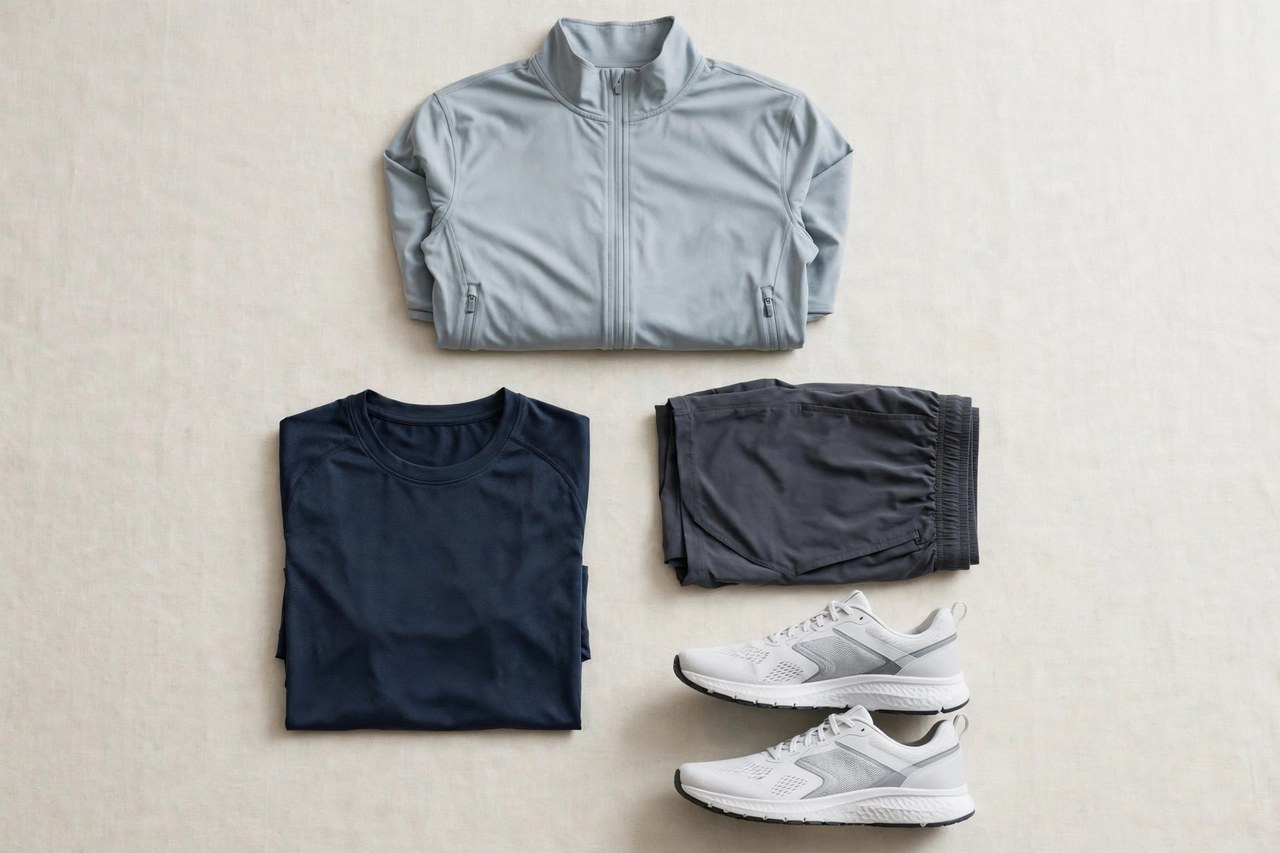
First of all, what is activewear? It is the right place to start, because activewear is the broadest word in the performance wardrobe. Activewear is clothing designed to be lived in actively: cut for movement, made from fabrics that manage sweat and stretch, and styled well enough to wear before and after the workout as well as during it. This guide defines the category, separates it from its close relatives, and explains the fabrics and features that earn a garment the name.
If athletic apparel is the specialist kit for a sport, activewear is the generalist wardrobe for an active life — the training session, the school run, the flight and the dog walk all ask for the same qualities, and activewear is built to answer all of them.
Activewear, Athletic Apparel, Sportswear, Athleisure
The four terms overlap, and the differences are emphasis. Athletic apparel, covered in its own guide in this letter, is designed to support physical activities, exercise, sports and athletic performance, garment by garment. Sportswear is the older, wider term for sports clothing and, in American usage, for coordinated casual separates generally. Activewear sits between them: performance fabrics and movement-first cuts, aimed at the whole active day rather than one sport.
Athleisure is where activewear finishes crossing into fashion — the same leggings, joggers and technical tees styled as everyday casual dress. A practical shopper does not need to police the borders: buy by fabric, cut and feature, and let the label fall where it likes.
The Fabrics and Features That Define It
Activewear fabrics are synthetics and blends chosen for four jobs: wicking sweat away from skin, drying quickly, stretching and recovering, and resisting odor across a long day. Polyester and nylon do most of the work; elastane provides the stretch; merino wool appears in premium pieces for temperature regulation and natural odor resistance. Cotton, comfortable as it is, holds sweat and dries slowly, which is why it survives mainly in casual activewear rather than training pieces.
Features follow the same logic: flat seams that do not chafe, gussets where movement concentrates, mesh panels where heat builds, zip pockets that keep a phone and keys through a run, and reflective details for low-light miles. A garment with those features in a wicking fabric is activewear whatever the tag calls it; a garment without them is casual clothing in a sporty costume.
Building an Activewear Rotation
A working rotation is small and deliberate: two or three training tops, two bottoms (one short, one long), one lightweight layer for warm-ups and travel, supportive shoes matched to your main activity, and enough socks to never train in yesterday's pair. Buy the second set only when laundry, not novelty, demands it — activewear earns its cost per wear faster than almost any other clothing a man owns.
Fit should skim and move: close enough that fabric does not flap or chafe, loose enough that a squat, a lunge and a reach all happen without adjustment. Care keeps the performance alive — wash cool, skip fabric softener, which coats wicking fibers, and air-dry or tumble low, because heat is what ages elastane. Treated that way, good activewear serves for years of active days.
Common Questions
What is activewear?
Activewear is clothing designed for an active day: cut for movement, made from fabrics that wick sweat, dry quickly and stretch, and styled to be worn before and after exercise as well as during it. It is broader than athletic apparel, which is specialist kit designed to support a particular sport or workout, garment by garment.
What fabrics make clothing count as activewear?
Mainly polyester and nylon, usually with elastane for stretch and recovery, and merino wool in premium pieces. They manage moisture, dry fast and resist odor across a long day. Plain cotton holds sweat and dries slowly, so it appears mostly in casual activewear rather than serious training pieces.
How should activewear be washed to keep it performing?
Wash cool and skip fabric softener, which coats the fibers and blocks wicking. Air-dry or tumble on low heat, because heat ages elastane and shortens the life of the stretch. Fit and fabric do the work in activewear, so care that protects both is what keeps a small rotation performing for years.
More in Men's Clothes Guide A
What Is Activewear?
First of all, “what is activewear?” — the question at the center of the page, because activewear is the broadest and most loosely used word in the performance wardrobe. Men’s athletic apparel is the specialist category inside the activewear umbrella, and that relationship structures the guide above.
More to Explore on Apparel Search
Looking for Men's Clothing Stores?
This guide explains men's activewear and how it differs from athletic apparel. To browse where to buy, visit our men's clothing store directory, where you can find retailers that carry it.