Two Categories, One Rail of Clothes
Athleisure and Activewear, Defined Side by Side
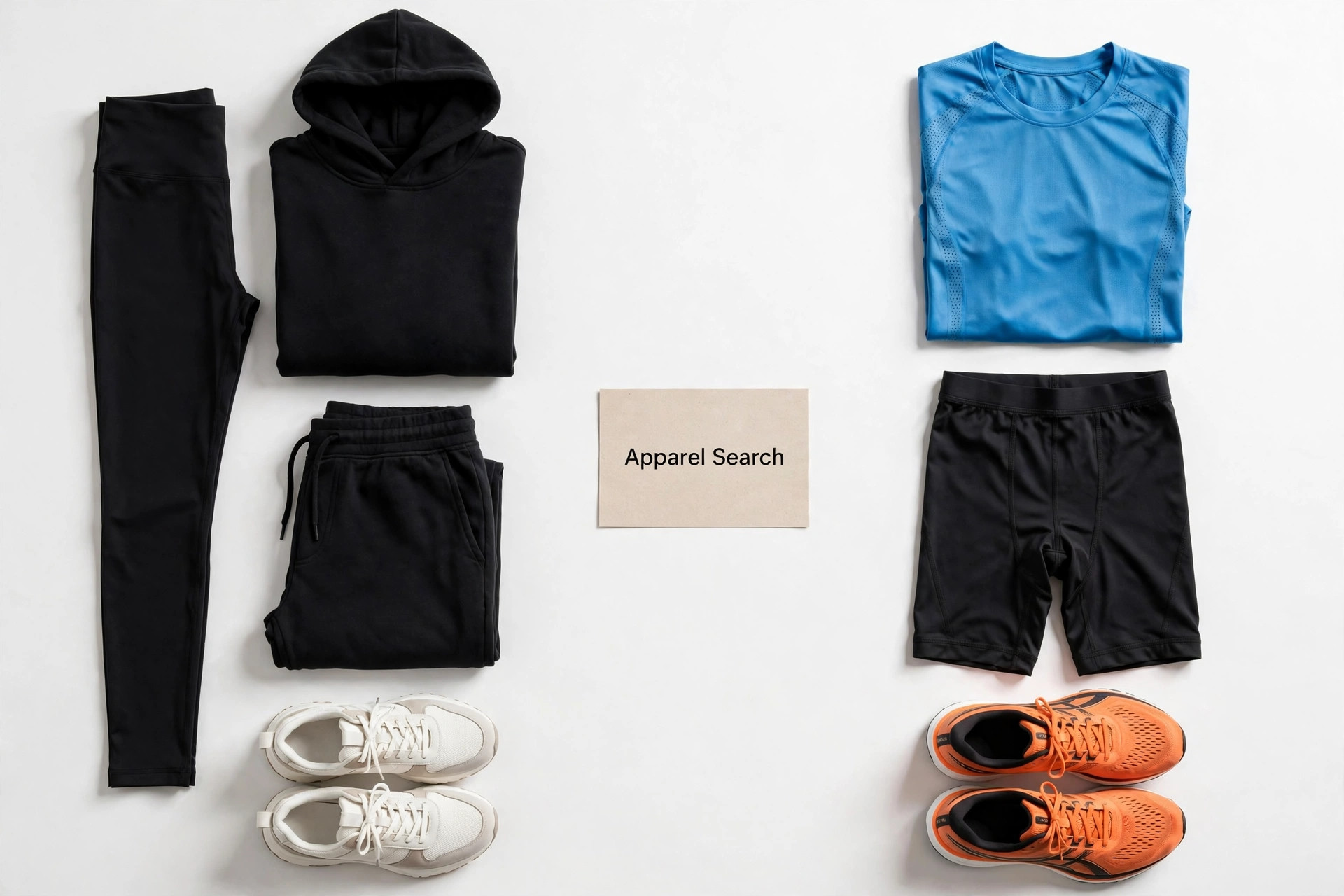
Activewear is clothing designed to be exercised in. Athleisure is clothing designed — or chosen — to be lived in, using activewear’s shapes and comfort. The garments overlap so heavily that the leggings on a morning run and the leggings at lunch may be the same pair, which is exactly why the distinction confuses people. The difference is not the garment; it is the job the garment is dressed for, and the priorities that follow from that job.
| Athleisure | Activewear | |
|---|---|---|
| Primary job | Everyday dress: comfort with a finished appearance | Exercise performance: support, movement and endurance |
| Worn for | Errands, travel, casual work, social days | Training, classes, running, sport |
| Fabric priorities | Matte finish, drape, structure, opacity on show | Moisture wicking, stretch, compression, quick drying |
| Fit signals | Tailored versions of athletic shapes; one structured layer | Body-mapped, supportive, unrestrictive fits |
| Logos & colour | Minimal logos; wardrobe neutrals | Branding and bright colours are normal |
| Footwear | Clean fashion trainers, loafers, hybrid shoes | Sport-specific shoes chosen for the activity |
| Success test | Looks chosen, not defaulted into | Performs through the whole session |
The short athleisure term entry gives the dictionary version; the performance side is specified in the women’s activewear guide and the men’s activewear guide, and a neighbouring distinction is drawn in the answer on the difference between activewear and sportswear. This page is the styling-side comparison.
Fabric & Tech
Where the Fabrics Genuinely Differ
Activewear technology is functional first: moisture-wicking knits that pull sweat off the skin, four-way stretch that survives deep movement, compression that supports muscle, mesh ventilation placed where heat builds, and flat seams that prevent chafing over thousands of repetitions. None of that is decoration, and all of it costs money — which is why serious gym kit is priced as equipment.
Athleisure borrows the comfort technologies and quietly drops or disguises the rest. Its fabrics favour a matte, clothing-like hand over a technical sheen; its stretch is for sitting, driving and walking rather than lunging; its waistbands are made to disappear under tops rather than to lock down during intervals. Some crossover pieces genuinely carry both sets of properties — a premium legging can wick, support and still look like a trouser — but as a rule, the more purely technical a fabric looks and feels, the harder it is to style as everyday dress, and the more structured and matte a piece is, the worse it performs in a hard session.
Occasions
When Each Category Is the Appropriate One
Choose activewear for anything with real exertion or real sweat: training, classes, running, matches and hikes. Support, wicking and freedom of movement are not optional there, and appearance is secondary. The sport-specific versions are covered by guides such as the pickleball clothing guide and what to wear to Pilates. Choose athleisure for everything around the exercise: travel days, errands, casual workplaces, spectating, and the social hour after a class. Choose neither where a dress code speaks plainly — formal offices, ceremonies and formal evenings ask for ordinary tailored clothing, and both categories fall short there however well they are styled. Dressing appropriately is mostly a matter of matching the category to the occasion, not of owning more clothes.
One Wardrobe
How the Two Overlap in a Real Wardrobe
Most wardrobes sensibly run the categories as one rail with two zones. At the performance end sit the pieces that work hardest and look most technical; at the style end sit the plainest, best-finished versions — the black matte legging, the tailored jogger, the unbranded quarter-zip — that carry everyday outfits, following the formulas in Women’s Athleisure Outfits and Men’s Athleisure Outfits. Pieces migrate: a new legging starts in the style zone, and as its finish fades it retires to workouts, where appearance matters least. Buying with both zones in mind — plain colours, minimal logos, matte fabrics — doubles the working life of every piece. The full style framework sits at the Athleisure Style & Outfits hub.
Questions
Common Questions
Is athleisure the same as activewear?
No. Activewear is designed for exercise performance — wicking, stretch, support and durability during a workout. Athleisure uses athletic-style garments for everyday dressing, where comfort and a finished appearance matter most. Individual pieces often qualify as both, but the categories describe different purposes.
Can you work out in athleisure clothes?
Light exercise, yes — most athleisure pieces stretch and move well enough for walking, gentle yoga or a light class. For intense, sweaty or high-impact training, true activewear performs better: it wicks faster, supports more and is built to survive repeated hard sessions and washing.
Can you wear activewear as everyday clothes?
That is precisely what athleisure styling does — with conditions. Plain, matte, well-kept activewear pieces styled with a structured layer and clean shoes read as everyday dress. Shiny, logo-heavy or worn-out gym kit worn unchanged reads as workout wear wherever it goes.
More to Explore
Search Apparel Search