01 — The Dress Code
The Studio Dress Code, Explained
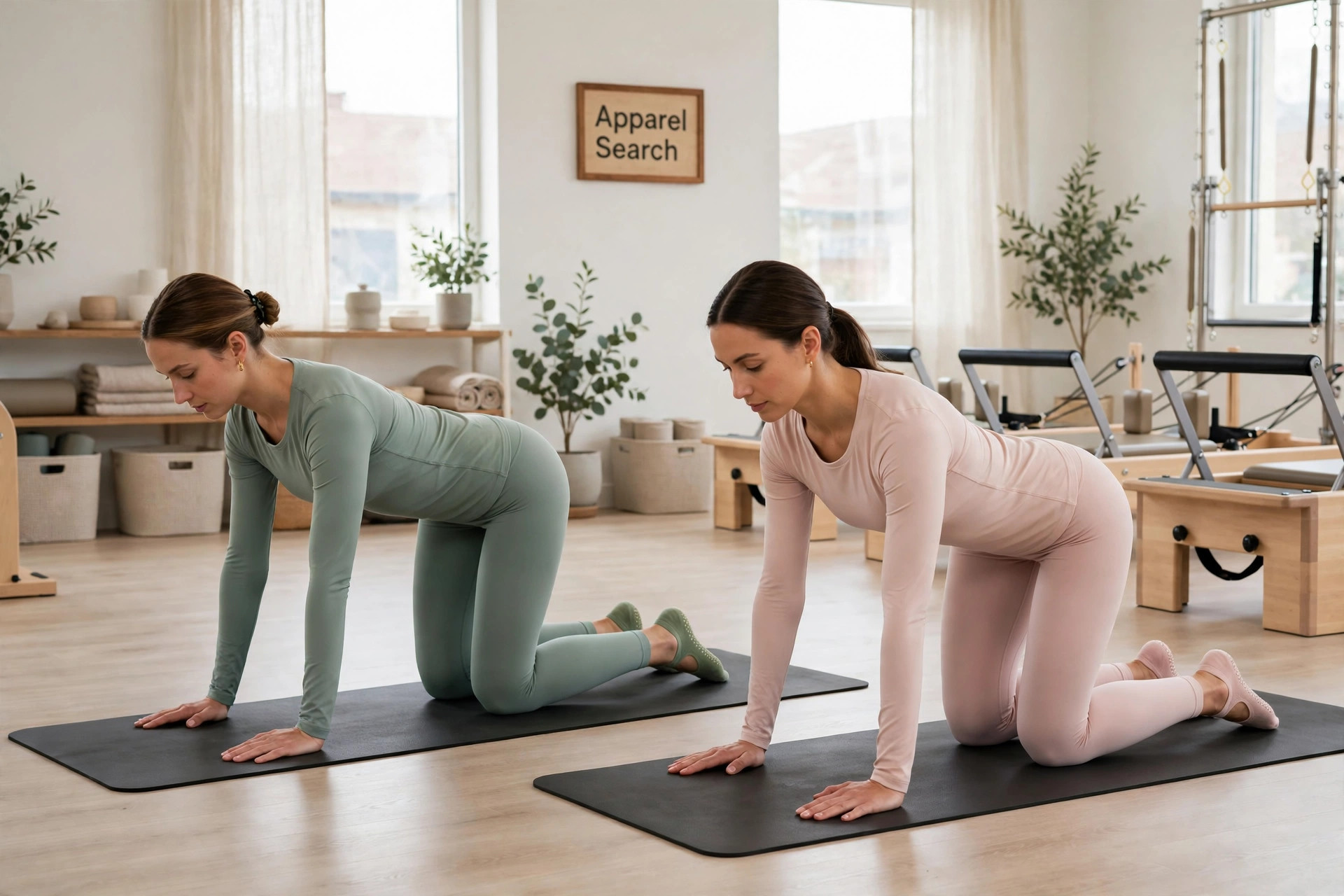
Pilates asks more of clothing than most workouts because the workout itself is precise. Whether the class is on a mat or on a reformer — the sliding-carriage machine with springs and straps — the instructor is watching how your body lines up, and the clothing that works best lets that happen: close-fitting, smooth, stretchy and free of anything hard or dangly. Loose gym clothes bunch, ride up and hide exactly the alignment cues a teacher needs to see. That is why studio regulars converge on the same uniform of leggings, a fitted top and grip socks. The full machine-specific version is in the Reformer Pilates Outfits guide; this page is the overview for every format.
Think of the dress code as three rules. First, fit close: fabric should follow the body without squeezing it. Second, stay smooth: no zippers at the back, no buckles, no rivets or chunky seams between you and the equipment. Third, grip the surface: feet work against a moving carriage, a mat or a polished floor, and they need traction rather than slide. Everything else — colors, brands, price points — is personal choice.
Search Apparel Search
02 — Fit and Fabric
Why Fitted and Hardware-Free Wins
The workhorse of the Pilates wardrobe is the legging: full-length or cropped, high-waisted, in a four-way-stretch knit that is opaque when it bends. A high, flat waistband matters more than in the gym, because so much Pilates work happens lying down, rolling and bridging — a waistband that folds or digs announces itself in every repetition. The women’s leggings guide compares rises, lengths and fabrics in depth. On top, the equivalent piece is a fitted tank or tee that will not pool toward your face in a roll-over or hang loose in a plank; many wearers add a longline sports bra as the top itself in warm studios. Support needs are modest next to running — Pilates is low-impact — but the sports bra guide explains how to match support to class format.
Hardware-free deserves its own emphasis because it surprises newcomers. A back zipper on leggings presses into the spine during roll-ups. A metal-tipped drawstring swings against the carriage. Buckles, snaps and studs scratch vinyl upholstery that studios pay dearly to maintain, and some studios ban them outright. The check is quick: run a hand over everything you plan to wear, and anything you can feel as a hard point is a reason to choose a different piece.
03 — The Kit
The Core Kit, Piece by Piece
A complete Pilates wardrobe is small. These are the pieces that earn their place, in the order most people buy them:
- Leggings, one or two pairs — high-waisted, squat-proof, with a gusset and a drawstring-free waist. The leggings product directory surveys the category across brands and price points.
- Fitted tops, two or three — tanks for warm studios, short or long sleeves for cool ones, always smooth at the back. The fitness tops directory collects the styles studios see most.
- A supportive bra or longline top — low-to-medium support suits most classes; choose seamed, pullover styles without back clasps for floor work.
- Grip socks, two pairs — so one pair is always clean; they are the closest thing Pilates has to mandatory equipment.
- One light layer — a wrap, zip-free pullover or long sleeve for the warm-up and the walk home, removed once the work starts.
Fabrics repeat across the kit: nylon or polyester blended with elastane for shape and quick drying, in matte finishes that read more studio than gym. Cotton appears in socks and soft layers but holds moisture as a main fabric.
04 — The Details
Hair, Jewelry and the Small Details
The finishing rules take thirty seconds and are mostly about moving parts. Hair goes up and back — a bun, braid or high ponytail — because loose hair tangles in reformer springs, gets trapped under shoulders during roll-ups and hides the neck line instructors watch. Jewelry comes off: rings can catch straps, necklaces swing into the face in inversions, and earrings snag on headrest padding. Leave anything precious at home rather than track it through class. Lotion matters more than expected — freshly applied lotion makes hands and feet slide on the carriage and bar, so save it for after class.
Mat classes forgive more than machine classes do: a softer, less technical kit is fine on the floor, and bare feet are often welcome. The dedicated Mat Pilates Outfits guide covers the floor-work wardrobe, including practicing at home, where the dress code relaxes but the same fit logic still makes the exercises easier to do well.
05 — Getting Started
Your First Class: A Simple Checklist
Arrive in leggings or fitted shorts, a close-fitting top, and grip socks if you own them — many studios sell a pair at the desk, and nearly all require them for reformer work. Bring a towel and a water bottle, tie your hair back, and take off jewelry while you change. There is no fashion element to a Pilates outfit beyond clean, close and comfortable. Men follow the same rules with a different default bottom — fitted shorts, often over a compression layer — and the specialist pages below cover each format and garment in turn.
Good to Know
Common Questions
Do I need grip socks for Pilates?
For reformer Pilates, at most studios, yes. The silicone dots on the soles keep feet from sliding on the moving carriage and footbar, and studios also require them because socks are more hygienic than bare feet on shared equipment. Mat classes are more relaxed — many allow bare feet — but grip socks still help on polished studio floors. If you do not own a pair, most studios sell them at the desk.
Can I wear shorts to Pilates?
Yes, with a fit caveat. Shorts should be close-fitting or worn over a fitted liner or compression short, because Pilates involves leg circles, straps and inverted positions where loose shorts shift and gap. Bike-style and fitted training shorts work well; loose running shorts with wide leg openings are the style regulars abandon first. On the reformer, many instructors prefer leggings or fitted shorts so they can see knee alignment clearly.
Why can I not wear clothes with zippers to Pilates?
Two reasons, one for you and one for the equipment. A zipper, buckle or snap pressed between your back and a mat or carriage digs in during rolling and bridging work, which is uncomfortable enough to change how you move. The same hardware scratches and tears the vinyl upholstery on reformers, which is expensive to replace, so many studios simply prohibit metal hardware in their dress codes.
What should I wear to my very first Pilates class?
Keep it simple: high-waisted leggings or fitted shorts, a close-fitting top that stays put when you bend, a low-to-medium support bra if you wear one, and grip socks. Tie long hair back, remove jewelry, and bring a towel and water bottle. You do not need a special outfit to start — clean, fitted gym clothing you already own will tell you within one class which piece, if any, is worth upgrading.