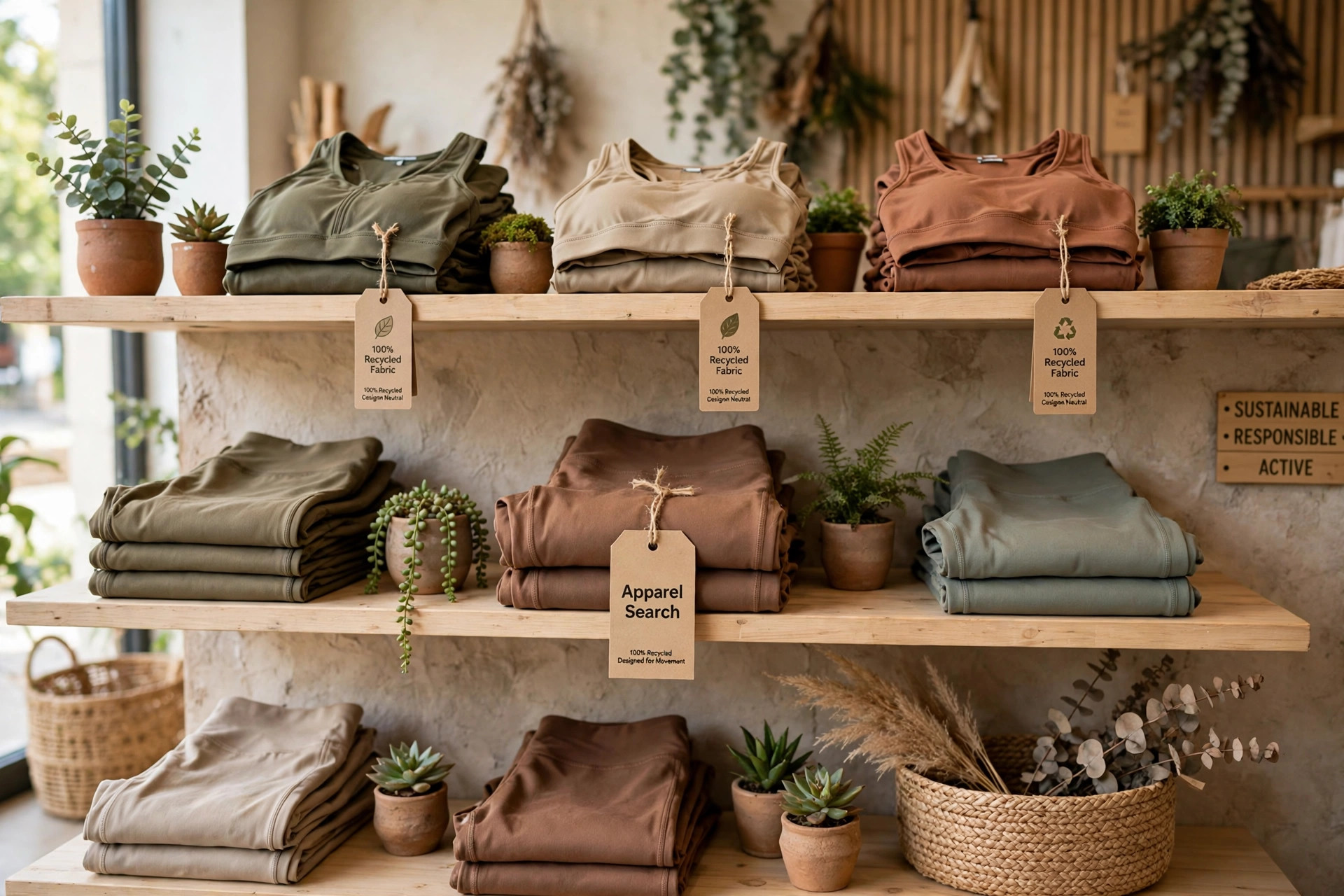
Activewear asks more of fabric than almost any other clothing: it must stretch in four directions, survive sweat and friction, hold its shape through hundreds of washes, and dry fast. Those demands are exactly why gym clothes are built from polyester, nylon and elastane — plastics, made from oil — and why "sustainable activewear" is a harder promise than a sustainable t-shirt. It is also achievable, and a real category of brands now works on it seriously: swapping virgin synthetics for recycled and regenerated fibers, building natural-fiber lines where the sport allows, certifying the claims, and designing for repair and take-back. This guide explains how to judge them — materials first, certifications second, brand behavior third — so the choice rests on evidence rather than on the color green printed on a hangtag. It complements the wider Sustainable Fashion Brands directory and the consumer guide to sustainable fashion.
The Challenge
Why Activewear Is the Hard Case
Three features of workout clothing resist easy fixes. First, stretch: elastane is blended into nearly everything, and elastane is neither recycled at scale nor separable from the fibers around it, which is why most activewear cannot currently be recycled into new clothing. Second, blends: performance fabrics mix fibers for good technical reasons, and mixed fibers defeat most recycling routes. Third, turnover: fashion cycles reach the gym too, and a legging discarded after a season carries its full footprint for a fraction of its possible life. A credible sustainable brand does not pretend these problems away — it reduces virgin plastic, increases recycled and natural content where performance allows, and works on lifespan, because the longest-wearing garment is almost always the lowest-impact one.
Fiber by Fiber
The Materials, Compared Honestly
| Material | Why it's used | Footprint notes |
|---|---|---|
| Recycled polyester | The workhorse swap — same performance as virgin polyester for leggings, tops and shorts. | Cuts energy and oil demand and diverts bottles and textile waste. Still sheds microfibers and is rarely recycled a second time. Look for GRS certification. |
| Regenerated nylon | For swim and high-stretch pieces needing nylon's strength and recovery. | Made from reclaimed fishing nets, carpets and industrial waste, depolymerized back to virgin-quality nylon — one of the few genuinely circular synthetics. |
| Organic cotton | Soft, breathable training wear — yoga, walking, light workouts, recovery layers. | Grown without synthetic pesticides or fertilizers; the Women's Organic Cotton Activewear Guide covers its real strengths and its honest limit: cotton holds sweat, so it suits lower-intensity training. GOTS is the certification that counts. |
| Merino wool | Base layers, running tops and socks — natural stretch, warmth and odor resistance. | Renewable and biodegradable, and it needs washing far less often. Judge the farming and animal-welfare standards behind it, and expect a higher price. |
| Lyocell (Tencel) | Soft training tops and underwear; smooth against skin, manages moisture well. | Made from wood pulp in a closed-loop process that recycles its solvents; a strong natural-derived option, usually blended for durability. |
| Virgin polyester / nylon | Still the default across most of the industry. | The baseline to improve on. If a "sustainable" line is mostly virgin plastic with a green name, that is marketing, not materials progress. |
The eco-friendly fabrics guide goes deeper on each fiber's production, and the Women's Activewear Guide and Men's Activewear Guide cover fit and construction across the category.
Proof, Not Adjectives
Certifications That Actually Verify Something
Certifications matter in this category precisely because the claims are easy to make and hard to eyeball. Five recur on credible activewear: GRS (Global Recycled Standard) verifies recycled content and chain of custody; GOTS certifies organic fibers and the processing behind them; OEKO-TEX Standard 100 tests the finished garment for harmful substances; bluesign audits the chemistry and resource use in synthetic fabric production; and B Corp and Fair Trade Certified speak to the company's wider labor and governance practices. Our Fashion Certifications guide explains what each label does and does not guarantee. The rule of thumb: a named, verifiable certification is evidence; the words "eco", "conscious" or "earth-friendly" alone are decoration.
The Landscape
What Credible Brands Do — and Who Is Doing It
Beyond materials, serious activewear brands share a pattern of behavior: they publish their recycled and preferred-fiber percentages, name their certifications, offer repair or take-back programs that keep garments in use, and keep their core styles running for years instead of churning them seasonally. Examples widely documented for working this way include Girlfriend Collective, built on leggings and basics made from recycled materials including plastic bottles and fishing nets; Patagonia, whose active and outdoor lines use recycled fabrics at scale and whose Worn Wear program repairs and resells used gear; prAna, known for organic cotton and hemp blends and Fair Trade Certified styles across its yoga and training ranges; Tentree, which plants trees for every item sold and favors low-impact fibers in its active line; and Wolven, a smaller label making activewear from recycled plastic-bottle fabric. Treat these as illustrations of the pattern, not a ranking — the criteria above will find you credible brands of every size, including local ones, and the activewear product directory collects the category broadly.
Judge a sustainable activewear brand the way you would judge training itself: not by the claims on the poster, but by the measurable work, repeated over years.
Watch For
Greenwashing Red Flags
- A tiny "conscious" capsule marketed loudly while the main line stays unchanged — judge the brand on its whole range.
- Unverifiable percentages: "made with recycled materials" with no amount given and no GRS or equivalent certification behind it.
- Bottle math presented as circularity: recycled-bottle polyester is a real improvement, but a one-way trip from bottle to landfill-bound legging is not a circle — honest brands say so.
- Vague nature language — "kind to the planet", "eco vibes" — with no materials list, no certifications and no published data anywhere on the site.
- Disposable prices: sustainability and ultra-cheap, ultra-fast turnover do not coexist; very low prices usually mean the costs were paid by someone else, somewhere else.
The Second Half
Care and Longevity: Where Your Impact Is Decided
Roughly speaking, how long activewear lasts matters as much as what it is made of — and that part belongs to the wearer. Wash cold and only when needed (airing handles most post-workout freshness), turn garments inside out, use a wash bag or filter to reduce microfiber shedding, and hang to dry: heat is elastane's enemy, and tumble drying is where stretch goes to die. Repair small failures early — a restitched seam or replaced drawstring costs little and returns a garment to service. When a piece is truly finished, use the brand's take-back program if it has one rather than the bin. Bought well and kept long, sustainable activewear stops being a compromise: the better-made legging is also the more comfortable one, workout after workout, year after year.
Good to Know
Common Questions
- What makes activewear sustainable — or not?
- Mostly the fiber. Conventional leggings and gym tops are virgin polyester and nylon — plastics made from oil, chosen for stretch and sweat handling. Sustainable versions swap in recycled polyester or regenerated nylon, organic cotton, merino or lyocell, and back the swap with certification. The second factor is lifespan: a legging worn two hundred times beats a 'greener' one replaced in a season.
- Is recycled polyester a real improvement?
- Yes, with honest limits. It cuts the energy and oil demand of virgin polyester substantially and diverts bottles and textile waste — which is why most credible activewear brands build on it. It is still plastic: it sheds microfibers in washing and is hard to recycle again at end of life. Treat it as the current best mainstream option, not a perfect one.
- Which certifications should I look for on activewear?
- GRS (Global Recycled Standard) for recycled content, GOTS for organic fibers, OEKO-TEX Standard 100 for harmful-substance testing, bluesign for safer chemistry in synthetic production, and B Corp or Fair Trade Certified for the company's wider practices. A specific logo you can verify beats a paragraph of green adjectives every time.
- How do I wash activewear to make it last and shed less?
- Wash cold, inside out, only when needed, and hang to dry — heat and tumble drying are what kill elastane. A wash bag or microfiber-catching filter reduces fiber shedding. Most gym clothes need rinsing and airing more often than they need a full wash.
More to Explore
- Sustainable Fashion — the section hub: brands, fabrics and certifications
- Sustainable Fashion Brands — the wider brand directory beyond activewear
- Eco-Friendly Fabrics — the textiles with the lightest footprint
- Fashion Certifications — what GOTS, GRS, OEKO-TEX and the rest actually verify
- Women's Organic Cotton Activewear Guide — the natural-fiber route in depth
- Activewear: Product Directory — the category across brands
- What to Wear to Pilates — the studio outfit guide: fitted, hardware-free pieces and grip socks
Search Apparel Search