Women's Fitness Apparel Guide
Fitness apparel is engineered clothing: technical fabrics, flat seams and fits built to move. Here is the full product range and how to judge each piece on its construction, not its label.
Shop Women's Fitness Apparel Now
Shop Women's Fitness Apparel on Amazon Shop Women's Fitness Apparel on eBayThe Amazon and eBay links on this page are affiliate links. If you make a purchase through them, Apparel Search may earn a commission.
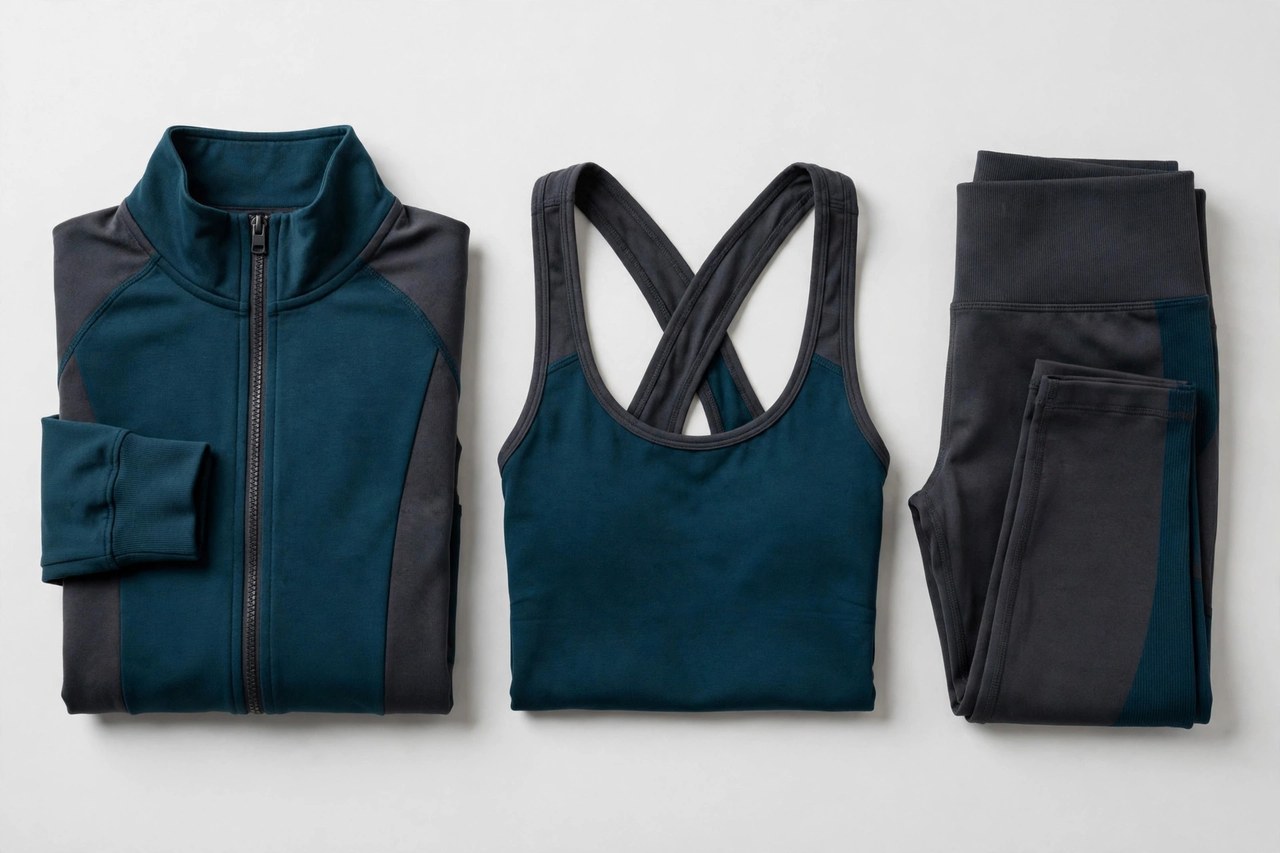
Fitness apparel is the product side of the workout wardrobe: garments designed from the fibre up for training, running, yoga and the gym. Where ordinary casual clothes are cut for sitting and standing, fitness apparel is cut for squatting, reaching, lunging and sweating, and it is sewn from technical fabrics that manage moisture, stretch in four directions and survive hundreds of washes without sagging.
This guide walks through the whole range — what each product is for, which fabrics and construction details actually do the work, and how to judge quality on the rail. For the wardrobe-building side of the subject, see our fitness clothing guide; for the fashion angle, see fitness fashion.
The Product Range
The core of the range is leggings and tights, from capri to full length, in light, medium and high compression. Above them sit sports bras graded by impact level, tanks and short-sleeve tops in racerback, fitted and relaxed cuts, and shorts from lined running styles to bike shorts. Around that core are the layers: warm-up jackets, quarter-zips, hoodies, joggers and studio wraps for the walk to the gym and the cool-down after.
Accessories complete the category: training gloves, grip socks for barre and Pilates, headbands, caps and gym bags. Each piece solves a specific problem — chafing, bounce, overheating, slipping — which is why fitness apparel rewards shoppers who read the spec sheet rather than the colour palette.
Technical Fabrics Do the Work
Almost everything starts with polyester or nylon blended with elastane (spandex). Polyester wicks sweat and dries fast but can hold odour; nylon feels smoother and resists abrasion better; elastane at 15–25% provides the stretch and recovery that keep leggings opaque and supportive. Merino wool blends appear in premium tops and socks for natural temperature regulation and odour resistance, at a higher price and with gentler washing.
Compression deserves a plain explanation: it is graduated pressure from a tight, high-elastane knit. It supports muscles, reduces bounce in bras and shorts, and helps garments stay put. It is not magic, and the differences between brands are mostly fit and fabric weight — measured in GSM, with heavier knits (250+) giving the most coverage and support.
Construction Details That Matter
Run a finger along the inside seams. Flatlock stitching lies flat against the skin and is the single best defence against chafing on long runs. A gusset in the crotch of leggings removes the four-way seam junction that would otherwise dig in and split. Wide, high waistbands with an internal drawcord stay up through burpees; cheap narrow elastic rolls and twists.
Check for mesh ventilation panels behind knees and across the back, bonded rather than sewn hems on premium pieces, and pockets that actually fit a phone without it bouncing loose. Reflective trims matter if you train outdoors in winter light. These details, not logos, are what you are paying for as prices climb.
Choosing by Activity
Match the apparel to the movement. High-impact training wants high-support bras and medium-to-high compression leggings with a secure waistband. Yoga and Pilates want the softest, stretchiest fabrics and nothing that digs when folded. Running wants light, fast-drying pieces with pockets and reflectivity. Lifting wants durable, squat-proof fabrics and room through the shoulders.
Whatever the activity, do the changing-room tests: squat to check opacity, raise your arms to check top length and bra support, and lunge to check that waistbands stay put. Apparel that passes in the mirror but fails in motion will live at the back of the drawer.
Reading the Spec Like a Buyer
Fitness apparel rewards label literacy. Beyond fibre percentages, look for fabric weight (higher GSM in leggings means more coverage and support), elastane content (15–25% is the functional band; much less loses recovery, much more feels restrictive), and any UPF rating on outdoor pieces (UPF 50 blocks about 98% of UV). ‘Squat-proof’, ‘anti-odour’ and ‘cooling’ are marketing until construction backs them: opacity is tested by stretching the fabric over your hand under light, anti-odour by silver or merino content, cooling by mesh placement and fabric thinness. The spec sheet, read properly, predicts the garment.
More Fitness Guides
Photos

Looking for Women's Clothing Stores?
This guide helps you choose women's fitness apparel. To browse where to buy, visit our women's clothing store directory, where you can find retailers that carry them.