Women's Fitness Footwear Guide
The right shoe depends on the workout, not the brand. How fitness footwear differs for running, lifting, HIIT and classes — and how to fit it properly.
Shop Women's Fitness Shoes Now
Shop Women's Fitness Shoes on Amazon Shop Women's Fitness Shoes on eBayThe Amazon and eBay links on this page are affiliate links. If you make a purchase through them, Apparel Search may earn a commission.
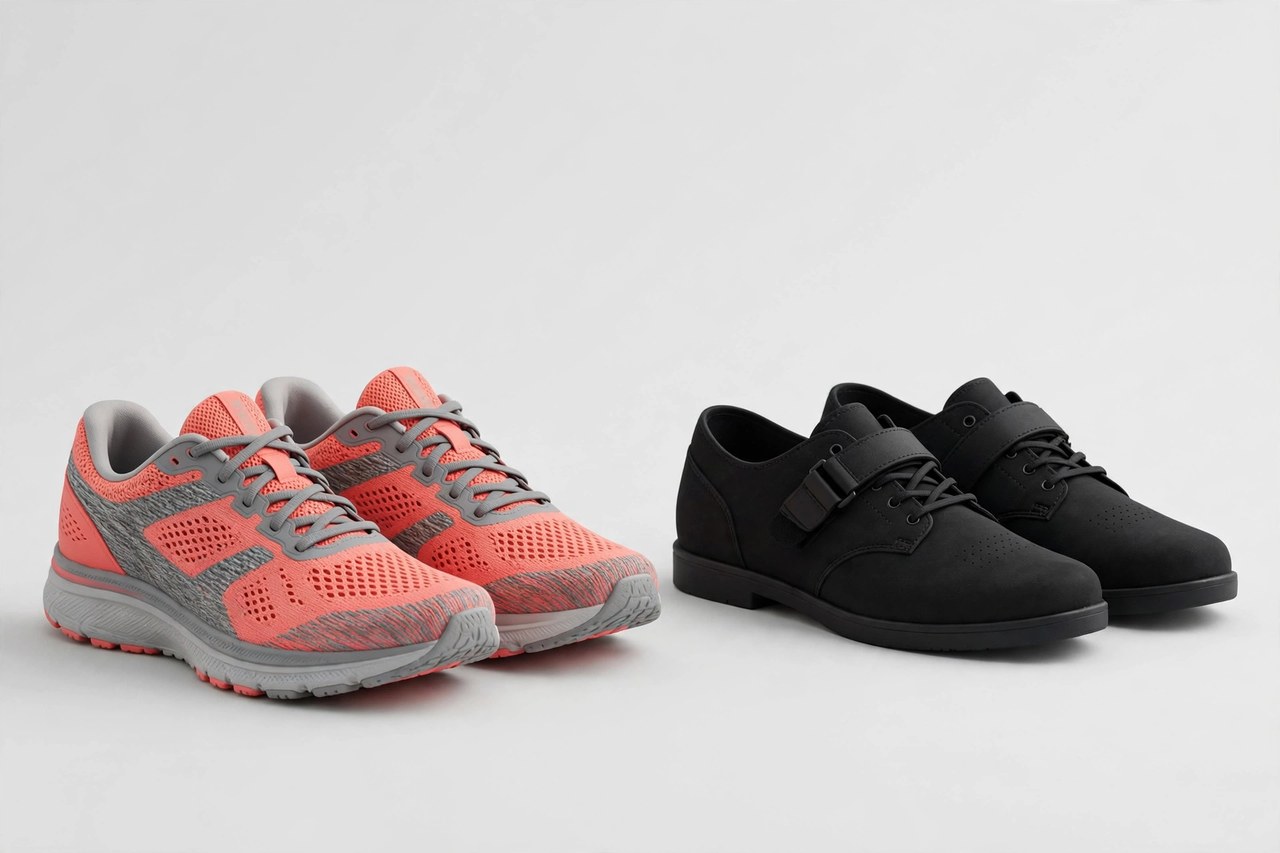
Fitness footwear is the one part of the workout kit where the wrong choice can genuinely hurt you. Shoes are built for a direction of movement: running shoes for forward motion, training shoes for side-to-side work, lifting shoes for a stable base. Wearing a soft, high running shoe for lateral drills is an ankle injury waiting to happen; running distance in a flat trainer is a recipe for sore shins.
This guide explains the categories, the anatomy terms worth knowing, and the fit rules that matter more than colour or brand. It is the footwear companion to our fitness apparel and fitness clothing guides.
Running Shoes: Built to Go Forward
Running shoes carry the most cushioning, a curved sole that encourages forward roll, and a heel-to-toe drop — the height difference between heel and forefoot, typically 8–12 mm in traditional trainers, less in minimalist styles. Neutral shoes suit most runners; stability models add support for feet that roll inward strongly. Neither is ‘better’ — match matters more than category.
Running shoes are consumables: foams compress and lose their protection after roughly 300–500 miles. Track mileage, and replace when the midsole feels dead, the outsole is smooth, or new aches appear in knees and shins that shoes used to prevent.
Training and Lifting Shoes: Built to Stay Put
For gym work the priorities reverse. Cross-training shoes sit lower and flatter, with a wider, more stable base, firmer foam and reinforced sides for lateral movement, rope climbs and quick direction changes. They are the right default for classes, circuits and general gym sessions.
Lifting shoes go further: a flat, incompressible sole (or a raised, solid heel for Olympic lifting) so force goes into the floor, not into squishy foam. Many lifters simply squat and deadlift in flat minimal shoes or barefoot-style trainers. What all gym shoes share: never train heavy in your cushioned runners.
Fit Rules That Matter
Fit fitness footwear at the end of the day, when feet are at their largest, wearing your training socks. You want a thumb's width (about a centimetre) between your longest toe and the end of the shoe — feet swell and slide forward in workouts. The heel should sit secure without slipping; the midfoot snug but not squeezed; the toe box wide enough for toes to spread under load.
Women-specific lasts are cut narrower in the heel and wider in the forefoot than men's, which is why ‘small men's sizes’ often fit badly. Walk, jog on the spot and do a few squats and lunges in the shop. Shoes should disappear during movement, not announce themselves.
One Pair or Several?
A single pair of cross-trainers covers classes, gym work and short runs adequately for most people. Add dedicated running shoes when weekly mileage climbs, because running in trainers under-cushions and training in runners destabilises. Rotating two pairs also lets foam recover between sessions and extends the life of both.
Whatever you choose, keep fitness footwear for fitness. Wearing training shoes all day compresses the foam and wears the grip before your workouts get the benefit. Our wider footwear section covers athletic shoes and every other category in depth.
Socks: The Forgotten Half of Footwear
Shoes get the budget and the attention, but socks decide half the comfort. Cotton socks are the enemy in fitness footwear: they absorb sweat, stay wet, soften skin and cause blisters. Synthetic or merino-blend training socks wick moisture away, hold their cushioning, and come in thicknesses matched to the shoe — thin for lifting and racing, padded for running. Length matters too: no-show socks slip in trainers, while quarter and crew lengths protect the ankle and Achilles from shoe collars. Budget for three or four good pairs with the shoes themselves; it is the cheapest performance upgrade in this entire guide.
More Fitness & Footwear Guides
Photos

More to Explore on Apparel Search
Looking for Women's Clothing Stores?
This guide helps you choose women's fitness footwear. To browse where to buy, visit our women's clothing store directory, where you can find retailers that carry them.