01 — The Requirement
Why Studios Require Grip Socks
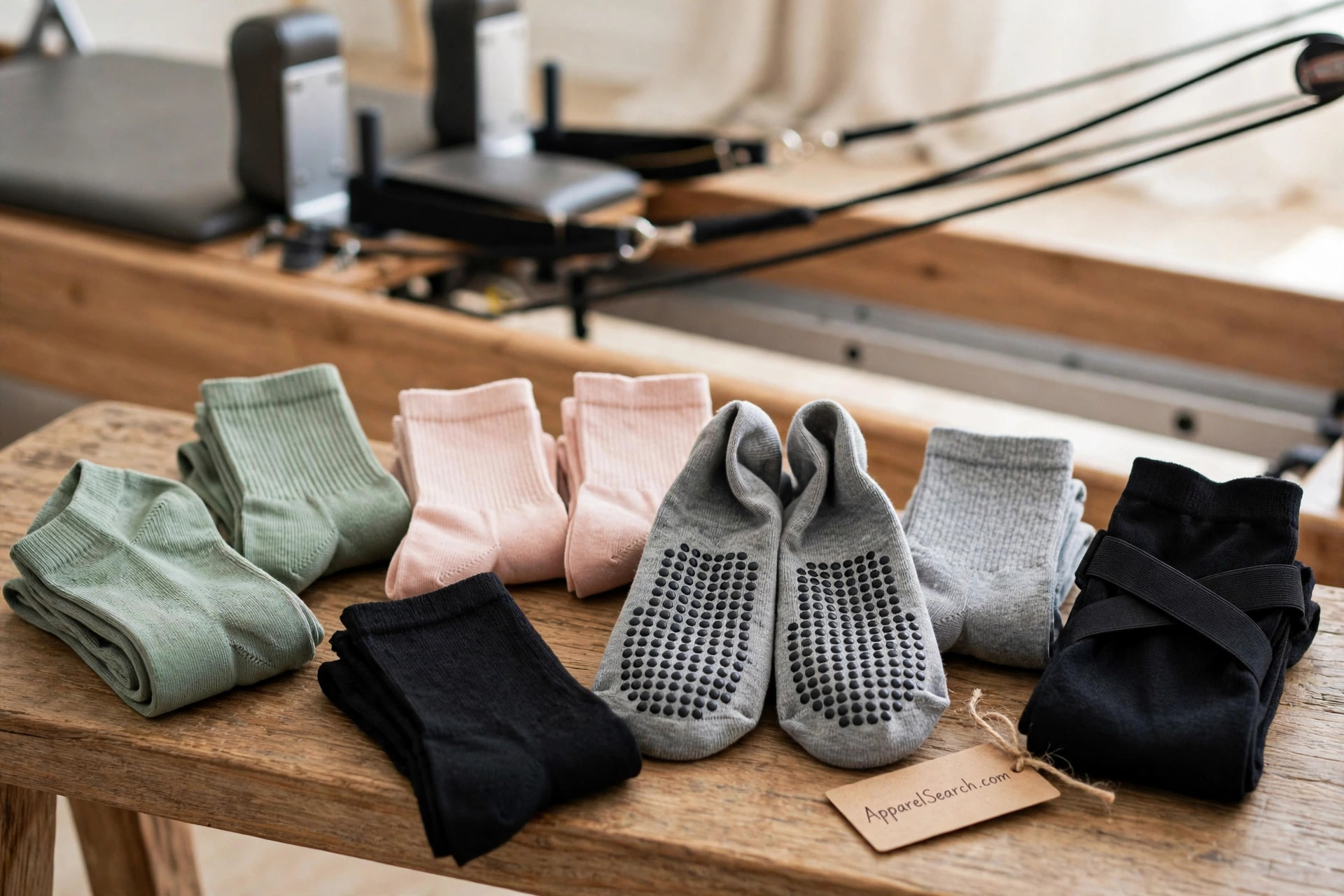
Grip socks exist because of a machine. On a reformer, feet press a footbar, ride a moving carriage and work in straps, and both bare feet and ordinary socks slide at exactly the moments a class asks for control. The silicone or PVC dots bonded to the sole turn the sock into a traction surface, and studios built the rule around that function first. Hygiene made the rule universal: a reformer is shared equipment, class after class, and socks are the clean barrier studios can actually enforce at the door. The requirement is at its strictest in machine classes — the Reformer Pilates Outfits guide sets out the full context — but the same socks have spread to barre, where the floor is the slippery surface, and to mat work on polished floors.
Newcomers sometimes hear the rule as a sales tactic, and studios do sell socks at the desk. The honest test is one class: feet that stay planted in straps change how the whole exercise feels, and most first-time buyers become two-pair owners within a month for the simplest of reasons — laundry.
02 — The Styles
The Styles, Compared
- Ankle and low-cut — the classic studio sock: a trainer-style cut with grip across the whole sole. Coolest in warm studios, and the style least likely to show above a legging hem. The everyday default.
- Crew and knee-high — more coverage for cool studios and for wearers who like compression-like snugness up the calf; knee-highs pair with cropped leggings in winter. The women’s socks guide covers lengths and knits across the wider sock wardrobe.
- Five-toe — individual toe pockets that let toes spread and grip independently. Devotees swear by the planted feeling in strap work; others find the fit fiddly. Try one pair before committing.
- Mary Jane and strappy — a ballet-inspired cut with an elastic strap or criss-cross bands over the instep. The strap genuinely helps the sock stay seated during pointed-foot work, and the style reads more studio than gym.
- Open-toe — heel and ball gripped, toes bare for floor feel. A barre favorite that some reformer studios accept and others do not — check the policy before buying.
Men’s ranges run narrower — ankle and crew cuts in larger sizes dominate — and the socks product directory maps the category across brands when a studio’s own desk stock does not fit.
03 — The Grip Itself
Reading the Grip: Patterns, Coverage and Materials
Turn the sock over: the sole tells you most of what you are paying for. Coverage is the first check — dots should run from heel to toe, including the ball of the foot where reformer pressure actually lands; fashion grip socks that dot only the arch grip decoratively. Pattern density comes next: a close honeycomb or full-field dot pattern out-grips a sparse novelty print, and slightly raised dots out-grip flat printed ones, which are ink rather than traction. Material decides lifespan — silicone dots flex and survive washing better than stiff PVC, which can crack and peel. The sock body matters too: a cotton-rich knit feels soft and holds moisture; a nylon or polyester blend with elastane fits closer, dries faster and aligns with the moisture-wicking fabrics used through the rest of the kit. Arch compression bands and a shaped heel pocket are the construction details that separate a sock that stays put from one that migrates.
04 — Fit and Care
Fit, Sizing and Care
Grip socks should fit like a second skin: snug at the arch, no slack at the toe, heel seated in its pocket. A sock that is half a size generous will twist during strap work, bunching dots away from where your weight lands — the most common reason a wearer concludes grip socks do not work. Most ranges are sized in shoe-size bands; if you sit between bands, choose the smaller for studio use. Men shopping women’s-dominated ranges should size by foot length rather than label, a point the men’s socks guide treats across sock types.
Care is where grip goes to live or die. Wash inside out, in cool or warm water, ideally in a small laundry bag so the dots do not abrade against zips and hooks. Air-dry or tumble on the lowest setting: repeated hot drying hardens silicone, fades elastic and is the usual cause of a pair that gripped beautifully for two months and then stopped. Kept that way, a good pair lasts a season of regular classes; two or three pairs in rotation is the regular’s setup.
Good to Know
Common Questions
How many pairs of grip socks do I need?
Two pairs is the working minimum for anyone taking weekly classes — one to wear, one in the wash — and three pairs suits a two-or-three-class week comfortably. Studios require a clean pair each visit, and grip socks are small, quick-drying items, so a modest rotation is genuinely all the sock wardrobe Pilates asks for. Buy the second pair after the first class, once you know your size and preferred style.
Can I just wear regular socks to a reformer class?
At most reformer studios, no — the policy exists because ordinary socks slide on the carriage and footbar, which is a control problem rather than a style rule. Some mat and community classes are more relaxed. If a studio allows regular socks for a trial class, expect the instructor to suggest grip socks before your second visit; the difference in strap work is noticeable within minutes.
Are five-toe grip socks better than closed-toe?
Neither is objectively better; they suit different feet. Five-toe socks let the toes spread and work independently, which many wearers find steadier in strap and standing work, and they fit wide feet well. Closed-toe socks go on faster, feel more familiar and keep feet warmer in cool studios. Studios accept both. The deciding factor is whether you like the toe pockets — try one pair of each across a month if you are unsure.
Why did my grip socks stop gripping?
Almost always heat. Hot washes and tumble drying harden and crack the silicone or PVC dots and relax the elastic, so the sock both slides and twists. Residue from fabric softener can also coat the dots. Wash inside out in cool water, skip the softener, and air-dry; a pair cared for that way should keep its grip for many months of classes.
More to Explore
Search Apparel Search