Women's Sports Bra Guide
A sports bra is engineered athletic equipment — its support comes from band, cup construction and strap design working together, matched to the impact of the activity.
Shop Women's Sports Bra Now
Shop Women's Sports Bra on Amazon Shop Women's Sports Bra on eBayThe Amazon and eBay links on this page are affiliate links. If you make a purchase through them, Apparel Search may earn a commission.
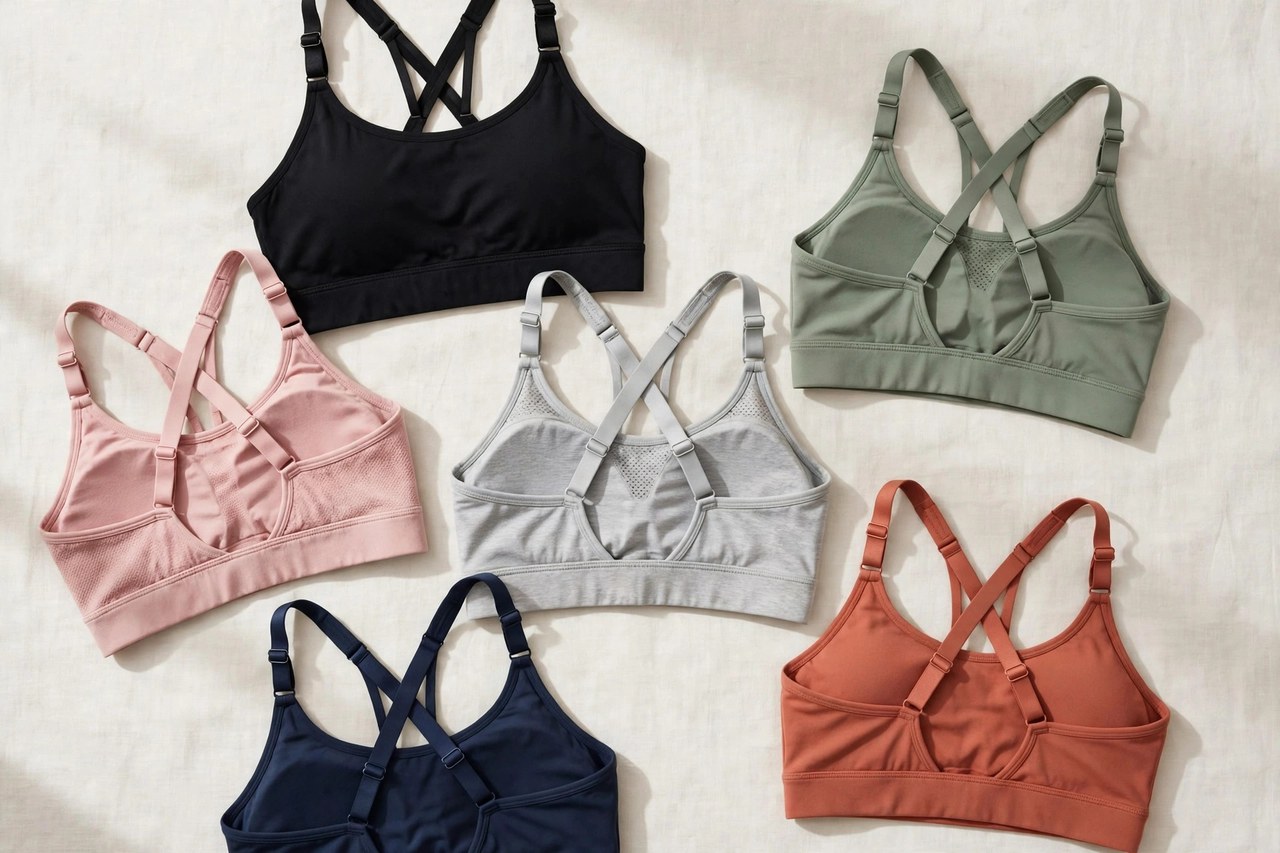
A sports bra is a support garment designed for exercise, built to limit movement and stay comfortable under exertion in ways an everyday bra is not. This guide discusses it strictly as athletic equipment: its construction types, its support levels, how sizing works, and which fabrics and features matter for which activities. The sports bra is part of athletic clothing generally; here the focus is on the engineering, because support is a measurable property, not a marketing adjective.
Two construction philosophies divide the category. Understanding which one a given bra uses — and which one your activity needs — is most of sports bra shopping. Everything else in this guide, from band fit to strap style to care, follows from that first distinction and from the impact level printed, sometimes optimistically, on the tag.
Compression and Encapsulation Construction
Compression bras are the familiar pullover style: a single stretch garment that holds the bust firmly against the body. They are simple, seamless under shirts, and effective at lower impact levels and smaller cup sizes, but at high impact or larger sizes, simple compression reaches its limit. Encapsulation bras are built with separate molded or seamed cups, like an everyday bra engineered for sport, supporting each side individually; they control movement better at larger cup sizes and give a more natural shape under clothing.
Combination bras layer both ideas — encapsulation cups inside a compression outer layer — and dominate the high-support end of the market. Whichever the construction, the underband does most of the work: it anchors the garment so straps and cups can do their part. A bra whose band is loose will fail however impressive its cups look, which is why fit checks in this category start at the ribcage, not the shoulder.
Support Levels Matched to Impact
Manufacturers grade bras as low, medium and high impact, and the grades correspond to activity, not to bravery. Low impact suits yoga, walking, cycling and strength training. Medium covers hiking, dance, skiing and gym machines. High impact is for running, court sports, aerobics and anything with repeated jumping or rapid direction change. Choosing up a level is always safe; choosing down shows up as discomfort within minutes and as a bra abandoned in the drawer within weeks.
Cup size interacts with impact more than most tags admit: the same activity is a higher-impact experience at a D cup than at a B cup, and many runners at larger sizes shop the high-support range for activities a chart calls medium. Use the activity label as a starting point, then apply the movement test in the fitting room — jog in place and jump; the garment should control movement without restricting breathing. A sports bra that only works at rest is not a sports bra.
Fit, Straps and Closures
Fit follows bra logic with athletic adjustments. The band should be snug on the loosest hook when new, level around the body, and stay put when you raise your arms. Cups should contain fully without spilling or gaping. Many sports bras are sold in band-and-cup sizes; others use small-medium-large sizing, which fits a narrower range of bodies well — if you are between its assumptions, look for the sized lines. Racerback designs pull straps inward for security and freedom of arm movement.
Feature choices are practical. Adjustable straps and hook closures extend a bra's useful life as its elastic ages, and make the bra far easier to put on after a workout than a pullover. Wide straps distribute load on the shoulder. Front-zip styles suit anyone who dreads the post-run pullover struggle. Underwire sports bras exist within encapsulation lines and are a fit question, not a comfort verdict — correctly sized, the wire sits on the ribcage and does its job unnoticed through a long run.
Fabrics, Care and Replacement
Sports bras are knitted from moisture-wicking synthetic blends — nylon or polyester with substantial elastane — with mesh panels placed for ventilation. Cotton is the fiber to avoid: it absorbs sweat, stays wet, chafes and loses what support it had. Seam placement matters as much as fiber; flat or bonded seams and a soft, covered band elastic are the difference between a bra forgotten during exercise and one that files complaints at mile three.
Care protects the elastic that provides the support. Wash in cold water, ideally in a lingerie bag, and hang dry — dryer heat is the leading cause of early support loss, ahead of the exercise itself. Rotate at least two bras if you train often, giving each a rest day for its fibers. Replace a sports bra when the band rides up despite adjustment, when straps no longer hold their setting, or roughly when its elastic birthday passes after a year of regular use: support fades gradually, and the replacement usually reveals how much had quietly gone.
Related Women's Guides
More to Explore on Apparel Search
Women’s Clothes Guide by Letter: A · B · C · D · E · F · G · H · I · J · K · L · M · N · O · P · Q · R · T · U · V · W · X · Y · Z
Looking for Women's Clothing Stores?
This guide helps you choose women's sports bras. To browse where to buy, visit our women's clothing store directory, where you can find retailers that carry them.