Start Here — The Whole Kit
Pickleball Clothing, Organised by What You Actually Wear
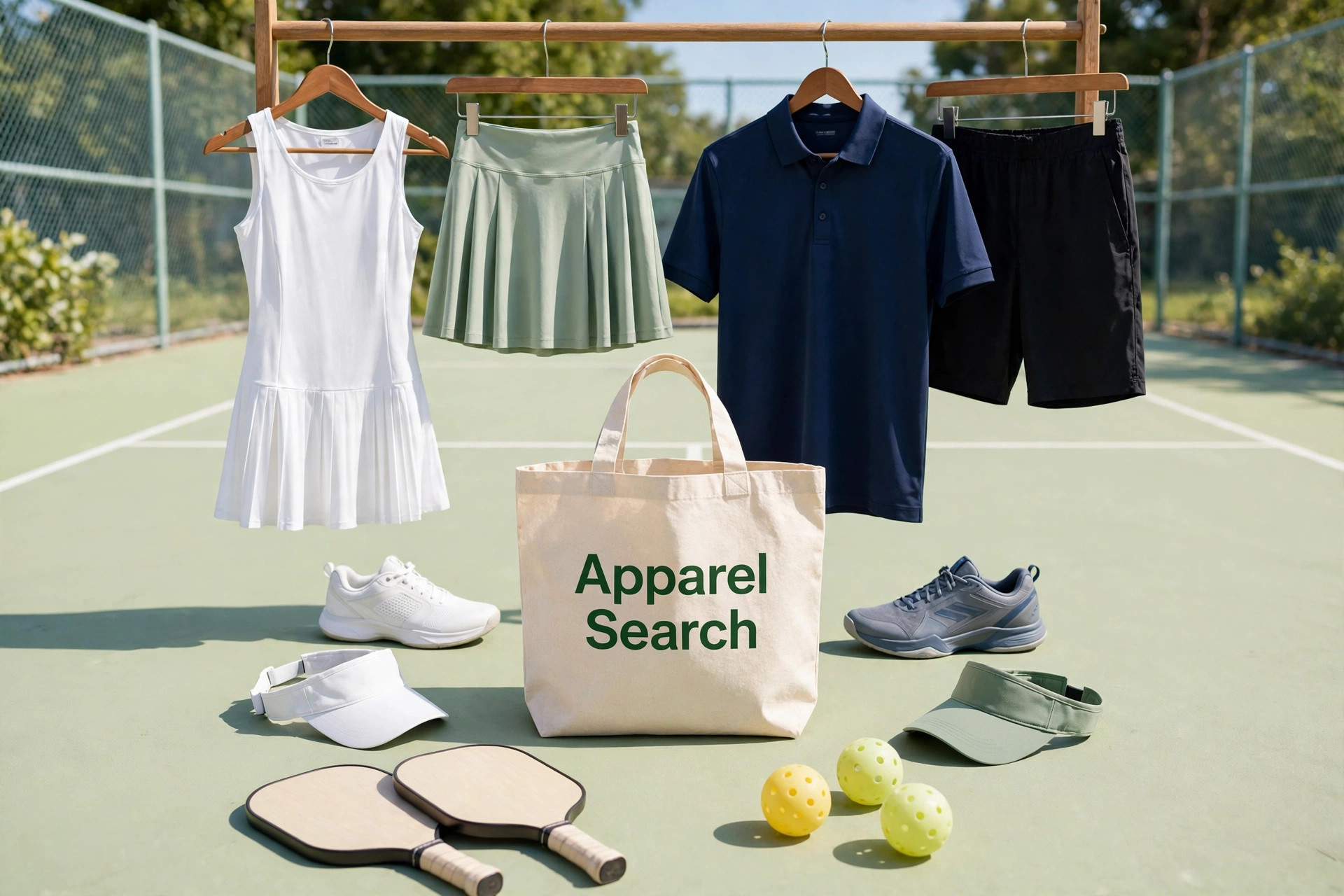
Pickleball looks gentle from the fence — a small court, a light paddle, a perforated ball — and then the first long rally teaches the truth: the game is played in short, sharp bursts. You shuffle sideways along the kitchen line, lunge for a dink, sprint back for a lob and stop dead, all inside a few seconds. Clothing that cannot move sideways, stretch without binding, or shed heat quickly becomes the opponent you notice most. This guide is the index to dressing for that game: what each part of the kit does, which fabrics earn their place, and where to go deeper on shoes, dresses, sun protection and a first game.
The wardrobe overlaps with tennis — the two sports share courts, fabrics and a long tradition of clean court style, and the women’s tennis clothing guide is worth reading alongside this one — but pickleball has its own demands. The court is smaller, the rallies are closer to the net, and the social game runs long: three or four games in an outing is normal, which means an outfit has to stay comfortable well past the first match. Women who have played for years will also find the long-standing women’s pickleball clothing guide in this family of pages, with its own take on the essentials.
The Index — Every Guide in This Series
The Pickleball Clothing Guides
Search Apparel Search
The Game — Movement First
What the Game Demands From Clothes
Lateral movement comes first. Most pickleball steps are sideways or diagonal, not straight ahead, so bottoms need a gusset or enough stretch to let the legs split wide without the fabric pulling at the knee, and hems need to stay put when you crouch at the kitchen line. Stops are sudden. A loose, flapping shirt is merely untidy; a shoe that rolls on a hard stop is an injury, which is why footwear gets its own guide in this series and why court shoes, not running shoes, are the standard recommendation. Heat builds quietly. Outdoor courts radiate warmth back at the players and games run back-to-back, so breathable, quick-drying fabric is a performance feature, not a luxury — the principles are the same ones behind the cooling clothing guide, applied to a smaller court.
Pockets deserve a sentence of their own, because pickleball players hold a second ball constantly. A ball pocket that actually holds a ball — on shorts, in a skort’s undershort, or up the back of a dress’s built-in brief — changes the rhythm of a game more than any other single feature. When you shop, test the pocket with a real ball before you judge anything else about the garment.
Fabric Rules — Dry, Stretch, Light
Fabrics and Fit That Work on Court
Three fabric rules cover nearly every good pickleball garment. It must manage moisture: synthetic knits and modern blends pull sweat off the skin and dry between games, where a heavy cotton tee holds water, sags and chafes — the moisture-wicking fabrics page explains how the fibres do it. It must stretch and recover: a modest percentage of elastane lets a top reach overhead and a short survive a lunge, and good recovery is what keeps that stretch from bagging out by August. It must be light: pickleball is a game of quick feet, and a heavy, waterlogged outfit taxes every step of it.
Fit follows the same logic. Tops should be close enough not to catch on a paddle swing but never tight across the shoulders; bottoms should allow a full side lunge in the fitting room, not just a walk to the counter. Seams matter more than shoppers expect — flat or soft seams under the arms and at the inner thigh are the difference between a four-game morning and a two-game one. And because so much of the game is played outdoors, fabric with a genuine ultraviolet protection rating earns a permanent place in the kit; sun strategy is covered in full in the sun protection guide in the index above.
Footwear — The One Non-Negotiable
Shoes: The Piece to Get Right First
If the budget stretches to only one pickleball-specific purchase, it should be the shoes. Court shoes are built for exactly this movement pattern: a wide, stable base that resists rolling on side steps, a durable toe for the drag that serving and lunging produce, and an outsole patterned for hard-court grip rather than the forward roll of a running shoe. Players comparing models can browse current styles through the tennis shoes product pages, since most court shoes serve both sports, and the women’s shoe guide in the index above walks through fit, width and when to replace a worn pair. Everything else in the kit can be borrowed from a general athletic wardrobe for a while; shoes cannot.
Good to Know
Common Questions
What should I wear to play pickleball?
Wear a breathable, moisture-wicking top, bottoms that allow a full side lunge — shorts, a skort or a court dress with built-in shorts — and proper court shoes with a wide, stable base for lateral movement. Add a visor or cap outdoors and a light layer for between games. The one piece to buy specifically for the sport is the shoes; the rest can start from a general athletic wardrobe.
Can I wear tennis clothing for pickleball?
Yes — the two wardrobes overlap almost completely. Tennis dresses, skirts, shorts and polos all transfer directly, and most court shoes are sold for both sports. The differences are matters of emphasis: pickleball puts even more weight on lateral stability and ball pockets, because rallies are played close to the net and players hold a second ball through most points.
Why not just wear running shoes?
Running shoes are built to roll forward in a straight line: narrow at the midfoot, cushioned high at the heel, and flexible where a court shoe is stiff. Pickleball movement is sideways, with hard stops and pivots, and a running shoe’s shape invites the ankle to roll on exactly those steps. A court shoe’s wide base, firmer sides and hard-court outsole are made for that pattern.
What fabrics are best for pickleball clothing?
Light synthetic knits and blends that wick moisture, stretch with elastane and dry quickly between games. They stay light when you sweat, survive repeated washing, and many carry a genuine UPF sun rating. Heavy cotton is the fabric to avoid for anything beyond a casual hit: it holds water, sags, and chafes over a long session.