Women’s Court Shoes — Stability Is the Sport
Women’s Pickleball Shoes: Built for the Sideways Game
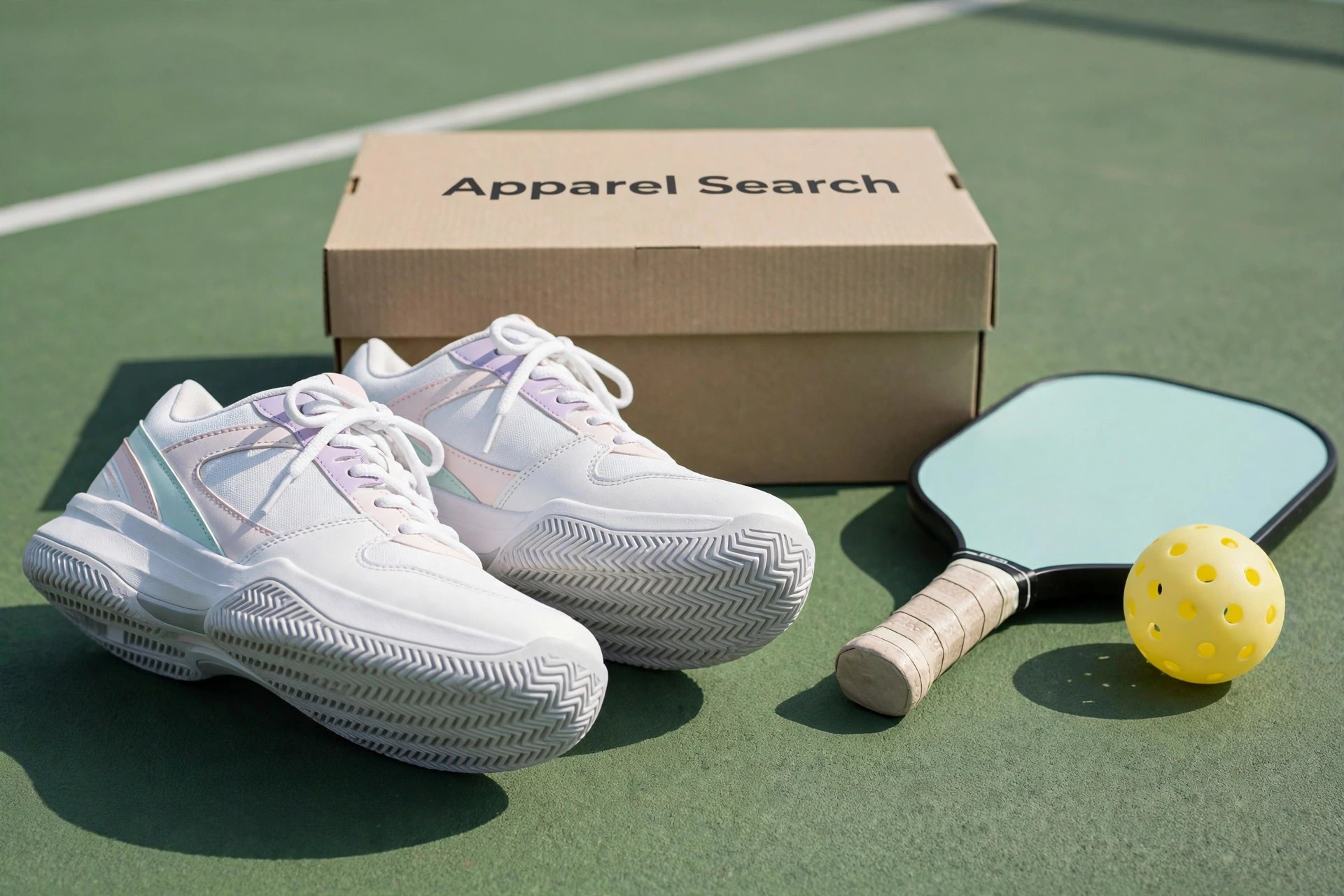
Pickleball is played sideways. Watch any rally from above and the footwork draws a zigzag — shuffle, split-step, lunge, recover, pivot — with almost none of the straight-ahead running that most athletic shoes are designed for. That single fact explains everything about pickleball footwear: the wide base, the stiffened sides, the durable toe, the outsole that grips a hard court without locking onto it. This guide explains how court shoes are built, how to fit them properly, and when a pair is worn out, drawing on the same construction covered in the women’s tennis shoes guide, since the two sports share their footwear almost completely.
It is the one guide in this series that borders on a safety lecture, and unapologetically: the most common pickleball injuries begin with the wrong shoes. A player in running shoes on a hard court is wearing equipment designed to tip her forward, asked to move her sideways.
Anatomy — Base, Sides, Toe, Sole
How a Court Shoe Is Built
The base is wide and low. A court shoe flares slightly at the forefoot and sits closer to the ground than a trainer, lowering the centre of gravity so a hard lateral stop pushes the shoe into the court instead of rolling it over. The sides are reinforced. Stiffer material at the midfoot and a firm heel counter resist the sideways slide that collapses the upper of a soft knit shoe within weeks. The toe is armoured. Serving and lunging drag the front of the trailing shoe across the court; a durable toe cap or drag guard is the visible difference between a court shoe and everything else in the shop.
The outsole is the handshake with the court. Hard-court soles use dense rubber in a herringbone or modified herringbone pattern that grips on push-off, releases on a pivot, and survives abrasive outdoor surfaces. Clay-court and indoor gum soles exist for their surfaces; match the sole to where you actually play. Shoppers comparing current models across brands can survey the field through the athletic shoes product pages and the shared tennis shoes product pages, since most court shoes are listed for both sports.
Fit — Room to Stop In
Fitting Court Shoes: Length, Width and the Stop Test
Fit a court shoe at the end of the day, in your playing socks, and judge it by stopping, not walking. You need a thumb’s width in front of the longest toe — hard stops drive the foot forward, and toes that meet the front of the shoe in the shop will be blackened by month two — combined with a midfoot snug enough that the foot does not slide inside the shoe on a side step. The heel should lock with minimal lift; a heel that slips on a lunge will blister long before it stabilises.
Width deserves honesty. Many women play in shoes too narrow through the forefoot because standard women’s lasts run slim, and the game’s split-steps and lunges spread the foot under load. If the forefoot feels pinched in the shop, it will feel worse at game four; look for wide fittings, which court-shoe ranges increasingly offer, rather than sizing up in length. The general footwear background in the women’s athletic shoes guide covers lasts and sizing systems in more depth. Finally, socks are part of the fit: a cushioned court sock with a blister guard at the heel, like those in the women’s athletic socks guide, changes the feel of the same shoe noticeably.
Wear — Knowing When They Are Done
When to Replace Them, and What to Avoid
Court shoes wear out in three places, and any one of them retires the pair. The outsole smooths first under the ball of the foot — when the herringbone pattern disappears there, grip is gone even if the shoe looks tidy. The midsole tires next, losing its resilience so landings feel flat and knees begin to report the difference. The upper goes last, stretching until the foot moves inside the shoe on lateral steps. Regular players on outdoor courts typically replace court shoes every six to twelve months; the honest test is a hard stop on your home court, not the calendar.
Two avoidances complete the guide. Avoid running shoes, for the reasons the hub of this series sets out: narrow, high and built to roll forward. And avoid fashion trainers that imitate a court silhouette without the structure — the test is in the base and the sides, not the styling. Players building the rest of the outfit around their shoes will find dresses, skorts and tops in the companion guides in this series, where footwear is treated with the same respect: first.
Good to Know
Common Questions
Can I play pickleball in running shoes?
You can, and many beginners do for a first session, but it is the footwear choice experienced players warn against most strongly. Running shoes are narrow, high and flexible, built to roll forward; pickleball stops and pivots sideways, where that shape invites the ankle to roll. For anything beyond a trial game, wear court shoes — the same shoes sold for tennis serve pickleball completely.
How should pickleball shoes fit?
A thumb’s width ahead of the longest toe, a midfoot snug enough to prevent sideways sliding inside the shoe, a heel that locks without lifting, and honest width through the forefoot. Fit them late in the day, in your playing socks, and judge them with a hard stop and a side lunge rather than a walk around the shop.
How long do pickleball shoes last?
For a regular player on outdoor hard courts, roughly six to twelve months. Replace them when the outsole pattern smooths under the ball of the foot, when landings feel flat as the midsole tires, or when the upper stretches enough for the foot to move inside the shoe on lateral steps — whichever arrives first.
Are tennis shoes and pickleball shoes the same?
In construction, essentially yes: wide stable base, reinforced sides, durable toe, hard-court outsole. Most ranges are sold for both sports, and many players wear one pair for both. Pickleball-specific models sometimes soften the toe drag guard and lighten the upper for the shorter court, but a good tennis court shoe is never the wrong answer for pickleball.
More to Explore
Search Apparel Search