Women's Athletic Socks Guide
The smallest gear with the biggest comfort payoff — sport socks explained by fiber, height, cushion and fit.
Shop Women's Athletic Socks Now
Shop Women's Athletic Socks on eBay Shop Women's Athletic Socks on AmazonThe eBay and Amazon links on this page are affiliate links. If you make a purchase through them, Apparel Search may earn a commission.
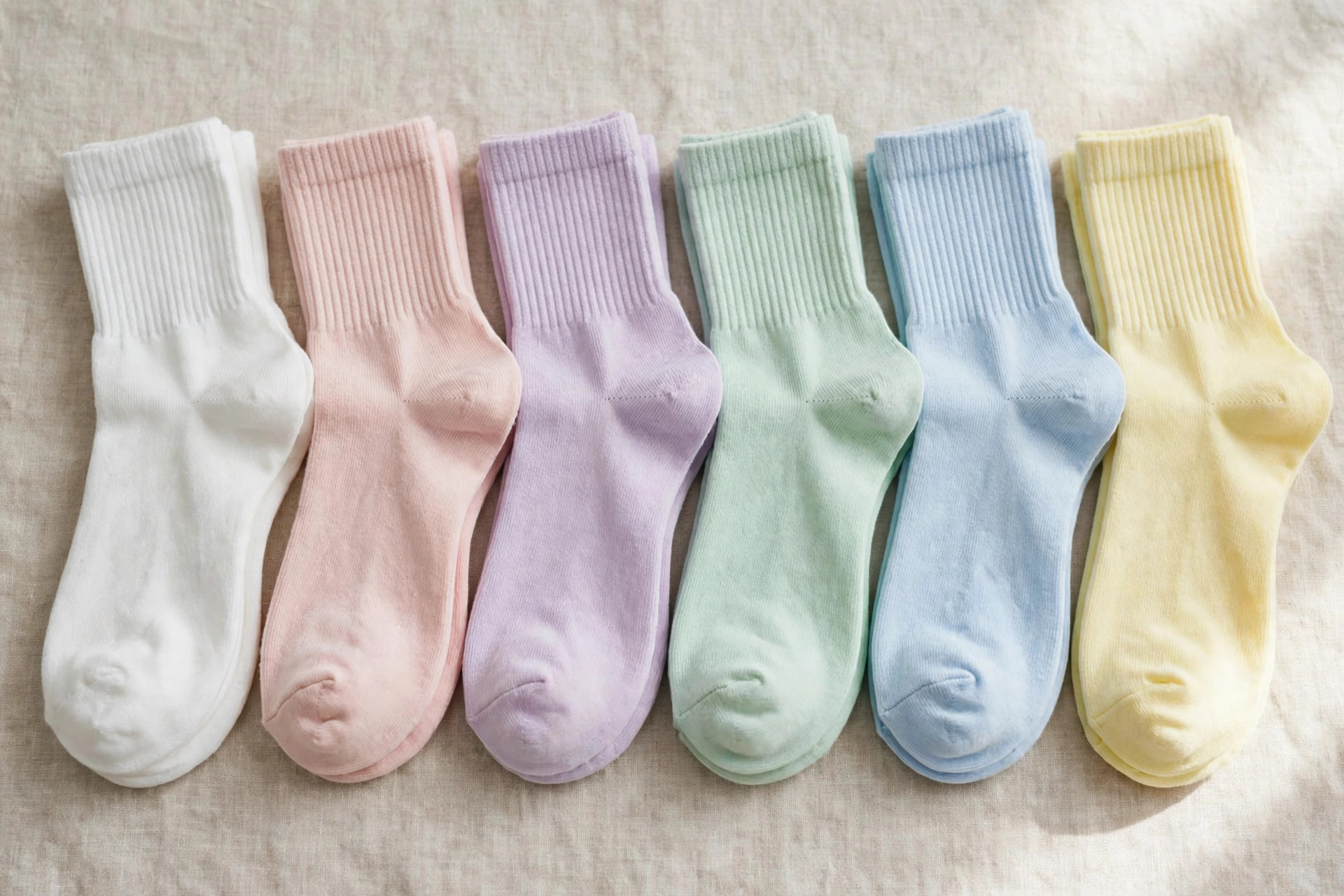
Athletic socks are the most underestimated gear in the bag. The wrong pair — cotton, loose, too thick or too thin — causes blisters, hot spots, and distracting bunching; the right pair disappears, managing moisture and friction for hours. Because socks sit at the interface between foot and shoe, small engineering details matter enormously: fiber blends, targeted cushioning, arch bands, and seamless toes. This guide explains how sport socks work and how to choose them for running, training, and all-day wear.
Fibers: Why Cotton Fails Athletes
Cotton absorbs sweat, holds it against the skin, loses its shape, and turns abrasive when wet — the blister recipe. Athletic socks use synthetic blends (nylon, polyester, acrylic performance fibers) that wick moisture away and keep their fit, or merino wool blends that manage moisture and temperature naturally and resist odor over long efforts. A touch of elastane keeps the sock mapped to the foot so it cannot slide and bunch. For most training, a synthetic or merino blend in the right height and cushion outperforms any cotton sock at any price — this is the easiest upgrade in all of sport gear.
Heights & Cushioning Zones
Height is functional, not just fashion. No-show and low-cut socks suit gym shoes and warm weather, ideally with a heel tab that stops slipping. Quarter and crew heights protect the ankle and Achilles from shoe collars and trail debris, and crew socks are the team-sport standard. Knee-high styles serve field sports and compression wearers. Cushioning comes in ultralight (close fit, racing), light to medium (the versatile default, padded at heel and forefoot), and maximum cushion (long runs, sensitive feet, recovery days). Targeted padding should sit where you land — check that the cushioned zones align with your foot, which is why sized socks beat one-size pairs.
Compression & Specialty Socks
Compression socks apply graduated pressure, snugger at the ankle than the calf, to support circulation during long runs, travel, and recovery afterward; many athletes wear them as much for fresher legs the next day as for performance. Toe socks separate the toes to prevent skin-on-skin blisters on long runs and hikes. Double-layer socks let two layers rub each other instead of your skin. Trail socks add height, durability, and debris defense. If blisters are your recurring problem, the fix is usually here — in fiber and fit — rather than in a different shoe.
Fit & Care
Athletic socks should be snug with no wrinkles, the heel pocket sitting exactly on your heel; excess fabric anywhere becomes a friction point by mile three. Buy your true shoe-size range and consider the smaller size if you are between, since socks relax slightly in wear. Wash cold and inside out; air-dry or tumble low to protect elastic and merino. Replace socks when the cushion packs down, the elastic gives up, or thin spots appear at the heel and ball — socks are consumables, and fresh ones are the cheapest comfort in sport.
Sock Systems for Long Days & Long Miles
For very long efforts — marathons, long hikes, tournament days with multiple games — athletes often think in sock systems rather than single pairs. The simplest system is one great pair, properly fitted, in a moisture-managing fiber. The advanced version pairs a thin liner sock (which moves friction off the skin) under a cushioned outer sock, a mountaineer's trick that endurance runners swear by. Either way, the system includes a plan: a fresh pair waiting at the finish, because changing into dry socks after a long event is one of sport's small luxuries and genuinely helps tired feet recover. Test any system in training first — race day is no place to debut a new layer against your skin.
Related Women's Guides
Looking for Women's Clothing Stores?
This guide helps you choose women's athletic socks by sport and height. To browse where to buy, visit our women's clothing store directory, where you can find retailers that carry them.