Men’s Court Kit — Built for Sideways
Men’s Pickleball Clothing: The Working Kit
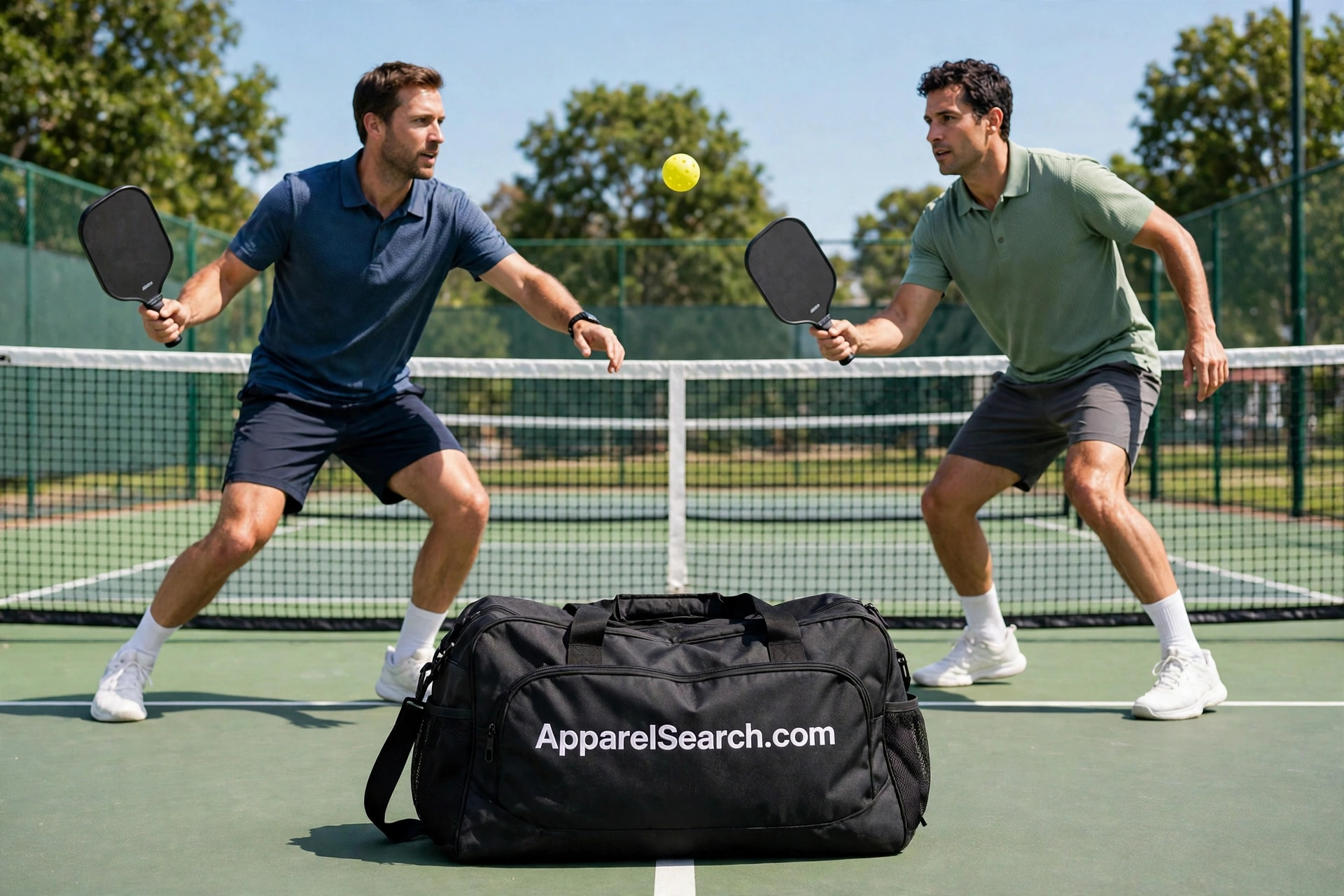
A man’s pickleball outfit has four working parts — top, shorts, shoes and socks — plus whatever the weather adds, and each part has a job shaped by the game itself: constant side-to-side movement at the kitchen line, overhead smashes, and long social sessions where game four matters as much as game one. This guide builds the kit piece by piece, from the polo that survives a full morning to the court shoe that keeps an ankle safe on a hard stop. It sits inside the wider men’s athletic apparel wardrobe, and players completely new to the sport should start with the first-game guide in the More to Explore row below, which assembles an outfit from clothes most men already own.
The good news is how little of the kit is exotic. Pickleball borrowed its dress code from tennis and its fabrics from modern training wear, so a thoughtful shopper is mostly choosing well among familiar garments — a breathable polo or tee, a stretch short with a ball pocket, a real court shoe — rather than hunting specialist equipment. The sections below take each piece in turn.
Tops — Collars, Tees and Airflow
Tops: Polos, Performance Tees and Sleeveless Play
The classic court top is the polo, and it still earns its place: the collar keeps a shirt looking tidy at clubs with dress codes, and modern performance polos are knitted from the same moisture-wicking synthetics as training tees. The men’s polo shirts guide covers fits and fabrics in depth. A polo for pickleball should be cut with room across the shoulders and a hem that stays tucked or sits cleanly untucked through an overhead swing — test the reach before you buy, because a shirt that pulls at the waist on every smash gets left in the drawer.
Performance tees are the relaxed alternative and the default at most community courts: light, cheap, quick to dry, and easy to rotate through a week of play. Sleeveless tops appear in serious summer heat and divide opinion at traditional clubs, so check the local dress code before adopting one. Whatever the style, the fabric rules hold: a synthetic or blended knit that moves sweat, a touch of stretch, and seams that do not sit where a paddle strap or a partner’s high-five lands — which is to say, keep shoulder seams smooth and tags out.
Shorts — Pockets Are a Feature
Shorts: Length, Stretch and the Ball Pocket
Pickleball shorts live or die by two things: how they move in a lunge and whether they hold a ball. The movement test is simple — a wide side step and a deep crouch at the kitchen line without the fabric binding at the thigh or the waistband folding. A gusseted crotch or a four-way stretch woven both pass it; a stiff, straight-cut short does not. Inseams in the seven-to-nine-inch range suit most men, keeping the hem clear of the knee while covering enough for a dignified dive.
The pocket test is just as simple: a standard pickleball should slide into the front pocket and stay there through a rally, or the short should offer a dedicated ball pocket at the side or back. Tennis shorts solved this problem decades ago, and the men’s tennis shorts guide is the best reference for pocket designs that work. Lined shorts with a light compression brief add support and stop chafing over long sessions; unlined shorts over separate compression wear give the same result with more laundry flexibility. Everyday criteria for cut and fabric are in the men’s shorts guide.
Feet — Where the Money Goes
Shoes and Socks: Stability Before Cushioning
Court shoes are the one non-negotiable purchase in this guide. Pickleball is a lateral game, and a court shoe answers it with a wide base that resists rolling, reinforced sides, a durable toe cap for drag, and a hard-court outsole that grips without grabbing. The closest relatives are tennis shoes — the men’s tennis shoes guide explains the shared construction — and most men simply buy a tennis court shoe and play both sports in it. Running shoes, with their narrow, high, forward-rolling shape, are the one footwear choice experienced players actively warn beginners against.
Socks are the quiet half of the system: a cushioned athletic sock with arch support and moisture management prevents the blisters that end sessions early, and the men’s athletic socks guide compares heights and knits. Add a light warm-up layer for early starts — a quarter-zip or track jacket that comes off after game one — and the kit is complete for three seasons of the year.
Good to Know
Common Questions
What shorts are best for men’s pickleball?
A stretch woven or knit short with a seven-to-nine-inch inseam, a gusset or four-way stretch for lunging, and a pocket that genuinely holds a pickleball through a rally. A light liner brief adds support and prevents chafing over long sessions. Stiff, straight-cut shorts that bind at the thigh are the style to avoid, however good they look off court.
Do men need pickleball-specific shoes?
Men need court shoes, which is the same thing in practice: most pickleball shoes and tennis court shoes share one construction — wide stable base, reinforced sides, hard-court outsole. What matters is not the label but the shape. Running shoes are built for straight-line motion and are the footwear most likely to roll an ankle during a hard lateral stop.
Are polos or T-shirts better for pickleball?
Both work; the choice is mostly about the venue and the heat. A performance polo looks right at clubs with dress codes and keeps its shape through a long morning. A moisture-wicking tee is lighter, cheaper and easier to rotate daily. Either should be a breathable synthetic knit with room to reach overhead without the hem pulling free.
What should men wear for winter or indoor pickleball?
Indoors, the standard kit works unchanged, with a warm-up layer for the trip to the court. Outdoors in cold weather, add a fitted thermal base under the usual top, athletic pants or joggers over shorts for warm-ups, and a wind-resistant jacket between games. Keep the court shoes — cold outdoor courts are still hard courts, and grip matters more, not less, on a damp surface.
Another Sporting Dress Code
From the Court to the Course: Men’s Golf Clothing
Pickleball asks almost nothing of its players beyond court shoes and sportswear. Golf asks a great deal more — a collar, tailored trousers, a belt and shoes made for grass, all enforced by a written dress code that varies from relaxed public courses to strict private clubs. If you play both games, the men’s golf clothing guide walks through the code course by course: polos and the collar rule, why denim and cargo shorts fail, spiked versus spikeless shoes, and the weather layers that keep a round comfortable.
More to Explore
Search Apparel Search