The Game That Dresses Up
Golf Clothing Starts With the Dress Code
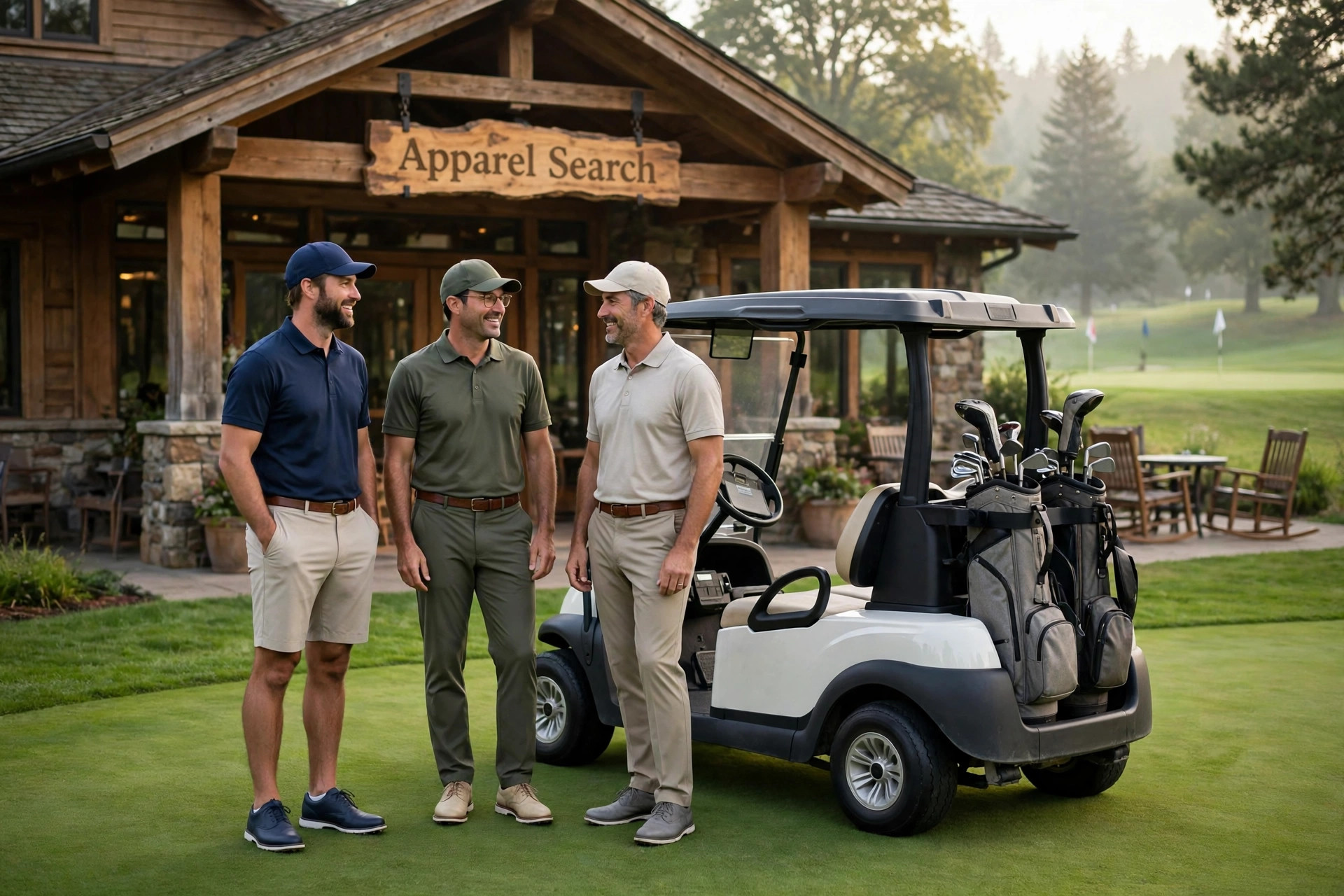
Golf is almost the last sport that meets you at the gate with a dress code, and men’s golf clothing is best understood as the answer to it: a collared polo, tailored trousers or proper shorts, a belt, and shoes built for grass. Get those four pieces right and you are correctly dressed for nearly every course in the world.
The code keeps a shared standard on a shared course, and modern golf clothing makes meeting it easy — today’s polos wick sweat, trousers stretch through the swing, and shoes walk eighteen holes in comfort.
The One-Minute Check Before Any Round
- Collar on the shirt, shirt tucked in, belt on the trousers.
- No denim, no cargo pockets, no gym shorts — anywhere in the outfit.
- Golf shoes or clean spikeless shoes; never trainers with worn soles at a strict club.
- Hat brim forward on the course, hat off indoors at private clubs.
Know Your Course
Dress Codes: Public Course vs Private Club
Public and municipal courses run the relaxed end of the code. Most ask for a collared shirt and no denim, and many accept neat shorts and spikeless shoes of almost any style. The floor is still a floor, though: the T-shirt, the basketball short and the jeans are turned away even where the atmosphere is friendly.
Private clubs and resort courses enforce the full traditional code, often in writing before you arrive. Expect collars tucked in, trousers or tailored shorts of an approved length, belts, hats brim-forward and removed in the clubhouse, and shoes changed in the locker room rather than the car park. Championship clubs add layers of their own — jackets in dining rooms, occasionally a ban on shorts altogether. The guest’s rule is simple: dress for the strictest plausible reading of the code, because you can be forgiven for being too smart, never for being too casual.
On Top
Polos and the Collar Rule
The golf polo is the uniform’s centre: a knitted collared shirt with a two- or three-button placket, worn tucked in. The modern version adds moisture-wicking fabric, stretch through the shoulders, and a collar that holds its shape instead of curling by the seventh hole. Fit should be clean rather than tight, with length enough to reach the top of the backswing without the hem pulling free.
Beyond the polo, men’s golf shirts include the mock-neck tops some contemporary courses accept and quarter-zip mid-layers worn over a polo. Loud prints are now acceptable at most clubs, but the collar is the non-negotiable part: it is the single detail dress codes name first.
Below the Belt
Trousers and Shorts: No Denim, No Cargo
Golf trousers are tailored trousers with a sporting brief: a flat front, a clean taper, and fabric — usually a cotton blend or technical weave — that stretches and breathes, worn without cuffs in khaki, navy, grey, black and increasingly in checks. The details live in the men’s golf pants guide; the silhouette rule is universal: if trousers could pass in a smart-casual office, they pass on the course.
Shorts follow the same tailoring in shorter form: flat-front, sitting at or just above the knee, with a belt. What strict clubs refuse is a short list worth memorising — denim in any form, cargo shorts with bellows pockets, gym and swim shorts, and cut-offs. Denim deserves its own emphasis, because it is the most common dress-code failure in the game: however neat the jeans, almost every course at every level says no.
The Finishing Pieces
Golf Shoes, Belts and Hats
Shoes divide into two families. Soft-spiked shoes carry replaceable plastic cleats and offer the surest grip on wet slopes and winter fairways. Spikeless shoes use a moulded nub tread instead; they grip well in dry conditions and can be worn straight into the clubhouse. Metal spikes are banned nearly everywhere. Fit and care are covered in the men’s golf shoes guide.
Belts are part of the uniform, not an afterthought — trousers and shorts are worn belted, in leather or woven styles that suit the shoes. Hats mean caps and visors with the brim forward; they come off indoors at traditional clubs. Add a single golf glove on the lead hand, as the men’s golf apparel guide sets out, and the classic kit is complete.
All Weather, No Excuses
Weather Layers — and What Never to Wear
Golf is played in whatever the day delivers, so the wardrobe layers. A quarter-zip pullover handles a cool morning; a waterproof jacket and trousers, cut roomy enough to swing in and quiet enough not to rustle through it, handle rain; a thermal base layer handles winter. Every layer should stay as neat as the outfit under it, because dress codes apply to the layers too. For fabrics, what to wear under and over one, and zip-height etiquette, see the men’s quarter-zip pullovers guide.
What Never to Wear on the Course
Denim of any kind, cargo shorts or trousers, plain T-shirts and tank tops, gym shorts and trainers with worn tread, football and replica sports shirts, and metal-spiked shoes. Each is named, in roughly that order, in the dress codes of courses around the world — leave all of them in the car.
Putting it together, a starter wardrobe needs very little: two polos, one pair of trousers, one pair of tailored shorts, a belt, a cap, and one pair of golf shoes. That kit, kept clean and pressed, will walk onto almost any first tee without a second thought — and the women’s golf clothing guide covers the same code from the other side of the pro shop.
Questions
Common Questions
Can men wear shorts on a golf course?
At most courses, yes — tailored golf shorts that sit at or just above the knee are widely accepted, including at many private clubs in summer. The shorts that fail are cargo shorts with bellows pockets, gym shorts, cut-offs and anything in denim. When a club is strict or the weather is cool, trousers are always the safe answer.
Do you have to wear a collared shirt for golf?
At most established courses, yes. The standard is a polo or other collared shirt, tucked in, and private clubs usually enforce it without exception. Some modern courses accept mock-neck golf tops, but a collar is never wrong, so a polo is the safe default for any course you have not played before.
Are spikeless golf shoes as good as spiked ones?
For most golfers on most days, yes. Spikeless soles grip well on dry fairways and can be worn from car to clubhouse. Soft-spiked shoes still edge them for traction on wet slopes and in winter conditions, and some golfers prefer the planted feel. Metal spikes, by contrast, are banned almost everywhere.
Can you wear jeans or a T-shirt at a public golf course?
Usually not, even at relaxed public courses. Denim and plain T-shirts are the two items most often named in golf dress codes at every level of the game. Chinos or golf trousers and a polo cost no more effort and pass everywhere, which is why they are the standard recommendation for a first round.
More to Explore
Search Apparel Search